





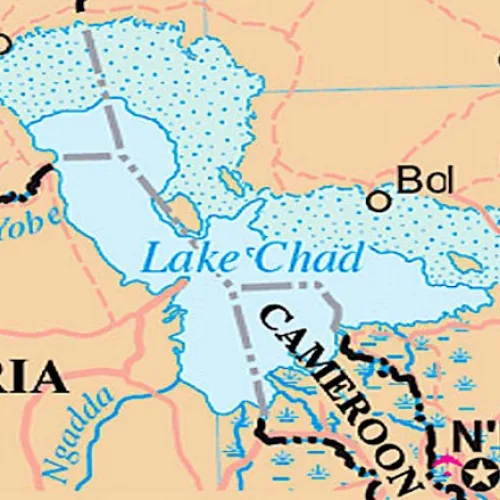
As the crisis in the Sahel region and Lake Chad Basin escalates like wildfire, Nigeria needs to prioritise deeper regional security cooperation within the Sahel region if it hopes to effectively tackle insurgency, banditry, and cross-border trade, and recharge the Basin.
This was part of discussions by ambassadors and diplomats from the Sahel and Lake Chad countries who converged on Borno State to chart security and trade cooperation in the region.
Sola Enikanolaiye, the Minister of State for Foreign Affairs, said the two-day high-level retreat of Nigerian ambassadors and diplomats from the Sahel and Lake Chad Basin countries was organised to develop practical solutions to the region’s critical challenges.
He said the Sahel and Lake Chad regions were plagued by terrorism and violent extremism, transnational organised crime, irregular migration, climate change, environmental degradation, humanitarian crises and geopolitical competition.
Read also: Nigerian diplomats urge Tinubu to back Goodluck Jonathan for UN Secretary-General
“These are challenges that transcend national boundaries, and no single country, however formidable in military strength and resource endowment, can, on its own alone, surmount these challenges or live in isolation,” the minister said.
Enikanolaiye explained that the diplomats were in Borno to explore opportunities to rebuild confidence, strengthen dialogue and deepen political consultations, rather than dwell solely on the challenges confronting the region.
He said Nigeria’s relationship with the countries of the Sahel and the Lake Chad Basin was unique and enduring, describing it as a relationship founded not merely on diplomatic engagement or geographical contiguity, but on centuries of shared history, commerce, culture, religion, language and enduring family ties.
According to him, while internal borders among the countries in the region define their sovereignty as independent nations, they do not diminish the deep historical and socio-cultural bonds that unite their peoples.
He described the theme of the retreat, “Strengthening Nigeria’s Engagement With Lake Chad Countries Toward Peace, Security and Trade Collaboration,” as apt.
The minister disclosed that Borno was chosen to host the retreat not only because of its historical importance and links with most Sahel countries, but also to enable participants to experience the resilience and transformation of the state after years of insurgency.
On his part, Babagana Zulum, Borno State Governor, commended the Ministry of Foreign Affairs for bringing the retreat to the state.
Zulum, who has been at the forefront of advocacy for a comprehensive approach to insecurity, used the occasion to rally regional stakeholders around the need for a unified front against terrorist groups, including Boko Haram and the Islamic State of West African Province (ISWAP).
Speaking against the backdrop of Borno’s long-standing experience with insurgency, Zulum reiterated that a purely military approach has proven insufficient and that the terrorism and displacement affecting the Sahel cannot be solved by kinetic means alone.
The Governor has consistently advocated for a multifaceted strategy that combines robust military offensives with non-kinetic interventions such as deradicalisation, reintegration, and humanitarian development.
He said, “While our armed forces continue their brave operations, we must enhance intelligence sharing, community-based border management, and joint stabilisation initiatives alongside the Multinational Joint Task Force (MINTF).”Zulum stated.
Dunoma Umara, the permanent secretary of the Ministry of Foreign Affairs, noted that the Sahel’s historical, cultural and economic ties with Nigeria made regional stability important to the country’s national security and prosperity.
Read also: Why financing, not farming, is Nigeria’s real agricultural frontier — Onifade
Also speaking, Brah Mahamat, the ambassador of Chad to Nigeria, called for a collective resolve to address the insecurity in the Sahel region, stating, “Although we belong to different institutional groupings, this should in no way impede our common security. Let us be clear: the enemy cares little whether we belong to CEMAC, ECOWAS or the AES. It aims to continue slipping across our borders, exploiting the operational limitations we have imposed upon ourselves.”
The retreat was attended by Nigerian diplomats, as well as the ambassadors of Burkina Faso, Mali, Cameroon, Chad, Niger and Mauritania to Nigeria and top officials of the Ministry of Foreign Affairs.


Comments
Start the conversation about this story.