





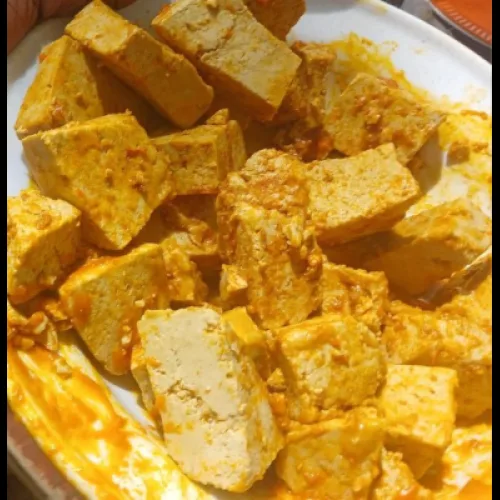
A couple of weeks ago, I traveled to Kwara State, Ilorin precisely and one of those days, we were served this cream-looking, white-looking, soft soyabeans cake-like delicacy. Well, this particular one was stewed in palmoil sauce.
In my curiosity, I asked my fellow foodies, trying to get the name of the fluffy delicacy.
Then I heard “Beske”. This was actually my first encounter with the word. I however, probed further and was told that this is also popularly described as “Tofu”.
The protein enriched delight, I was told, can serve as a better alternative to animal beef, meat and offals.
Very colourful and delightful-looking, I decided to explore and check out the nutritious ways to relish this protein.
In the course of culinary inquiry, I discovered that while tofu originated from ancient China, Beske represents Nigeria’s unique adaptation of soybean curd into a distinct culinary tradition.
The techniques, local identity, community knowledge, and cultural significance surrounding Beske in Kwara State make it worthy of serious documentation and, potentially, a future UNESCO Intangible Cultural Heritage nomination focused on the traditional knowledge and practices of Beske production.
Do you know that across most bustling markets and homes of Ilorin, Kwara State, and many parts of Northern Nigeria, this simple white delicacy has quietly nourished generations, preserving culinary knowledge that has been passed down from one family to another?
So, whether soybeans, soy beans, soyabeans, or soya beans, it is the same protein enrich food. Soybeans is American Enhlish while Soyabean is British.
Soybean or soya bean is a species of legume (Glycine max) native to eastern Asia. It is classified as an oilseed rather than a pulse due to its high oil content and its more popular use as a source of vegetable oil and industrial applications such as biodiesel.
Reports say it has been grown in China for over 5000 years.
Soybean is one of the most versatile crops grown around the world and has a raft of applications including a source of vegetable oil for human food and industrial uses, as a valued protein source in livestock production, for use in preparing a range of human foods such as traditional foods like tofu and soy milk as well as novel uses as a protein isolate and for textured protein.
Soybean also has an almost endless application in industrial products such lubricants, plastics, waxes and a range of intermediate chemicals including fatty acids.
And in more recent times, soybean has been recognised for its health and wellbeing properties and is now used in a range of nutrition bars, cereals, pasta and baked goods.
Soybeans make up about 60% of the overall world oilseed production and are grown and traded across the globe.
They are considered one of the most important of global commodities.
Of the average 260 million tonnes used worldwide each year about 10% is said to be used directly for human foods, about 20% is extracted for oil and the remainder is used for livestock feeds.
Soft, creamy and rich in protein, the soybean curd locally known as Beske is much more than food. It is a cultural expression, a source of livelihood, and a testament to the ingenuity of local communities in transforming a humble crop into a nutritious staple.
Although tofu is widely associated with East Asia, particularly China where historical records trace its origins to over 2,000 years ago, the Nigerian adaptation known as Beske has evolved into a distinctive culinary tradition in Kwara State.
Prepared from soaked soybeans that are ground, cooked, coagulated and pressed into soft white cakes, Beske has become an affordable and highly valued source of protein for many households.
Served fried, steamed or incorporated into soups and stews, Beske is often regarded as an excellent alternative to meat.
Its mild flavour allows it to absorb local spices and seasonings, making it a versatile ingredient in traditional Nigerian cuisine.
Beyond its culinary appeal, it plays a significant role in improving household nutrition, particularly among families seeking affordable protein sources.
Nutrition experts describe tofu as one of the healthiest plant-based foods available.
Thus, Beske is naturally cholesterol-free, low in saturated fat and rich in high-quality protein containing all the essential amino acids required by the human body.
It also provides calcium, iron, magnesium, phosphorus, potassium, zinc and B vitamins, nutrients that support healthy bones, muscle development, heart health and overall wellbeing.
Its low glycaemic index also makes it suitable for people managing diabetes, while its high protein content promotes satiety and supports healthy weight management.
Equally important is the cultural heritage locked into its production.
Across many communities in Ilorin, the knowledge of producing Beske is transmitted from older women to younger generations through observation, practice and family traditions.
From selecting quality soybeans to determining the right stage for coagulation and pressing, the process reflects indigenous knowledge that has endured over time.
The production and sale of Beske also provide livelihoods for women and small-scale, as well as medium-scale entrepreneurs, contributing to local economies and strengthening food security.
This living tradition presents a compelling opportunity for cultural preservation.
UNESCO’s Representative List of the Intangible Cultural Heritage of Humanity does not recognise foods solely because they are delicious or nutritious.
Rather, it celebrates the knowledge, skills, practices and traditions that communities inherit, preserve and transmit across generations.
In this regard, the traditional knowledge surrounding the production of Beske in Kwara State possesses many of the qualities that align with UNESCO’s principles.
Recognising Beske as part of Nigeria’s culinary heritage would not merely celebrate a local delicacy. It would acknowledge the cultural identity of the communities that have sustained the tradition for decades, preserve indigenous food-processing knowledge and promote sustainable, plant-based diets that contribute to food security and environmental sustainability.
Despite its significance, Beske remains largely undocumented outside its local communities.
Increased research, documentation and public awareness are essential to preserving this culinary tradition before valuable indigenous knowledge is lost to changing lifestyles and the growing influence of processed foods.
Owing to the fact that Nigeria continues to explore ways of safeguarding its rich cultural heritage, Beske stands as a reminder that heritage is not confined to monuments, festivals or historical sites.
It equally resides in the everyday foods that tell stories of resilience, identity and community.
By documenting and promoting the traditional knowledge surrounding Beske production, Nigeria has an opportunity to elevate an overlooked culinary treasure onto the national and, potentially, the global stage through UNESCO’s Intangible Cultural Heritage framework.
Sometimes, the most extraordinary heritage is found not in grand landmarks, but on the humble plates shared around family tables.


Comments
Start the conversation about this story.