





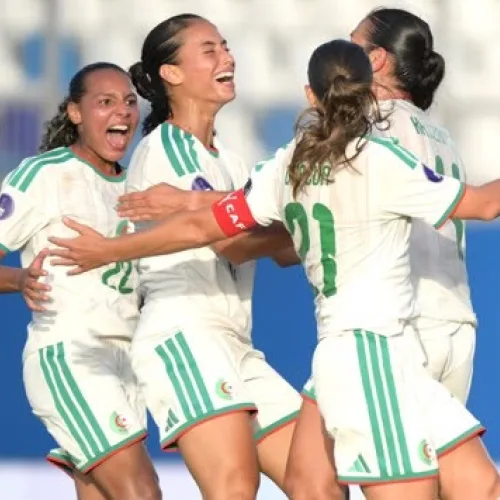
Algeria booked a historic place at the 2027 FIFA Women’s World Cup in Brazil after staging a dramatic second-half comeback to defeat Côte d’Ivoire 2-1 in the quarter-finals of the 2026 TotalEnergies CAF Women’s Africa Cup of Nations in Morocco on Saturday.
Second-half goals from Ines Khiri and Amira Ould Braham overturned an early deficit after Ines Konan had given Côte d’Ivoire the lead, sending the Algerian women’s national team into the semi-finals of the continental competition for the first time in their history. Blueprint reports
The victory represents a major milestone for the Fennecs, who not only reached the last four of the Women’s Africa Cup of Nations for the first time but also secured automatic qualification for the 2027 FIFA Women’s World Cup.
The four semi-finalists at the Morocco 2026 tournament automatically qualify as Africa’s representatives at the World Cup in Brazil, making Saturday’s quarter-final victory one of the biggest results in the history of Algerian women’s football.
For coach Farid Benstiti and his players, the triumph was also a measure of redemption after the heartbreak of their previous quarter-final appearance, when they were eliminated by Ghana on penalties following a goalless draw.
This time, Algeria refused to allow history to repeat itself.
Despite falling behind in the first half, Benstiti’s side showed resilience and composure to turn the contest around and secure a famous victory.
Côte d’Ivoire start on the front foot
The quarter-final brought together two sides with contrasting strengths and approaches.
Côte d’Ivoire entered the encounter as one of the most dangerous attacking teams in the competition after scoring eight goals during the group stage, while Algeria had built their campaign on a reputation for defensive organisation and discipline.
The Ivorians settled into the game more quickly and took the initiative as they sought to test Algeria’s well-organised back line.
Their positive approach was rewarded in the 30th minute when Ines Konan broke the deadlock.
Konan finished confidently to give Côte d’Ivoire the lead and cap an impressive opening period for the Lady Elephants, who appeared capable of building on their attacking momentum.
Algeria were also forced into an early change after Morgane Ikene was unable to continue because of injury, with Morgane Belkhiter coming into the contest.
The situation became even more challenging for Algeria as Côte d’Ivoire continued to threaten, but the complexion of the match changed dramatically before the interval.
Red card changes the complexion
Côte d’Ivoire were reduced to 10 players after Habibou Ouedraogo was shown a red card before half-time.
The dismissal handed Algeria a significant numerical advantage and created an opportunity for Benstiti to rethink his approach for the second half.
Although the Fennecs went into the break trailing, they returned with greater urgency and determination.
The extra player gave Algeria more control of possession, while Côte d’Ivoire were forced to work harder defensively to protect their narrow advantage.
Benstiti recognised the changing momentum and made decisive alterations after the restart.
Benstiti’s substitutions inspire comeback
The introduction of Ikram Adjabi and Ines Khiri added fresh energy and greater attacking purpose to the Algerian side.
The tactical changes quickly produced the desired effect.
Khiri rewarded her coach’s faith in the 58th minute when she scored the equaliser, bringing Algeria level and swinging momentum firmly in favour of the North Africans.
The goal transformed the atmosphere around the contest as Algeria sensed that history was within reach.
However, Côte d’Ivoire were presented with an immediate opportunity to regain the lead when they were awarded a penalty four minutes later.
Rebecca Elloh stepped forward with the chance to put her side back in front, but she failed to convert from the spot.
The missed penalty proved to be a major turning point.
Rather than allowing the setback to disrupt their concentration, Algeria immediately took advantage of the reprieve.
Just two minutes after the penalty miss, Marine Dafeur produced an excellent pass to release Amira Ould Braham.
The Algerian forward remained composed and finished calmly in the 64th minute to complete the comeback and give the Fennecs the lead for the first time.
Algeria hold firm under pressure
Despite playing with 10 players, Côte d’Ivoire refused to surrender their World Cup dream without a fight.
Coach Reynald Pedros introduced fresh players as the Ivorians pushed forward in search of an equaliser that would have forced the match into extra time.
But Algeria’s defensive discipline, which had been one of the major features of their tournament, came to the fore once again.
The Fennecs remained organised and composed as they repelled late pressure from the Ivorians.
Goalkeeper Chloé N’Gazi also played an important role in protecting the advantage, organising her defence and helping Algeria withstand the sustained pressure during the closing stages.
Côte d’Ivoire continued to search for a way back into the match, but Algeria held their ground until the final whistle.
The scenes that followed reflected the enormity of the achievement.
World Cup dream becomes reality
The victory ensured Algeria would take their place in the semi-finals of the Women’s Africa Cup of Nations for the first time.
More importantly, it confirmed their place at the 2027 FIFA Women’s World Cup in Brazil.
It will mark a historic breakthrough for Algeria on the global stage, with the Fennecs earning their place among the nations that will represent Africa at the expanded qualification stage.
Benstiti had spoken before the match about the progress of his side and their determination to move beyond the pain of last year’s quarter-final disappointment.
His players responded in the best possible manner.
Having built their success on a strong defensive foundation, Algeria also demonstrated resilience, tactical awareness and attacking quality when it mattered most.
The comeback victory showed another side of a team that had already impressed during the tournament with its ability to remain disciplined and difficult to break down.
Côte d’Ivoire’s World Cup hopes remain alive
While Algeria celebrated automatic qualification for Brazil 2027, Côte d’Ivoire’s hopes of reaching the World Cup are not yet over.
Under the tournament’s qualification system, the four losing quarter-finalists will compete in an African play-off.
The two winners will progress to the FIFA Women’s World Cup inter-confederation play-offs, where they will have another opportunity to secure a place at the global tournament.
For Côte d’Ivoire, therefore, the defeat represents a setback but not the end of their World Cup ambitions.
The Lady Elephants will now have to regroup and focus on the additional qualification route as they seek to remain in contention for a place in Brazil.
Their elimination should also not overshadow what has been an encouraging tournament.
After returning to the Women’s Africa Cup of Nations following a lengthy absence, Côte d’Ivoire demonstrated that they are capable of competing with some of the continent’s established women’s football powers.
A day Algeria will never forget
For Algeria, however, Saturday’s result will take its place among the greatest achievements in the history of the women’s national team.
In one memorable afternoon, the Fennecs achieved two major milestones, reaching the semi-finals of the TotalEnergies CAF Women’s Africa Cup of Nations for the first time and securing a historic ticket to the 2027 FIFA Women’s World Cup.
The comeback against Côte d’Ivoire also underlined the growth of the Algerian team under Benstiti and their growing status in African women’s football.
From the disappointment of last year’s quarter-final exit to the celebrations of Morocco 2026, Algeria have completed a remarkable journey.
Their attention will now turn to the semi-finals as they seek to continue an already historic campaign.
But regardless of what happens next, the victory over Côte d’Ivoire has ensured that the 2026 Women’s Africa Cup of Nations will be remembered as the tournament where Algeria finally broke new ground and announced their arrival on the biggest stage of African women’s football.
Comments
Start the conversation about this story.