





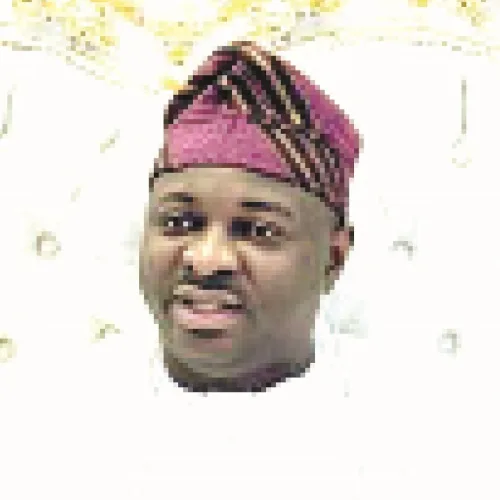
His Imperial Majesty, Oba Sulaiman Adekunle Bamgbade Ayodele III, Arole Olofin Ogunfunminire, is the Olofin of Isheri land and Adimula of the Awori Kingdoms, Ogun State. In this interview with SUBAIR MOHAMMED, he speaks about his life journey, especially his transition from the military and civil service to the throne of his forebears.
WHO are the people that have been the greatest influence in your life, and what values did they instil in you?
My greatest influences have been my parents and my military background. During my years in the military, I met many officers who shaped my character. I also had mentors in the civil service.
Since becoming a traditional ruler, I have maintained close relationships with respected monarchs, including the Alake of Egbaland, Oba Gbadebo Adedotun; the Oniru of Iru Kingdom and the Ooni of Ife. Their guidance has also influenced my leadership style.
Tell us about your journey through military training?
I joined the Nigerian Military School at a very young age, around 12 years old. That experience defined my life. From there, I progressed into a professional military career. The discipline, order and values I learnt have remained with me throughout my life. I believe they have shaped my personality and leadership.
Many people described you as calm and calculated. Is that a product of your military background?
Absolutely. Military training teaches discipline, patience and self-control from an early age. Those qualities have stayed with me and continued to influence the way I approach leadership.
ALSO READ: Sanwo-Olu inspects vandalised bridge, assures Lagosians of structural safety
What has been your most cherished moment on the throne?
There have been many fulfilling moments. One of the most significant was the reconstruction and commissioning of this palace. The palace was ancient and had remained largely unchanged for generations. Rebuilding it into a befitting royal residence is one of my proudest achievements.
What other defining moments stand out in your life?
I was born and raised on Bamgbose Street on Lagos Island before attending the Nigerian Military School in Zaria.
After my military career, I joined the Lagos State Civil Service. While there, I furthered my education, obtaining a Bachelor’s degree in Computer Science, a Postgraduate Diploma in Civil and Environmental Engineering and a Master’s degree in Systems Engineering.
I later established my own engineering company before I was selected as the Olofin of Isheri. Looking back, every stage of my journey prepared me for the throne, but being confirmed as the next Olofin completely transformed my life.
Tell us about your family life?
I spent much of my childhood in the military environment. Today, I am happily married to my Olori, and we are blessed with four children—two boys and two girls.
How did your upbringing prepare you for the responsibilities of the throne?
The combination of military discipline and civilian experience prepared me well. Beyond that, I have served as Assistant Secretary of the Southern Nigeria Traditional Rulers Council, under the leadership of the Ooni of Ife. Those responsibilities exposed me to broader traditional leadership and governance issues, which have strengthened my capacity as a monarch.
Can you explain the historical and cultural significance of Isheri?
Isheri is regarded as the cradle of the Awori people. Our progenitor, Olofin Ogunfunminire, migrated from Ile-Ife and founded Isheri.
According to tradition, during a period of drought, he consulted the Ifa oracle in Ile-Ife and was instructed to place sacred items on the river and follow them downstream. The point where the vessel eventually sank became significant, and from that event came the name “Awori.”
From Isheri, descendants spread out to establish many Awori settlements, including Igbesa, Agboyi, Ajiran and others. The Idejo lineage, which includes royal families such as the Oniru and Elegushi, also traces part of its ancestry to this migration. That is why Isheri remains the ancestral home of the Awori people.
Your community is riverine and hosts major oil pipelines. What has been the impact?
The pipelines have had more negative than positive effects on our people. Before I became king, pipeline vandalism was common in neighbouring communities, and the consequences affected Isheri as well.
Oil pollution has destroyed our rivers. Our people were traditionally fishermen and farmers, but those livelihoods have been severely disrupted. Fishes are no longer abundant, the water is polluted and many residents have been forced to seek other means of survival.
What makes Isheri unique?
Economically, Isheri is home to the largest cattle market in the South-West, popularly known as Isheri Kara Market.
We are also surrounded by water, giving the town a unique riverine landscape that attracts people to settle here.
What are your expectations regarding the pipelines and their impact on the community?
Our people deserve compensation through meaningful development. The destruction of our rivers has taken away our traditional occupations.
One major intervention we need is a commercial jetty. The Ogun River connects us to the Lagos Lagoon and provides access to places like Lagos Island, Ikorodu, Agboyi and Mile 12. Developing water transportation would significantly improve the lives of our people.
Has the presence of the pipelines brought any meaningful infrastructure?
Unfortunately, no. The negative impact far outweighs any benefits. The rivers where we once swam and sourced drinking water are now polluted. Government intervention has been inadequate, and our people continue to suffer.
Have you engaged the government on these concerns?
Yes. I recently wrote to the government requesting intervention. They acknowledged our letter, but we are still waiting for concrete action.
Looking back on your five years on the throne, what developments have you brought to Isheri?
Despite Isheri’s historical importance, many basic facilities were lacking. We facilitated the establishment of the community’s first secondary school. We relocated and rebuilt the primary healthcare centre to provide better medical services.
Access to justice was another challenge because residents had to travel long distances to attend court. I wrote to the Chief Judge of Ogun State, who graciously approved the establishment of a High Court. I personally constructed the court buildings and handed them over to the Ministry of Justice.
We have also built a community hall and reconstructed the palace. These are some of the achievements we have recorded within five years.
What role should traditional rulers play in addressing insecurity?
Traditional rulers should be formally integrated into Nigeria’s security architecture. As Assistant Secretary of the Southern Nigeria Traditional Rulers Council, I also served on the committee established by the National Council of Traditional Rulers to propose constitutional roles for traditional institutions.
We recommended that traditional rulers be represented on security councils at the federal, state and local government levels because we handle many community disputes before they escalate.
For example, we successfully resolved a major conflict involving traders at the South-West’s largest cattle market before it became a wider security issue. Traditional rulers possess valuable grassroots intelligence that can strengthen national security.
As you mark your fifth anniversary, what would you like from government?
My greatest wish is the construction of a commercial jetty. Many residents commute daily to Ikorodu, Mile 12 and other riverine communities. Efficient ferry services would provide a faster and more affordable alternative to road transportation while boosting economic activities.
What message do you have for your subjects and the Awori people?
Since ascending the throne, I have institutionalised the Awori Summit, a biennial gathering of prominent Awori sons and daughters from Lagos and Ogun states to discuss our culture, heritage and development.
We have successfully held two editions, and another will take place this September. I encourage all Awori sons and daughters to continue supporting this initiative as we work together for the progress of our people.
What activities have been planned for your fifth coronation anniversary?
Activities include the Odun Aje Festival, Boat Regatta, chieftaincy installations, the Awori Summit, Jumat service, Fuji Night, and the grand finale on September 20. The events are designed to celebrate our culture, promote unity and showcase the rich heritage of the Awori people.
Comments
Start the conversation about this story.