





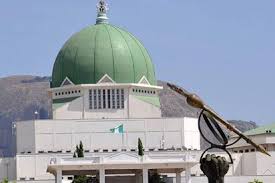
Perceived procedural errors observed from passage of State Police Bill at both Chambers of the National Assembly in June this year, to recent request for memoranda from Nigerians by the executive on National Policing Bill, are examined by Blueprint.ng correspondent.
Legislative procedures for consideration and passage of Bills
Bills whether private or executive, in line with parliamentary practices and as specified by relevant provisions of the constitution and rules of the Senate or House of Representatives, have three critical stages of consideration which are first, second and third readings.
While the first reading of a bill centers on just introduction or listing for consideration, the second and third reading stages are the most critical, entailing exhaustive debates among lawmakers.
The debates are based on principles and objectives of the bill, as well as inclusion of inputs from critical stakeholders at the public hearing stage and final clause by clause consideration of report on it in the hallowed chambers for passage and onward transmission for presidential assent.
Presidential assent is after the required legislative concurrence by both the Senate and the House of Representatives and even 2/3 of the States’ Houses of Assembly if it is a bill on constitution amendment like the State Police Bill.
The State Police Bill
However, the State Police Bill, expeditiously considered and passed at different times in both the Senate and the House of Representatives in June and July this year, perhaps because of the urgency for decentralisation of policing in the country, did not pass through the required legislative procedures, particularly the public hearing aspect after second reading, for inclusion of inputs from critical stakeholders outside the National Assembly.
For example, in the Senate, the bill which came as an Executive bill through communication received from President Bola Ahmed Tinubu on Tuesday , 23rd June , 2026, was listed for first reading the following day (Wednesday, 24th June, 2026) and made to go through second reading the same day and even passed for third reading the very day without any public hearing for inputs from critical stakeholders among other Nigerians.
The expeditious consideration and passage the Senate gave the very important bill was first thought was done to be on the same wavelength with the House of Representatives which had earlier passed the bill as an in – house legislation on the 11th of June, 2026, only to also on July 23rd 2026, rescind its earlier decision and through similar communication from President Tinubu, considered and passed the executive bill that day.
Enters public hearing on a draft bill from the Executive
While journalists covering both chambers of the National Assembly and concerned Nigerians generally, are seeking information on whether the bill has been transmitted to the various States’ Houses of Assembly for required 2/3 concurrence, a thunder bolt news came from the Villa Monday this week, that President Tinubu would receive final draft copy of a National Policing bill from the presidential working group after receiving memoranda from critical stakeholders.
The news which came through a statement signed by the Special Adviser to the President (Information & Strategy), Bayo Onanuga, read: ” The Presidential Working Group on the proposed National Policing Bill has invited Nigerians to submit memoranda and policy proposals as part of efforts to establish a comprehensive legal and operational framework for State Policing.
“Chief of Staff to the President and Chairman of the Working Group, Mr Femi Gbajabiamila, announced this on Monday after the Working Group’s meeting at the State House, Abuja.
“The Working Group is reviewing the Police Act 2020, the Police Service Commission framework, police regulations, and other relevant laws to support the development of an effective, modern policing system.
“The proposed framework will set national minimum standards, define state readiness and grant certification, clarify jurisdictional responsibilities, ensure independent oversight, uphold human rights, and guarantee sustainable funding. It would also spell out an orderly transition to a dual-policing structure.
“The call for memoranda will run for two weeks, allowing citizens, professionals, civil society, security agencies, state and local governments, academics, and other stakeholders to contribute. Submissions will be reviewed and integrated into the draft bill, which will then be subject to further national consultation before being finalised and sent to the National Assembly.
“The Working Group has adopted a seven-week work programme running from July 27 to September 14, 2026. The draft Executive Bill is scheduled for presentation to President Bola Ahmed Tinubu on September 3, 2026, with national consultations to follow before the final approval.
“The new National Policing Bill will set out requirements for recruitment, training, oversight, funding, and transition arrangements to ensure credible, effective, and accountable policing nationwide.
“A proposed State Police Service must demonstrate that it has credible arrangements for recruitment, vetting, training, pay, pensions, equipment, custody, complaints, discipline, data, firearms control, independent oversight and financial sustainability before it begins policing,” Gbajabiamila said .
Perceived error
Though as clearly stated in the above press statement, the proposed National Policing Bill is different from the already passed State Police Bill by both chambers of the National Assembly, but memoranda being requested for by the executive from critical stakeholders is like conducting public hearing which supposed to be an exclusive preserve of the legislature.
Perhaps, similar public hearing was conducted by the executive on State State Police Bill before transmitting them to the National Assembly which made both chambers to expeditiously consider and pass it in one sitting each, without any legislative rigour as important as the legislation is.
Secondly, the proposed National Policing bill being operational guideline for running of State Police and policing generally in the country, supposed to have been submitted along side the State Police bill in June for robust legislative inputs because laws that affect every Nigerian should emerge from an open legislative process where diverse opinions are heard, debated and reflected where appropriate.
Perhaps for integrity protection stake, both chambers of the National Assembly may when it receives the proposed National Policing Bill, not give it one – sitting expeditious consideration and passage but allow it to go through the required legislative processes and procedures from first reading to second and third reading respectively at different sessions, because as often said, anything worth doing, is worth doing well.
From contentious to consensus proposal
However, despite perceived procedural errors in the emerging State Police Legislation, it is a welcome development in the face of insecurity bedeviling the nation, the very reason the proposal that has been contentious over the years, suddenly turned into a generally approved one, through alterations of sections 214 to 216 of the 1999 constitution (as amended) by moving policing from exclusive to concurrent list.
Section 214 establishes the Nigeria Police Force (NPF) as the sole national police force and explicitly prohibits the establishment of any other police force by the federal or state governments.
Section 215 outlines the appointment of the Inspector-General of Police and the operational control and command of the force while section 216 grants power relating to the delegation of functions of the Nigeria Police Council.

Comments
Start the conversation about this story.