





Yemen’s Iran-backed Houthi rebels have claimed responsibility for a series of deadly attacks this week, intensifying their confrontation with Saudi-backed Yemeni forces and raising concerns that the conflict could widen across the region.
The attacks have killed dozens of civilians and soldiers and targeted Saudi-linked oil tankers travelling from Red Sea ports through the Bab el-Mandeb Strait toward the Gulf of Aden and international markets.
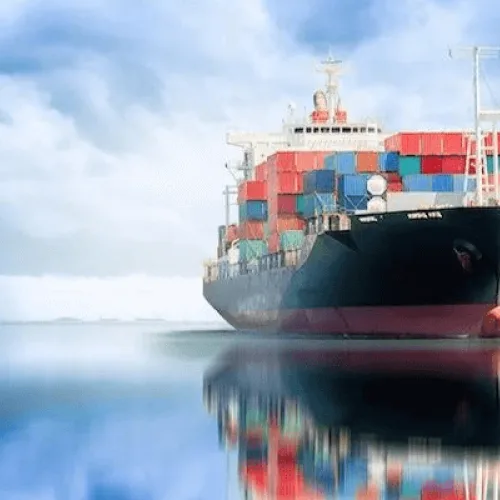
The Bab el-Mandeb is a critical maritime chokepoint linking the Red Sea with the Gulf of Aden. Before the latest escalation, about 12% of global trade, including roughly a quarter of container traffic, passed through the waterway on routes connecting Europe and Asia through Egypt’s Suez Canal.
Fewer tankers have crossed the strait since the attacks began, according to shipping data from analytics company Kpler.
The escalation reflects how Iran “is scaling up pressure on the United States in Yemen through its close ally,” Yemen researcher Afrah Nasser wrote in an analysis for the nonprofit DAWN.
“The escalation is directly connected to regional developments,” she wrote.
The latest Houthi attacks, including one in northeastern Yemen on Friday morning, came weeks after the rebels announced a blockade on Saudi-linked vessels leaving the strait. The Houthis say the move is retaliation for Saudi Arabia’s yearslong blockade of Yemen and recent attacks on areas under their control, including the capital, Sanaa.
A Houthi attack on Thursday injured 11 civilians, including a 4-year-old child, according to the Saudi military. Separate attacks on Saudi-backed military positions in eastern Yemen killed at least 17 soldiers, according to SABA, a news agency affiliated with Yemen’s internationally recognized government.
Houthi spokesman Nasruddin Amer said on X on Friday that the group would continue targeting Saudi military buildups in an effort to force Riyadh to lift its blockade of Yemen.
Shipping risks grow
The renewed attacks have heightened concerns about another disruption to global maritime trade at a time when Iran’s conflict with the United States has already threatened shipping through the Strait of Hormuz.
In Hormuz, even sporadic attacks have been enough to discourage vessels from travelling through the waterway by increasing security risks and insurance costs. Analysts warn that a similar situation in Bab el-Mandeb could disrupt two of the world’s most important shipping routes simultaneously, putting additional pressure on global trade and energy supplies.
Bab el-Mandeb has served as an alternative route for Gulf oil exports since the Strait of Hormuz came under threat, allowing more tankers from Saudi ports to reach international markets.
Three Houthi officials told The Associated Press in July that the group had spent months preparing plans to disrupt shipping through Bab el-Mandeb. Although the Houthis do not control the Yemeni coastline directly bordering the strait, they hold territory less than 100 kilometres away.
The officials spoke on condition of anonymity because they were not authorized to discuss the plans publicly.
With Bab el-Mandeb and Hormuz increasingly vulnerable, options for transporting Gulf oil and gas to global markets are limited. Alternatives include pipelines across the Arabian Peninsula, routes through Egypt’s Suez Canal or a much longer journey around South Africa’s Cape of Good Hope.
Conflict rooted in Yemen’s civil war
Yemen’s civil war began in 2014 after Houthi forces seized Sanaa and large parts of northern Yemen, forcing the internationally recognized government into exile.
Saudi Arabia subsequently led an international coalition against the rebels and imposed an air and sea blockade on Houthi-controlled areas, although the restrictions have eased in recent years.
The Houthis say their attempt to restrict Saudi-linked shipping through Bab el-Mandeb is intended to pressure Riyadh into ending the blockade.
Ahmed Nagi, a senior Yemen analyst at the International Crisis Group, said the strategy also serves Iran’s interests as the United States continues its military campaign against the Houthis.
“From Iran’s perspective, opening additional pressure points across the region gives it more leverage,” Nagi told the AP last month. “The Houthis provide Tehran with influence over one of the world’s most important maritime choke-points.”


Taofeek Oyedokun with Agency Report
Taofeek Oyedokun is a correspondent at BusinessDay with years of experience reporting on political economy, public policy, migration, environment/climate change, and social justice. A graduate of Political Science from the University of Lagos, he has also earned multiple professional certificates in journalism and media-related training. Known for his clear, data-driven reporting, Oyedokun covers a wide range of national and international socioeconomic issues, bringing depth, balance, and public-interest focus to his work.
Comments
Start the conversation about this story.