





The Nigerian Onion Producers, Processors and Marketers Association of Nigeria (NOPPMAN) has called for an urgent roundtable involving the Federal Government, ECOWAS and countries importing Nigerian onions to negotiate and sign a comprehensive Memorandum of Understanding (MoU) to safeguard cross-border onion trade.
The association said the proposed agreement should not be restricted to Ghana but must cover all countries that buy onions from Nigeria, arguing that a uniform framework was necessary to prevent recurring trade disputes and protect exporters from avoidable losses.
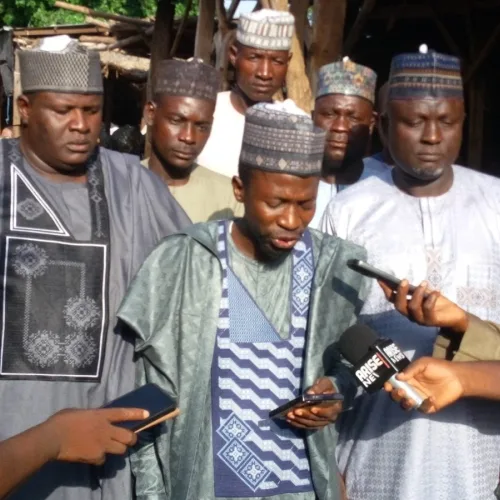
President of NOPPMAN, Alhaji Isa Aliyu, made the call on Sunday while addressing journalists at the onion market in Kara, Sokoto State.
Aliyu said Nigerian onion exporters had suffered an estimated N1.2 billion in losses following delays and restrictions on the offloading of their consignments at the Kotoku Market in Ghana.
He said NOPPMAN wanted stakeholders to move away from repeated, temporary interventions and establish a permanent mechanism governing Nigeria’s onion exports across the continent.
“Our demand is clearly for us to resume onion exportation to any other country, not even Ghana itself. We want to have a kind of permanent solution to this little challenge that is facing cross-border trade in Africa,” Aliyu said.
According to him, the proposed MoU should be signed between Nigeria and every country importing its onions and should be anchored on the ECOWAS Trade Liberalisation Scheme (ETLS), the African Continental Free Trade Area (AfCFTA) and other applicable regional trade agreements.
“We want to have a memorandum of agreement with any country that is coming to buy our onion or any country that we are going to be exporting our onion to,” he said.
Aliyu said the agreement should establish clear rules on market access, movement of trucks, allocation and offloading of consignments, payment arrangements and dispute resolution.
He also urged ECOWAS to serve as a neutral mediator and observer, saying any country or trading group that violated the terms of the agreement should be sanctioned in accordance with the provisions of the pact.
The NOPPMAN president clarified that the immediate challenge was with Ghana and not other countries importing Nigerian onions.
“No, we don’t have any problems in any other country apart from Ghana. It’s only Ghana,” he said.
He explained that the decision to halt exports to other destinations was a preventive measure aimed at ensuring that similar problems did not occur in other markets.
Aliyu alleged that Nigerian onion trucks had been subjected to prolonged delays at the Kotoku Market, with consignments reportedly being offloaded at the rate of only two trucks per day.
He said the delays were particularly damaging because onions were highly perishable, resulting in consignments deteriorating and causing significant financial losses to exporters and truck operators.
According to him, NOPPMAN had engaged relevant authorities in Nigeria and Ghana to resolve the dispute, including a meeting held in Ghana on August 5, 2026, involving government officials, diplomats and other stakeholders.
He alleged that Ghana’s Deputy Minister of Trade, Agribusiness and Industry, Mr Samson, directed the affected traders to offload the Nigerian trucks, but the directive was allegedly not implemented.
“To our greatest surprise, they refused to offload it. They went on with their own restriction of offloading only two per day, when the onion had already been there for almost a week,” Aliyu alleged.
He stressed that the association’s position was not against Ghanaian traders or the Ghanaian people, but against what it described as restrictions on legitimate cross-border trade.
“Our concern is not with the people or the traders of Ghana. Nigeria and Ghana have longstanding economic, diplomatic and people-to-people relations, and we remain committed to peaceful and mutually beneficial trade between our two countries,” he said.
Aliyu said the recurring nature of the dispute demonstrated the need for a permanent solution rather than repeated government interventions whenever a crisis occurred.
“We have been going back and forth. This thing has been recurring. So for now, we have stopped the trade,” he said.
He called on all relevant stakeholders to urgently convene the proposed roundtable and sign an agreement that would protect both Nigerian exporters and foreign buyers.
“We want to come up with a framework that is under ETLS or AfCFTA, so that it will protect both the exporters and the importers from the destination countries.”
Aliyu said NOPPMAN would resume onion exports once the proposed framework was agreed upon and signed.
“Once this is done, we will resume our onion activities, onion trade,” he said.
Comments
Start the conversation about this story.