





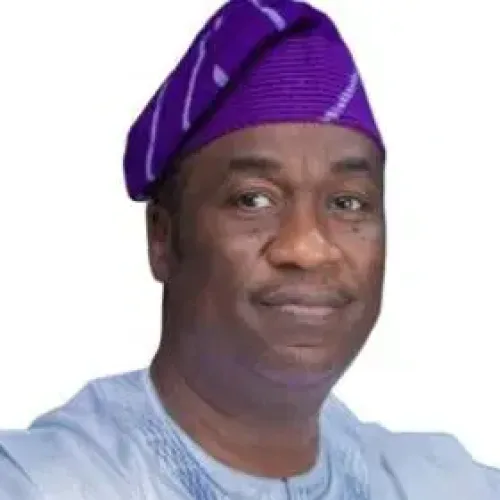
As Lagos grapples with the problem of rising waste generation across the state, the Deputy Governor, Dr Kadri Obafemi Hamzat, has urged residents to complement government efforts by taking greater responsibility for their environment, properly disposing of waste and complying with environmental regulations.
He made the call during a live interview on ‘Daily Digest with Jim Disu’ on Nigeria Info FM, where he stressed that a cleaner Lagos ultimately depends on the collective actions of government, operators and residents.
Hamzat, who noted that a more organised and sustainable waste-management system was important and essential in Lagos as the state continues to experience rapid population growth and urbanisation, attributed some of the state’s waste-management challenges to the significant increase in the volume of waste generated daily.
The Deputy Governor added that the figure had exceeded the government’s initial projections, a development he linked to the increase in waste generation due to expanding population and the growing number of people living and operating informally across the state.
He added that these factors had further increased the volume of waste requiring collection and disposal, saying: “The government had initially estimated that Lagos generated about 13,000 tonnes of waste daily, but subsequently discovered that the volume had risen to approximately 17,000 tonnes.
“The increase had placed additional pressure on the Lagos State Waste Management Authority (LAWMA) and other waste-management operators, making effective planning and management more difficult.”
According to him, Lagos currently has about 420 Private Sector Participation (PSP) operators involved in waste collection, while disruptions affecting waste-collection trucks had also contributed to the challenges experienced in some parts of the state.
He cautioned against blaming LAWMA for the situation, noting that the agency had been saddled with a responsibility whose scale was not initially anticipated.
The Deputy Governor stressed the importance of accurate data in addressing the challenge, noting that proper planning and effective management could only be achieved when the actual scale of a problem was known.
“You cannot manage what you cannot measure,” Hamzat said, even as he stressed the need for the state to continually review its waste-management strategies in line with the realities of a rapidly growing metropolis.
He, therefore, called on Nigerians to embrace a renewed sense of responsibility and patriotism, urging the citizens to protect public assets, respect the law, uphold family values and contribute to the development of the country.
Hamzat, who also underscored the need for a national reset anchored on education, strong family values, responsible citizenship and effective enforcement of laws, stated that rebuilding Nigeria’s value system must begin with the education and upbringing of children.
Added to this, the Deputy Governor explained that the family, schools, religious institutions, government and other segments of society all have important roles to play in shaping responsible citizens.
He said: “What Nigerians have are our values. Education is key and we must make sure that all our children are well educated. We have to go back and start again. The major pillars are the family, school, education and our laws. We must strengthen all of these to make sure that we do not lose our values.”
Please follow and like us:
Comments
Start the conversation about this story.