





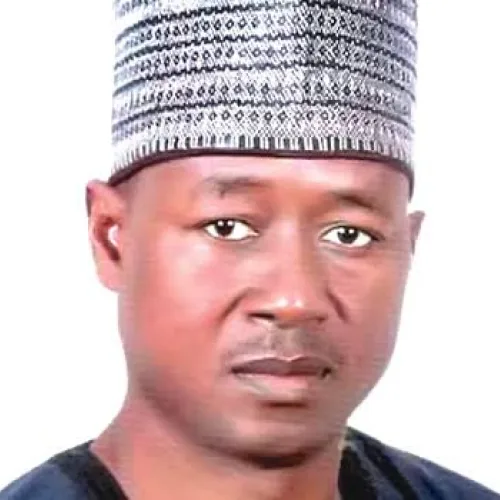
A political analyst and chieftain of the ruling All Progressives Congress (APC), Hon Umar D. Duhu, has called on Christian and Muslim clerics to refrain from partisan politics and avoid statements capable of deepening religious and political divisions in Adamawa State.
Duhu made the call in an open letter addressed to Rev. Robert Tonborokai Gajere, in which he criticised the cleric’s recent comments on the political trajectory of Adamawa State.
He said religious leaders, by virtue of the offices they occupy, are expected to serve as voices of moderation, peace and unity, particularly during periods of heightened political tension.
According to Duhu, while clergy members, like every other Nigerian, have the constitutional right to express their opinions, such freedom should be exercised responsibly and without resorting to religious sentiments or partisan rhetoric.
He took particular exception to the claim that “Christians played the major role in bringing Fintiri to power,” arguing that framing electoral outcomes along religious lines could further polarise the state.
Duhu said elections are determined by votes cast, collated and declared in accordance with the law, adding that disputes over electoral outcomes should be handled through the appropriate legal channels rather than through religious narratives.
“When the pulpit is converted into a campaign podium, and when consecrated voices descend into partisan analysis and epithets such as ‘bad political analyst who didn’t pass through the four corners of the classroom,’ we risk the erosion of institutional credibility and public trust,” he said.
The APC chieftain argued that the Church and other religious institutions could lose their moral authority if they are perceived as partisan political organisations.
He urged religious leaders to remain fathers and mothers to all, regardless of their religion, political affiliation or geographical background.
Duhu also addressed comments attributed to Sheikh Jingir during a national television programme, where he said the description of the “People of the Book” as “infidels” amounted to hate speech.
He called on the Nigerian Inter-Religious Council, the National Orientation Agency and other relevant authorities to publicly condemn what he described as inflammatory religious rhetoric.
According to him, religious leaders and public figures who participate in national discussions have a responsibility to promote peaceful coexistence rather than allow statements capable of fuelling religious tension to go unchallenged.
“The dignitaries and moderators present at that broadcast had a moral and civic duty of care to interject and caution,” Duhu said.
He further urged both Christian and Muslim leaders to embrace responsible speech and avoid rhetoric that could damage the peaceful coexistence of communities.
Duhu said Adamawa State remains a reflection of Nigeria’s religious and political diversity and warned that the consequences of religious polarisation could extend beyond individual elections.
He noted that political figures such as Ahmadu Fintiri, Aisha Binani, Jibrilla Bindow and Elisha Abbo would come and go, but the damage caused by religious division could persist long after political contests had ended.
“Politicians will come and go, Fintiri, Binani, Bindow, Abbo, and others will contest and serve. But the damage done when religious leaders legitimize division can outlive many electoral cycles,” he said.
Duhu called on clerics and political actors to prioritise peace, unity and the rule of law, stressing the need for public discourse to be guided by mutual respect and love for one another.
“May God grant us wisdom to build bridges instead of barricades,” he added.
Comments
Start the conversation about this story.