





The Economic and Financial Crimes Commission has recovered more than N115bn and $84m in outstanding statutory levies owed the Niger Delta Development Commission by oil companies, the agency told the Senate on Wednesday.
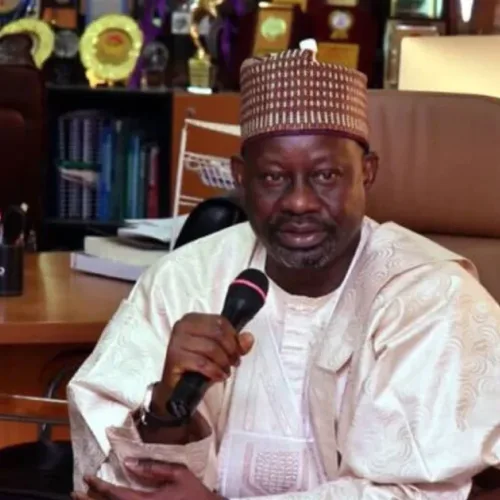
The disclosure was made before the Senate Public Accounts Committee, chaired by Senator Ibrahim Dankwambo, during the committee’s ongoing investigation into issues raised in the 2021–2023 Nigeria Extractive Industries Transparency Initiative Oil and Gas Industry Audit Report.
Representing the anti-graft agency, Francis Usani said the commission investigated 43 oil companies following queries raised in the NEITI audit, with 24 companies operating in the oil-rich Niger Delta found to have outstanding liabilities arising from the three per cent statutory levy payable to the NDDC.
According to Usani, the 24 companies were initially found to owe N76.88bn and $81.08m, while 19 others were cleared after the investigation.
“At the commencement of investigation, EFCC invited 43 oil companies, out of which 24 operating within the Niger Delta were found to have outstanding liabilities in the sums of N76,883,705,907.17 and $81,076,655.00, while the remaining 19 other oil companies were given a clean bill of health,” Usani told the Senate Committee.
He said the EFCC’s intervention prompted some of the affected companies to settle their obligations directly with the NDDC.
Usani disclosed that the companies had paid N6.71bn and $16.99m directly to the commission.
He further explained that the EFCC had released N73.37bn and $67.07m of the recovered funds to the NDDC, while N3.51bn and $14.01bn remained in the commission’s recovery account.
“Out of the sums so far recovered by the commission on behalf of NDDC, total sums of N73.37bn and $67.07m have been released to NDDC, leaving the balance of N3.51bn and $14.01m in EFCC’s recovery account,” he said.
The latest disclosure adds a financial dimension to the Senate’s wider examination of revenue shortfalls and unresolved liabilities identified in NEITI’s audit of Nigeria’s oil and gas sector.
Explaining the scope of the investigation, Usani said the EFCC focused primarily on the unpaid three per cent statutory levy due to the NDDC, as identified in the NEITI audit.
He, however, clarified that the commission’s investigation did not rule out the possibility of other outstanding statutory obligations and taxes owed to the Federal Government.
“The EFCC focused on one primary pillar identified in the NEITI report, i.e., unpaid three per cent statutory levies due to NDDC, but we did not lose sight of the fact that there could be other unpaid statutory obligations and taxes due to the Federal Government,” Usani said.
The disclosure is significant given the NDDC’s statutory responsibility for the development of the Niger Delta region, where oil and gas exploration and production have generated substantial environmental and socioeconomic concerns over the years.
The three per cent levy forms part of the statutory funding framework for the commission and is intended to support development interventions in the oil-producing region.
The Senate committee is examining the extent to which oil companies have complied with their financial obligations and whether failures to remit statutory payments contributed to revenue leakages in the sector.
Senate summons oil chiefs
As the EFCC presented details of its recovery efforts, the Senate committee moved to compel chief executives of major oil companies to personally respond to queries raised against their companies in the NEITI audit report.
The committee rejected an attempt by TotalEnergies EP Nigeria Limited to have a representative appear on behalf of its management, insisting that the company’s managing director must personally answer questions before the panel.
The committee consequently directed the Managing Director of TotalEnergies EP Nigeria Limited to appear before it next week.
It also issued what it described as a final opportunity to the managing directors of South Atlantic Petroleum Limited, Oando Oil Limited, Famfa Oil Limited and Green Energy International Limited to appear personally before the committee.
The committee’s decision followed concerns over the adequacy of representations made by some companies invited to respond to financial queries contained in the NEITI reports.
The latest summons signals a tougher approach by the Senate panel, which is seeking direct explanations from the heads of companies whose operations and financial obligations have been flagged in the audit.
The Senate investigation is part of a broader review of the 2021, 2022 and 2023 NEITI Oil and Gas Industry Audit Reports.
NEITI audits are intended to promote transparency and accountability in Nigeria’s extractive industries by examining production, payments, revenues and other transactions between companies and government entities.
The reports also provide a basis for identifying discrepancies and outstanding obligations requiring clarification or reconciliation.
The Senate Public Accounts Committee has consequently been inviting companies named in the reports to explain outstanding queries.
The panel had earlier summoned several oil companies over unresolved issues arising from the audits and warned that failure to honour its invitations could lead to the invocation of the constitutional powers of the National Assembly.
The committee’s latest action against the oil companies reflects its determination to establish whether the financial obligations identified in the NEITI reports have been settled and, where they remain outstanding, why.
For the lawmakers, the issue is not limited to the recovery of funds but also concerns the effectiveness of existing mechanisms for ensuring that companies operating in Nigeria’s extractive sector comply with their statutory obligations.
The EFCC’s intervention demonstrates how audit findings can lead to further investigation and recovery efforts when discrepancies or outstanding liabilities are identified.
The commission’s investigation also provides the Senate with additional information as it examines the financial relationship between oil companies and government institutions responsible for collecting statutory revenues.
The committee is expected to continue its investigative hearing on Thursday as it examines further details contained in the NEITI reports.
Additional oil companies and relevant government agencies may also be invited as the panel seeks to establish the full extent of outstanding obligations and determine whether any revenue due to the Federal Government or the NDDC remains unremitted.
Dankwambo said the committee would continue its investigation until it had obtained the necessary explanations on the issues raised in the audit reports.
The Senate probe is expected to focus increasingly on personal appearances by company chief executives, particularly where previous representations have failed to resolve outstanding queries.
The committee’s investigation could therefore result in further recovery actions, additional summonses or recommendations for enforcement where companies are found to have failed to meet their statutory obligations.
Comments
Start the conversation about this story.