






Five human rights organisations have jointly called on the National Assembly to withdraw the Foreign Aids (Regulation, Transparency and Disclosure) Bill 2026, codenamed SB. 1034, warning that it could restrict civic space and put human rights defenders at risk.
In a joint statement issued on Wednesday, the Nigerian Human Rights Defenders Network, Partnership for Justice, Front Line Defenders, West African Human Rights Defenders Network, and Protection International said the Bill directly contradicts commitments Nigeria made during its fourth Universal Periodic Review (UPR) cycle to protect freedom of association, assembly and expression.
UPR is a unique process established by the United Nations Human Rights Council (UNHRC). It involves a periodic review of the human rights records of all 193 UN member states.
About Bill
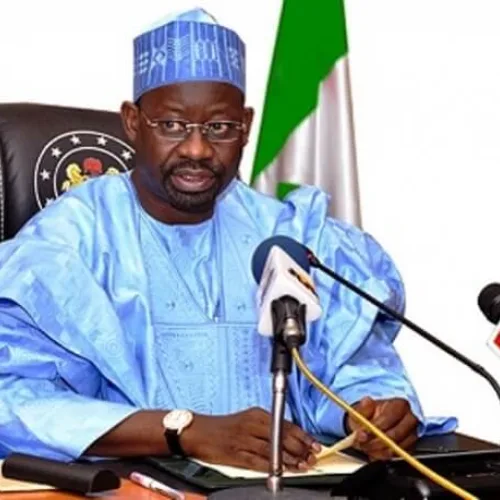
The Bill, sponsored by Ibrahim Dankwambo, a senator representing Gombe North in May 2026, passed second reading in the Senate in July. It seeks to establish a Foreign Aid Regulatory Commission to track, register, audit, coordinate, sanction and suspend all foreign grants, donor funds and technical assistance.
This bill differs from previous legislative attempts in that its scope extends beyond NGOs.

It aims to oversee all forms of foreign funding, including grants, donations, and technical assistance for a broad range of recipients in Nigeria, such as government bodies, civil society groups, and private organisations.
The groups noted that Nigeria is currently a candidate for election to the UN Human Rights Council for the 2027-2029 term.
“A candidacy that should be matched by concrete domestic protection of human rights defenders,” they wrote in the statement.
Dangers highlighted
The CSOs flagged some sections of the Bill they say pose the biggest threat. They mentioned Section 6(1), which requires a 30-day registration of any foreign donation.
The groups argued the deadline would criminalise rapid-response funding such as legal defence, emergency relocation, and support for survivors of gender-based violence and human rights violations.
Another area of the proposed law flagged by the organisations is the section on public disclosure of partners. Mandatory publication of implementing partners and funded activities in a national register, they said, “creates serious and foreseeable security risks, including surveillance, harassment, and retaliation” for defenders, witnesses and survivors.
“Section 11 requires foreign-funded activity to “align” with Nigeria’s national development plans and priorities,” the group said.
“This standard is broad and vague enough that the state could brand the work of human rights defenders, including those documenting rights violations, defending land and environmental rights, or supporting marginalised and at-risk communities, as ‘out of alignment with priorities,’ providing a legal basis to restrict their protection and support.”
Also, the group said that the functions of the proposed regulatory agency overlap with existing bodies, including the Corporate Affairs Commission (CAC), the Special Control Unit Against Money Laundering (SCUML), the Federal Inland Revenue Service (FIRS), and the Nigerian Financial Intelligence Unit (NFIU).
Demands
The organisations are calling for the immediate withdrawal of the proposed law.
They demanded that civil society be consulted for any future law on foreign funding, in line with the Constitution and the UN Declaration on Human Rights Defenders.
Additionally, the groups called for robust protections to ensure the confidentiality of information concerning human rights defenders, survivors, and witnesses.
They also demanded an expedited process for emergency protection funding, not subject to standard registration timelines, and the reaffirmation of constitutional rights to association, expression, and assembly.
ALSO READ: US House passes bill to cut foreign aid to Nigeria
“We support legitimate transparency in the use of foreign funding, but we firmly reject the use of regulatory mechanisms as instruments of surveillance, censorship, and intimidation,” the statement said.
The groups said that they remain committed to “the holistic protection of human rights defenders at risk and to safeguarding the civic space in which they operate.”
The Bill is expected to proceed to the committee stage in the Senate in the coming weeks.
Policy and Legal Advocacy Centre (PLAC), an independent, non-partisan, non-profit capacity-building organisation that works to strengthen democratic governance and citizens’ participation in Nigeria, said in an article that creating another commission with overlapping powers risks adding bureaucracy rather than improving accountability.
“Experience in Nigeria demonstrates that institutional proliferation rarely solves governance challenges. More often, it creates confusion, duplication, increased compliance costs and regulatory uncertainty,” the advocacy organisations said.
Discover more from Premium Times Nigeria
Subscribe to get the latest posts sent to your email.
Comments
Start the conversation about this story.