






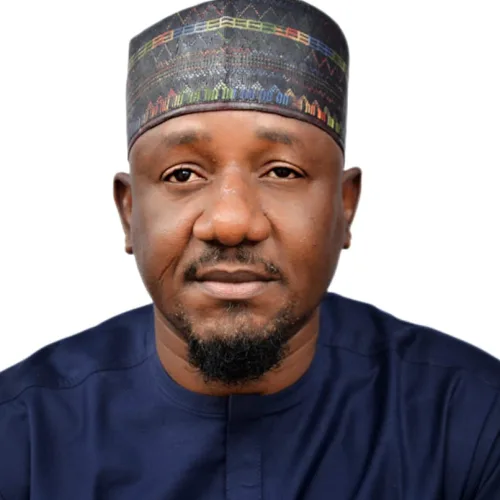
As the 2027 general elections draw nearer, one of the associations routing for good governance in the country, Grassroots Mobilisation Initiative (GMI) is of the opinion that with what the current administration has done, there is a brighter chance for President Bola Tinubu in 2027. Its national coordinator, Samaila Musa stated this in an interview with Blueprint.ng correspondent.
How have you supported President Bola Ahmed Tinubu’s administration, particularly on economic reforms?
Looking at it critically, President Tinubu’s administration started on the right footing by focusing heavily on macro fiscal reforms like subsidy removal, unifying exchange rates and increasing non-oil revenue. We have been trying to sensitise the general public on the economic reforms implemented by this administration. The president did not pretend from the outset that it was going to be an easy journey. When he came on board, he said sacrifices were inevitable going by the situation the country found itself. The first two years were not easy which was expected anyway. We are literally sailing above board now, and things are beginning to take shape. At the macro-economic level, the country is now stable. It is at the micro-economic level that we are still trying to find our feet. That is part of the sensitisation we have been doing on a larger scale. A lot of people, particularly at the grassroots, did not really understand the impact of these reforms. To the typical Nigerian, the narrative was simply that things were not working and life was becoming increasingly difficult. These are the sacrifices we needed to make, and that is what we have been educating Nigerians about. It was a period of sacrifice, and that period is gradually coming to an end because things are beginning to take shape. We are beginning to see some of the dividends of the sacrifices we have made.
On a weekly basis, we are out there sensitising Nigerians and helping them to understand what is happening.
How is your group mobilising support for President Tinubu?
We have been mobilising support because you cannot mobilise support for an incumbent without being able to showcase some of the things he has done, what he is doing and how he intends to achieve his objectives. There are quite a lot of things on the ground to show that this administration has done a lot, especially in terms of infrastructure and road construction.
Literally every facet of the economy is being addressed. In education, for instance, the student loan scheme is a major step in the right direction. We can see people from disadvantaged backgrounds who ordinarily would not have been able to afford higher education now benefiting from it. That is part of the dividends of the Renewed Hope Agenda. Those are the things we are taking to the general public. The president was not insensitive to the plight of Nigerians; so, he introduced some social support measures to cushion the effect of the sacrifices for example MSME intervention funds, Student loan (NELFUND), a New Minimum Wage (70,000), targeted cash transfers all aimed at vulnerable households.
Looking at GMI initiatives, what aspects of President Tinubu’s achievements are you focused on educating the public?
They are numerous. Across the country, several roads have been constructed since the inception of this administration. These are projects that would bring development and have long-term impacts on the economy. Beyond infrastructure, the president has also made efforts to address insecurity which was not better when he came on board. We must remember that it existed for more than 20 years; so, it is not a problem that started yesterday. This administration is making significant strides in that regard. We are beginning to see the rejig of security architecture. We know that what took several years to destroy cannot be fixed in two years. We are therefore working hand-in-hand with people at the grassroots to help them understand what the administration is doing because the narrative being sold by some people is quite different. Some people would prefer the era when subsidy was still in place, but Nigeria cannot continue indefinitely on that path. The country would face serious economic difficulties in the long run if necessary decisions are not taken.
What have been the feedback?
The feedback has been awesome because a lot of people did not really understand what fuel subsidy was. When we talked about fuel subsidy, many people asked: ‘what exactly are you removing that is making life more difficult?’ We have engaged with people at the grassroots and tried to educate them on what fuel subsidy is and why its removal became necessary. The same applies to floating of the Naira. People did not understand why the Naira needed to be floated or what the implications were for the economy. Today, we have a relatively stable Naira-to-Dollar exchange rate which has a significant impact on the economy.
How has your advocacy helped to improve public perception of government policies?
Our radio programmes are one of the major ways we have been reaching the public. The feedback we are getting is very encouraging. On a weekly basis, we are also in the national dailies talking about this government and its policies. People call to engage with us through our social media platforms, saying they never understood the issues the way we presented them. What they had previously understood was different. We are trying to change that narrative. There was a vacuum in public orientation which our organisation has been able to bridge, alongside other agencies doing similar things. By and large, we have made tremendous impacts trying to manage how people perceive some of those policies. Some opposition members may be putting forward what we consider to be a false narrative about what is going on, but none of them actually said there was something fundamentally wrong with fuel subsidy. No one also said there was anything wrong with floating the Naira.
What is your assessment of President Tinubu’s fight against insecurity?
This is a battle that has been on for 20 years. Some of the most dangerous terrorist groups in the world have focused on Nigeria for various reasons. The fact that high-ranking members of terrorist organisations have been arrested/killed on Nigerian soil demonstrates the gravity of the war being fought. The president said from the onset that there would be no hiding place for terrorists. So, since he came on board, we have seen, almost on a monthly basis, reports of high-profile terrorists being eliminated by security operatives. We must therefore give kudos to the National Security Adviser, the Minister of Defence and the other security agencies. I believe gradually we would get there. What took about 20 years to infiltrate the country cannot necessarily be flushed out in three or four years.
Some persons are raising concerns about the high cost of living, therefore dousing confidence in the president. Do you think this could affect his chances?
I think we should be very realistic. This is election period. The South-west, for example, can be said to be automatically secured because that is the region the president comes from, but don’t forget that in 2023, the North-west gave the president significant support. In the history of Nigeria, no matter how good you are, before you finish your tenure, some people must have fallen out with you. Some came into government with the expectation that they would be given appointments, but didn’t get; some would say they are no longer with you because you did not give them what they wanted. Everybody cannot get appointment in any government. Because of this, some people would leave in protest. It is visible to everyone that this administration is working. I believe that President Tinubu would still win significant support in the north, particularly North-west. The vice president is from North-east coupled with the fact that five of the six governors are all in the president’s party. So, I see victory for the president in the long run. I believe President Tinubu would still win the 2027 general election. Of course, you cannot expect to sweep every state, but when you look at the number of governors and political leaders who have moved from opposition parties, including PDP and NNPP into APC, you will now realise the political strength of the ruling party. As the administration came on board, it did not have this number, but today, we have seen a significant number of governors and political leaders aligning with APC. So, no matter how difficult the opposition tries to make things, we are confident that many of these governors would deliver their states.
What plans does your organisation has to take the campaign to other parts of the country?
We are already on the ground with structures across all 36 states of the federation. What we are doing now is activating those structures. In some areas, there have been complaints that members have not been given clear direction on exactly what to do. So, in the next few days, we would begin town hall meetings, making use of our structures and collaborating with civil society organisations across the states.
The objective is to educate people, engage communities and establish working relationships with different NGOs so that we can bring them into the fold and work towards the victory for Mr president.
There have been concerns about the administration weakening the opposition. What are your plans towards peaceful campaign/election?
As far as we are concerned, we see that as a form of manipulation on the part of the opposition. You cannot expect a politician to work for another person’s victory; power is not given; you compete to get it. When President Tinubu contested in 2023, virtually everything worked against him, but he did not complain, but went for power and he got it. The president has never hidden his intention to win again, but made it clear that he would not sit down idly. If the opposition accuses the government of weakening the opposition, then they should also understand that political parties everywhere attract people to their folds. The president started mobilising even before some opposition groups started putting themselves together. That is why he is far ahead of them and that is the way politics works. He has not done it through violence and we are also going to emulate that approach by encouraging dialogue. If there are grievances, we should bring people to the table and talk.
Comments
Start the conversation about this story.