





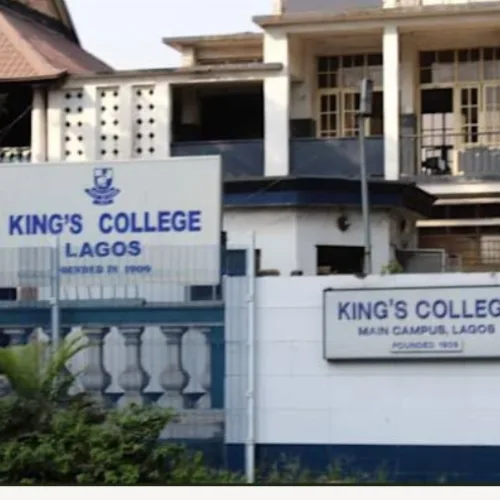
The proposed concession of King’s College, Lagos, to its old boys has sparked widespread opposition, with parents and other stakeholders threatening a mass protest over concerns about the plans by the federal government.
The Parent-Teacher Association (PTA) has come out strongly against the concession, which was granted to the King’s College Old Boys’ Association (KCOBA) last month, describing it as a move that lacks broad support among those with a direct stake in the 116-year-old institution.
Peter Oluwaseye, the PTA chairman, said the resistance cuts across multiple stakeholder groups.
“Parents are not in support of the move. Senior civil servants are also saying no to it. The community is also not in support, alumni should not treat the college as personal property since they attended the school just like the current students are doing,” he said.
Oluwaseye argued that no private entity could replicate the calibre of teaching staff currently at the college, and called for old students to support the institution through voluntary giving rather than a takeover arrangement. “We say no to concession, whatever guise it is being planned,” he noted.
Kashim Ibrahim-Imam, the KCOBA president, publicly announced the concession, which comes with a N100 billion endowment fund aimed at repositioning the college.
Early contributions to the fund signal significant buy-in from notable figures such as Oluremi Tinubu, Nigeria’s first lady, who donated N10 million, while Ibrahim-Imam personally committed N1 billion. Philip Asiodu, the former board of trustees’ chairman and Femi Okunnu, the new board chairman, donated N100 million, respectively.
According to KCOBA, proceeds from the fund are earmarked for infrastructure renewal, teacher development, digital technology upgrades, scholarships, research and student welfare, areas alumni say have suffered from years of underinvestment.
Ibrahim-Imam has pushed back on suggestions that the arrangement amounts to a sale of the public institution, insisting ownership remains unchanged.
He described the deal instead as ‘the establishment of a new governance framework through which KCOBA will partner with government to restore, strengthen, modernise, and sustain one of Nigeria’s greatest educational institutions.’
He framed the approval as a landmark moment for public education financing in Nigeria, noting that King’s College, established in 1909, has produced graduates across public service, business, the judiciary, the military and academia.
Moreover, he said that years of ‘careful planning, sustained advocacy, constructive engagement’ by alumni preceded the government’s approval.
With parents, civil servants and community stakeholders lining up against the concession, the arrangement, despite its financial backing, faces a governance dispute that could test how far alumni-funded partnerships can go in reforming Nigeria’s public schools without stakeholder buy-in.
Whether the planned protest forces a review of the deal’s terms, or whether the funding commitments already in motion carry it forward regardless, is likely to shape how similar public-private education partnerships are structured going forward.


Charles Ogwo is a proactive journalist, driving education, and business innovations for over 10 years. He leads initiatives leveraging tech to enhance storytelling and build topnotch performing team. Charles is passionate about harnessing technology to inform, engage and empower communities.
Comments
Start the conversation about this story.