





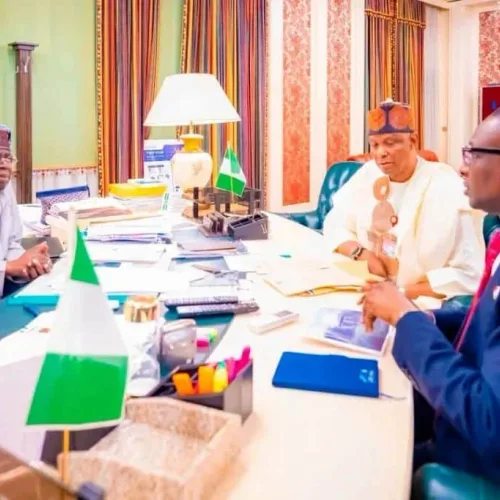
President Bola Ahmed Tinubu on Tuesday met with the Executive Chairman of the Economic and Financial Crimes Commission (EFCC), Ola Olukoyede, and the Minister of Housing and Urban Development, Muttaqha Rabe Darma, at the State House in Abuja.
The meeting focused on the management and disposal of houses and other properties seized nationwide by the anti-graft agency, with emphasis on transparency and accountability.
The engagement comes just three days after Osun State Governor Ademola Adeleke secured re-election in the August 15 governorship election, and shortly after he announced the withdrawal of the legal action challenging the EFCC’s freezing of the state’s accounts.
The timing of Tuesday’s meeting is noteworthy, as it represents the first publicly disclosed engagement between President Tinubu and Olukoyede since the President intervened in the dispute over the EFCC’s action against the Osun State Government.
On August 5, the EFCC obtained a court order freezing Osun State Government accounts as part of an investigation into the alleged mismanagement of about N11 billion in ecology funds, intervention funds and Federation Account allocations.
The state government subsequently approached the Federal High Court in Abuja, challenging the order and accusing the commission of pursuing a political “witch-hunt.”
However, President Tinubu later directed the EFCC to return to court and vacate the freezing order, expressing concern over the timing of the action so close to the governorship election.
Following his victory, Adeleke said he had instructed the state Attorney General to withdraw the suit, praising the President for his intervention.
Against this backdrop, Tuesday’s meeting places renewed attention on the broader issue of how assets recovered or seized by anti-corruption agencies are managed, preserved and eventually disposed of.
The Presidency said the discussions between Tinubu, Olukoyede and the Housing Minister centred on ensuring that the disposal of seized houses nationwide is conducted in line with established rules of transparency and accountability.
The meeting also signals continued engagement between the Presidency and the EFCC on the management of recovered assets, even as the commission faces heightened public scrutiny over its activities and enforcement decisions.
With the Osun controversy now moving toward resolution, the focus of Tuesday’s engagement shifted from the political dispute to the administration and transparent disposal of assets recovered through anti-corruption investigations.


Comments
Start the conversation about this story.