






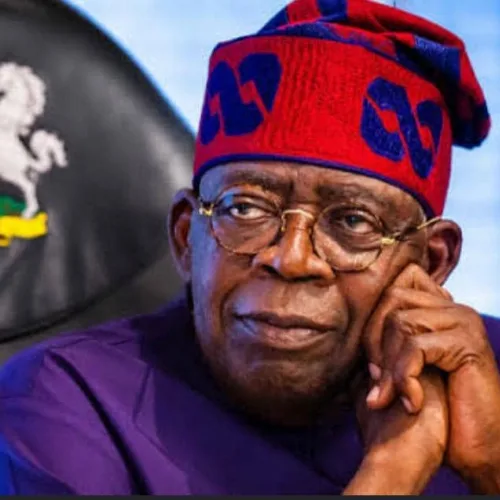
President Bola Ahmed Tinubu has reaffirmed the Federal Government’s commitment to peaceful, transparent and credible elections in Nigeria.
The president was represented by the Secretary to the Government of the Federation (SGF) George Akume noted this in Abuja at the signing of the Peace Accord on issue-based campaigns, organised by the National Peace Committee (NPC).
The SGF said recent improvements in the country’s electoral process had strengthened voters’ confidence and increased political accountability, as citizens could now be more assured that their votes would count.
He noted that elections conducted between October 2025 and August 15, 2026, had demonstrated Nigerians’ capacity to participate in the democratic process with maturity and respect.
According to him, local and international observers had described the exercises as free, credible and transparent.
The SGF said transparency in the electoral process would help reduce post-election disputes and litigation, stressing that political leaders had gathered to make a solemn commitment to Nigerians to place national interest above personal and partisan ambitions.
He called on Nigerians, civil society organisations, development partners and the media to support efforts to deepen democracy and build stronger public institutions.
“Democracy is not just about periodic elections that get politicians into government positions. Democracy is about our citizens participating in the affairs of their nation,” he said.
Also, the National Peace Committee (NPC) by former Head of State, General Abdulsalami Abubakar said the committee had facilitated 30 peace accords since 2015, including five at the national level and 25 at the sub-national level covering states with off-cycle elections.
He said the committee had also established independent, state-based peace architectures in 23 states to complement its work at the national level.
According to him, the issue-based campaign accord was first established in 2019 to encourage political actors to focus their campaigns on issues affecting Nigerians rather than sentiments, personal attacks and character assassination.
“Political campaigns have taken away civility and decency in public discourse and conversations and have created a toxic atmosphere that has the potential to incite citizens against the state, against other political parties and candidates,” Abubakar said.
He explained that the accord had been annotated to link its provisions to the Constitution, the Electoral Act and other relevant laws, thereby reinforcing the legal and civic responsibilities of political actors.
The former Head of State appealed to political parties, chairmen, candidates, campaign councils and spokespersons to avoid fake news, personal insults and attacks, while promoting tolerance, civility and respect for opposing views.
He also highlighted the role of its Election Security Information (ESI) Hub, which monitors election-related offences and wider security developments across the country.
The presidential candidate of the Nigeria Democratic Congress, Peter Obi, urged political office seekers to ensure that their conduct and utterances reflected the offices they sought.
Obi said candidates should maintain high standards of behaviour and focus their campaigns on the challenges confronting Nigerians.
“We must, for the sake of this country, ensure that our conduct and behaviour reflect the office we’re seeking,” he said.
He argued that the credibility of a peace accord ultimately depended on the personal conduct of political candidates,
According to him, exemplary leadership should go beyond the ceremonial signing of agreements.
Obi also expressed concern over deaths recorded during previous elections, including the Osun governorship election, stressing that no political ambition should result in the loss of human lives.
“Nobody needs to die for an election. It shouldn’t be,” he said, while urging political actors to conduct themselves responsibly.
On calls for a separate “justice accord” to punish violators of peace agreements, Obi said the ultimate sanction should come from voters.
“The punishment is that Nigerians should not vote for them,” he said.
Comments
Start the conversation about this story.