





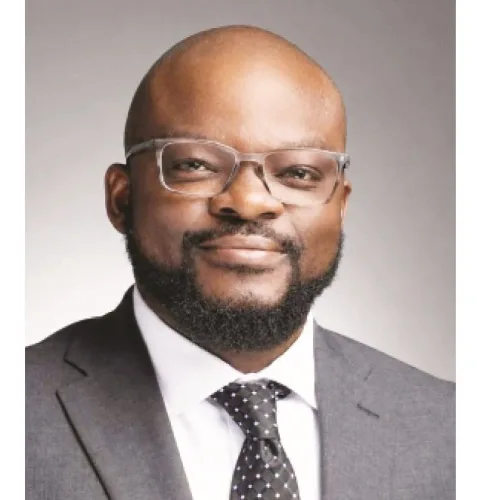
Dr. Oluwole Jegede is a triple board-certified physician-scientist, psychiatrist, addiction medicine specialist, and assistant professor at Yale University School of Medicine. His research focuses on using culturally responsive implementation science to improve evidence-based addiction treatments for historically underprivileged communities. In this interview with Sade Oguntola, he discusses his efforts to reduce gaps in addiction treatment in the US and around the world by bridging clinical care, community participation, and translational research. Excerpts:
The 2026 Yale Physician Scientist Development Award is a big deal. What does this recognition mean to you and to Nigerian scientists in diaspora?
I’m deeply honoured by this recognition. While it acknowledges my work, I see it as recognition of what is possible for scientists of African heritage on the global stage. It reminds us that where you begin does not determine where you can contribute. I hope it encourages young Nigerian researchers to pursue ambitious ideas, knowing that excellence is recognised regardless of where you come from or where you are from. For those of us in the diaspora, I also believe we have a responsibility to build bridges—bringing knowledge, collaborations, and opportunities back to the African continent.
You started as a physiotherapist before psychiatry. How did that clinical background shape your view of addiction and recovery?
Physiotherapy taught me that recovery is rarely about a single treatment. It requires patience, consistency, motivation, and understanding the person’s environment. Those same principles apply in psychiatry, mental health and addiction medicine. Addiction is not simply about stopping drug use; it’s about helping people rebuild their lives. My rehabilitation background naturally prepared me to see recovery as a process rather than a single event. In terms of research, I think my research teeth were cut as a physiotherapy student – I was taught the beauty and ethics of seeking, advancing and contributing to human research.
What made you pivot from physiotherapy to psychiatry, and specifically to addiction research? Was there a defining moment?
During my clinical work, I realised that many patients’ physical illnesses were inseparable from psychological and social challenges. I became increasingly interested in understanding why people struggled with substance use and why effective treatments often failed to reach those who needed them most. There wasn’t one dramatic moment, but rather a growing realisation that if we wanted better outcomes, we needed to understand not just the biology of addiction but also social and structural determinants, including culture, poverty, discrimination, trauma, and community.
Your focus is on culturally adapted contingency management for stimulant use disorder—cocaine and methamphetamine. Can you break down what “Contingency Management” means in simple terms?
Contingency Management (CM) is quite simple on the surface, but the details and operationalisation can be challenging. When someone reaches an important recovery goal—such as testing negative for cocaine or methamphetamine—they immediately receive a small reward (this is called ‘positive reinforcement’ based on the principle of Operant Conditioning). That reward reinforces healthy behaviour, much like we encourage children when they do well in school or athletes when they reach milestones. Decades of research have shown that it is one of the most effective treatments for stimulant addiction. My research asks an important question: can we make this already effective treatment work even better by making it culturally meaningful? CM has been shown to be very effective across all drug types and in many different socioeconomic contexts.
Why is a “culturally adapted” approach so important for African Americans and other underserved communities? What’s missing in the current one-size-fits-all treatment?
Evidence-based treatments are essential, but people do not experience illness in the same way. Culture shapes how we understand addiction and mental illness, how we seek help, whom we trust, and what motivates us. Many treatments were developed without fully considering the experiences of underserved communities. Cultural adaptation does not mean changing the science; it means delivering the science in ways that better reflect people’s lived experiences while preserving the core elements that make the treatment effective.
Stimulant addiction is rising globally. Are we seeing similar cocaine and meth trends in Nigeria and Africa, or is this still mainly a US problem?
This is increasingly becoming a global issue. Although the United States continues to experience very high rates of stimulant-related deaths, reports from several African countries, including Nigeria, suggest growing use of cocaine, methamphetamine, and other synthetic substances. The challenge is that surveillance systems across much of Africa are still developing, so the true scale may be underestimated. This is exactly why building effective treatment systems now is so important. In fact, my colleagues and I teamed up with other scientists and just published a paper that described substance use in Northern Nigeria – you will be surprised at what the numbers show!
In your research, what cultural values, beliefs, or community structures are you building into the intervention to make it work better?
Rather than assuming what communities need, we ask them directly. We work with patients, families, community members, and clinicians to identify what matters most. Some examples include strengthening relationships between providers and patients, using rewards that communities consider meaningful, improving communication styles, reducing barriers to care, and ensuring the treatment respects people’s values and lived experiences. The community helps shape the intervention from the beginning.
ALSO READ: Recreational drugs, including cannabis, can cause stroke — Study
In Nigeria and many African communities, addiction is often called “weakness” or “spiritual attack”. How does that stigma affect treatment, and how can we change the conversation?
Stigma delays treatment. When addiction is viewed as a moral failure instead of a medical condition, people often hide their struggles until severe complications develop. Faith and spirituality are incredibly important in many communities, but they should complement—not replace—evidence-based medical care. We need conversations that recognise addiction as a chronic health condition while respecting cultural and religious beliefs. Compassion should replace judgement.
As a Nigerian psychiatrist in the US, do you see parallels between how Black Americans and Nigerians experience mental health stigma and access to care?
Absolutely. Although the histories differ, many challenges are surprisingly similar. Both communities often face stigma around mental illness, delays in seeking treatment, mistrust of healthcare systems, and structural barriers to accessing care. At the same time, both communities possess remarkable strengths—strong family networks, faith communities, resilience, and social connectedness. These strengths can become powerful tools for improving mental health care. A study we conducted a few years ago actually showed the challenges that first-generation US citizens of African descent face are no different than what our siblings, native Black Americans, face.
You’re a clinical and translational scientist. What does that look like day-to-day? How do you move research from Yale labs into real communities?
My week may involve seeing patients, analysing research data, meeting with community advisory boards, mentoring trainees, and working with healthcare providers to improve treatment delivery. Translational science simply means ensuring that discoveries do not remain in journals or academic spaces; they become real solutions that improve people’s lives in clinics and communities.
If your contingency management model works, how soon could we see it adapted for use in Nigeria or other African countries?
If our studies demonstrate improved effectiveness, the principles could potentially be adapted elsewhere relatively quickly. However, I would never recommend simply exporting an American model. Every country has its own culture, healthcare system, and social context. Nigeria deserves an intervention developed with Nigerian communities, not merely imported from abroad. My hope is that our work provides a scientific framework that local researchers can build upon. In addition, I am eager to promote and expand evidence-based addiction treatments in Nigeria and on the African continent.
What role should community leaders, churches, and NGOs play in making addiction treatment more acceptable and effective?
They are indispensable partners. Trusted community organisations are often the first places people seek help. Churches, mosques, traditional leaders, and NGOs can reduce stigma, encourage early treatment, educate families, and help people remain engaged in care. Successful addiction treatment requires partnerships between healthcare systems and communities.
Drug use among Nigerian youth is a growing concern. What lessons from your US research can we apply back home right now?
The biggest lesson is that waiting until addiction becomes severe is too late. Early intervention, family engagement, school-based prevention, reducing stigma, and expanding access to evidence-based treatment should all be priorities. We also need to involve young people themselves in designing prevention programmes. Interventions are more effective when the people they are intended to help have a voice in creating them.
Nigeria has limited addiction treatment centres and psychiatrists. What’s your advice to policymakers on building culturally relevant addiction services here?
The solution is not simply to train more psychiatrists, although that is certainly important. We should also empower primary care physicians, nurses, psychologists, social workers, peer recovery specialists, and community health workers to provide evidence-based addiction care. Integrating addiction treatment into primary healthcare, investing in workforce development, supporting implementation research, and involving communities in service design will likely have the greatest long-term impact.
What kept you going as an African-trained physiotherapist breaking into US academic psychiatry? What was the hardest part?
A: Curiosity, perseverance, and purpose. The journey involved changing careers, adapting to new healthcare systems, balancing clinical work with research, and competing in highly competitive academic environments. Like many international physicians, I had to prove myself repeatedly and continue to do so. What sustained me was remembering why I entered medicine—to improve people’s lives—and believing that every challenge was preparing me for greater impact.
Winning this award puts you in rooms with top global scientists. What do you want the world to understand about African contributions to mental health?
A: Africa is not simply a place where research is conducted—it is a place where important ideas originate. African researchers have unique perspectives on resilience, community engagement, cultural psychiatry, and health systems that can enrich global mental health. The future of science should be built through partnership, not one-way knowledge transfer.
What’s next for you? After this award and research, what problem in addiction do you want to solve in the next five years?
A: My immediate goal is to develop and rigorously test culturally responsive addiction treatments that improve outcomes for underserved communities while preserving scientific rigour. Beyond that, I hope to build implementation strategies that help effective treatments move rapidly into everyday clinical practice, reducing disparities in addiction care. Ultimately, I want to contribute to a future where a person’s race, culture, or socioeconomic background no longer predicts the quality of addiction treatment they receive.
Comments
Start the conversation about this story.