





A new scientific study has confirmed that Cissus quadrangularis, a medicinal plant widely used in Zimbabwe and other parts of Africa, is effective in treating intestinal worm infections and is safe for human use.
The study, published in the Journal of Complementary and Alternative Medical Research, provides scientific evidence supporting what traditional healers have known for generations. Researchers found that the plant possesses powerful anti-worm (anthelmintic), antibacterial, and antioxidant properties, while showing no signs of toxicity in laboratory tests.
The research was carried out by Joey Chifamba, Sifiso R. Sai, Wadzanai S. Mutambanengwe, and Fortune Chagonda from the University of Zimbabwe, with Chifamba also affiliated with the University of California, Los Angeles (UCLA).
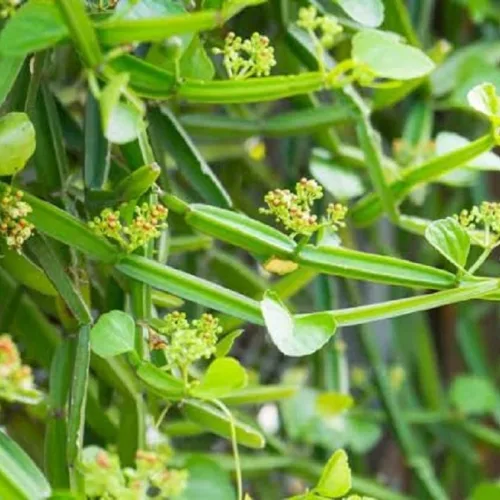
Known locally in Zimbabwe as “muvengahonye,” meaning “worm killer,” Cissus quadrangularis has been used for centuries by traditional healers to treat intestinal worms in both humans and livestock.
The climbing succulent plant, commonly found growing on mopane trees in southern Africa, has also been traditionally used to manage asthma, diabetes, bone fractures, joint pain, and menstrual disorders.
Despite its widespread use, there has been limited scientific evidence to support these traditional claims—until now.
The researchers noted that soil-transmitted worm infections remain one of the world’s most neglected tropical diseases, affecting more than 1.5 billion people, especially in poor communities across Africa, Asia, and Latin America.
Children are among the most affected. Worm infections can lead to malnutrition, poor growth, anaemia, reduced school performance, and weakened immunity.
Although drugs such as albendazole and mebendazole are widely used, scientists say increasing drug resistance and limited access to medicines in many developing countries have created an urgent need to identify alternative treatments.
The scientists collected Cissus quadrangularis stems from Gokwe South District in Zimbabwe.
The plant was processed into extracts and subjected to several laboratory tests to determine its medicinal compounds, its antibacterial activity, its ability to kill parasitic worms, and its safety through toxicity studies using laboratory rats.
Laboratory analysis revealed that the plant contains several active compounds known for their health benefits as well as proteins, carbohydrates, healthy fats, and important minerals, making it nutritionally valuable.
According to the researchers, these natural compounds contribute to the plant’s antioxidant, anti-inflammatory, antimicrobial, and immune-supporting properties.
The study also showed that the plant extract successfully inhibited the growth of dangerous bacteria, including Staphylococcus aureus and Escherichia coli, with antibacterial activity comparable to that of the commonly used antibiotic doxycycline.
However, the extract was less effective against Klebsiella pneumoniae, another disease-causing bacterium.
The researchers believe the plant’s high flavonoid content is largely responsible for its antibacterial effects.
Using Indian earthworms as laboratory models, scientists found that the extract caused paralysis and death in the worms within minutes, indicating the plant’s ability to kill parasitic worms.
At a concentration of 100 mg/ml, the plant extract performed almost as well as albendazole, one of the world’s most widely used deworming medicines.
They reported that safety tests conducted on laboratory rats showed encouraging results. Animals given doses of up to 2,000 mg per kilogram of body weight showed no deaths, visible signs of poisoning, abnormal behavior, or weight loss throughout the study.
The researchers estimated that the plant’s lethal dose (LD50) is above 2,000 mg/kg, indicating that it is practically non-toxic when used appropriately.
They therefore concluded that the plant possesses significant anthelmintic activity, validating its traditional use as a natural deworming remedy.
Beyond its anti-worm properties, previous studies cited by the researchers suggest that Cissus quadrangularis may offer additional health benefits.
Research has shown that the plant may promote faster healing of broken bones, reduce inflammation, prevent stomach ulcers, protect against oxidative stress, and support immune function.
The researchers believe the findings are particularly important for African countries, where access to modern medicines can be limited and traditional medicine remains an important part of healthcare.
ALSO READ: Recreational drugs, including cannabis, can cause stroke — Study
They argue that scientifically validated medicinal plants such as Cissus quadrangularis could complement existing public health programmes aimed at controlling worm infections.
However, they stressed that further clinical trials in humans are needed before the plant can be recommended as a standard medical treatment.
The researchers concluded that the study provides strong scientific evidence supporting the traditional use of Cissus quadrangularis.
“Our findings validate the use of the plant in traditional medicine as an effective and biologically safe anthelmintic treatment,” the authors stated.
Nigeria has a rich tradition of using medicinal plants to treat intestinal worms in both humans and livestock. Many of these remedies used for generations included neem, bitter leaf, pawpaw seed, pumpkin seed, garlic, and scent leaf.
Several human and laboratory studies have found that papaya seeds can reduce intestinal worm burden, particularly roundworms, while pumpkin seeds are said to contain cucurbitacin, which can paralyse certain intestinal worms, making them easier to expel.
As scientists continue searching for affordable, safe, and locally available medicines, Cissus quadrangularis may offer a promising natural solution in the fight against parasitic infections and other diseases across Africa.
Comments
Start the conversation about this story.