






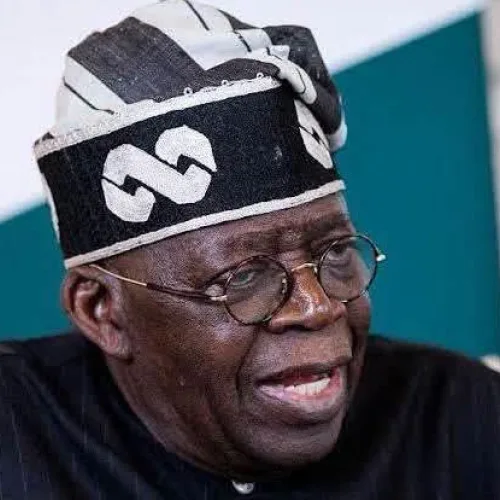
President Bola Ahmed Tinubu has directed that all legally cleared and unencumbered funds recovered by the Economic and Financial Crimes Commission (EFCC) be channelled to the Nigerian Education Loan Fund (NELFUND) to strengthen the financing of tertiary education.
He also directed relevant government agencies to explore the mobilisation of resources from the Unclaimed Dividends Trust Fund and the Dormant Accounts Trust Fund for NELFUND, subject to compliance with the laws governing the two funds.
Minister of Education Dr Tunji Alausa disclosed this Wednesday while briefing State House correspondents after the Federal Executive Council (FEC) meeting presided over by President Tinubu in Abuja.
Alausa described the decisions as a major boost for Nigerian students but clarified that the directive on EFCC recoveries applied strictly to liquid funds that had been legally recovered, conclusively cleared and freed from litigation.
He stressed that seized properties, non-liquid assets and funds still subject to court proceedings would not be transferred to NELFUND.
He said the president directed the Attorney-General of the Federation and Minister of Justice, the Minister of Finance and officials of the ministries of Education and Finance, the Debt Management Office and other relevant agencies to develop the legal and operational framework for transferring the eligible funds.
He said the Attorney-General would also work with the EFCC Chairman to identify recoveries legally available for transfer.
“The President was very clear: not seized properties. All recovered looted funds—liquid funds recovered by the EFCC—will now be transferred to NELFUND,” he said.
He explained that the government would examine the legislation establishing the Unclaimed Dividends Trust Fund and the Dormant Accounts Trust Fund to determine the lawful procedure for making resources from the two funds available to NELFUND.
Alausa reiterated that only money free from litigation and other legal restrictions would be affected by the directive.
“Every single fund that is still subject to a legal challenge will not be part of the money transferred to NELFUND. The funds to be transferred will be cleared and unencumbered funds that were looted—funds that legally belong to Nigeria and Nigerians,” he said.
NELFUND disbursements exceed N343bn
The minister said President Tinubu considered education as one of the most productive uses of recovered public resources, particularly as the administration seeks to build the human capital required to realise its ambition of developing a $1 trillion economy.
He said the decision would place NELFUND on a more sustainable financial foundation as demand for student loans continued to rise.
According to him, more than 1.2 million Nigerian students are benefiting from the scheme, while NELFUND has disbursed over N93 billion in upkeep allowances to students in federal and state-owned public tertiary institutions.
He said more than N250 billion had been paid to public tertiary institutions as tuition and institutional charges, taking total disbursements under the scheme beyond N343 billion.
“The education of our children cannot wait. It is of utmost importance to the President, and he will do everything necessary to protect the future of every Nigerian child and student,” he said.
The minister described the student loan scheme as the fulfilment of one of Tinubu’s campaign promises to widen access to tertiary education, irrespective of students’ financial circumstances.
He also addressed complaints involving institutions that allegedly withheld refunds from students who had paid their school fees before NELFUND subsequently remitted the same institutional charges.
He said the government had established a framework requiring affected institutions to refund such payments to students within a stipulated period.
According to him, the widespread difficulties recorded during the early implementation of the scheme had largely been resolved, adding that any outstanding case brought to the ministry’s attention would be investigated.
FEC approves N155.3bn for National Library
Meanwhile, FEC also approved an augmentation of approximately N118.31 billion for the completion of the long-abandoned National Library of Nigeria headquarters complex in Abuja.
Council also approved about N37 billion for furnishing the facility, bringing the combined intervention for its construction and equipment to approximately N155.31 billion.
Alausa said construction of the National Library began on April 29, 2006, and was originally scheduled for completion within two years. Work on the complex, however, stopped in October 2008, leaving the project abandoned for nearly two decades.
He said President Tinubu directed the Ministry of Education to mobilise resources for the revival of the project, including funding sourced through the Tertiary Education Trust Fund (TETFund).
The minister acknowledged the contribution of First Lady Senator Oluremi Tinubu, who requested that gifts intended for her birthday be donated towards the completion of the National Library.
According to him, the initiative generated about N25 billion for the project.
“Council today approved the augmentation of the existing contract for the completion of the National Library of Nigeria headquarters building complex in Abuja,” he said.
Alausa expressed optimism that construction would resume within the next few months.
FEC also approved the establishment of the Nigerian Academy for the Gifted and Talented through the transformation of the existing Suleja Academy.
Alausa said Suleja Academy was created to identify, educate and nurture exceptionally gifted Nigerian children but had gradually come to operate largely like a conventional Federal Government College, limiting its ability to fulfil its founding mandate.
He said under the proposed arrangement, the institution will become an autonomous academy with its own governing structure and diversified funding sources, including federal appropriations, endowments, donations and gifts.
The minister said the academy would identify gifted children from across the country and provide the specialised environment required to develop their abilities for innovation and national advancement.
He said the Council directed the Attorney-General of the Federation to prepare an executive bill for transmission to the National Assembly to provide the legal foundation for the academy’s transformation.
“We have to find every genius in this country, bring them into the academy, nurture their talents and allow them to help create the Nigeria of tomorrow,” he said.
The council also approved the deployment of an Entrepreneurship, Innovation and Business Incubation Certification programme in selected Nigerian universities.
Alausa described the initiative as a technology-driven programme that would equip students with practical skills in entrepreneurship, innovation, business incubation, enterprise development and digital technology.
He said participants will also receive professional certification, mentorship and incubation support to help transform viable ideas into sustainable enterprises.
The minister said the programme had already been tested at the University of Lagos and was intended to shift the orientation of graduates from depending solely on salaried employment to becoming entrepreneurs, innovators and job creators.
According to him, implementation will begin this year in 14 federal universities before being expanded to other tertiary institutions.
The participating universities are Ahmadu Bello University, Zaria; Bayero University, Kano; Nnamdi Azikiwe University, Awka; Obafemi Awolowo University, Ile-Ife; University of Abuja; University of Benin; University of Ibadan; University of Ilorin; University of Jos; University of Lagos; University of Maiduguri; University of Nigeria, Nsukka; University of Port Harcourt; and Usmanu Danfodiyo University, Sokoto.
He said the approvals demonstrated the administration’s determination to place education at the centre of Nigeria’s economic transformation and equip young people with the academic knowledge and practical capabilities needed to participate meaningfully in the emerging economy.
He said President Tinubu had given the education ministry a clear mandate to ensure that every Nigerian child could access education comparable in quality to standards obtainable elsewhere in the world.
Approves N610bn highway projects, 600 homes for military personnel
Also, the Council approved contracts and public-private partnership concessions worth more than N610 billion for major highway projects across the country.
The Council also approved the direct purchase of 600 four-bedroom terrace duplexes in Abuja for personnel of the Armed Forces, raising the number of military housing units approved by the administration to 2,156.
Minister of State for Works Bello Mohammed Goronyo, and the Minister of Housing and Urban Development Muttaqha Rabe Darma, announced these while briefing State House correspondents after Wednesday’s FEC meeting in Abuja.
Goronyo said the road approvals covered reconstruction, rehabilitation and upgrading projects, as well as concessions designed to attract private capital and technical expertise into the development, operation and maintenance of federal highways.
According to him, the Council ratified the award of a N159.826 billion contract for the reconstruction of the Ado-Ekiti–Iyin–Aramoko–Itawure–Osun State border road to Messrs CBC Global Civil and Building Construction Nigeria Limited.
He said the contract sum, inclusive of 7.5 per cent Value Added Tax, carries a completion period of 24 months.
FEC also ratified a N54.118 billion variation and change order for another road rehabilitation project previously presented to the Council.
The adjustment, he said, became necessary because of changes in the scope and cost of the work.
The minister said the decisions were part of the Tinubu administration’s programme to address longstanding deficiencies on federal highways and improve connections among states, commercial centres and agricultural areas.
He said the government was combining budgetary financing with private-sector participation to accelerate road development at a time of rising construction and rehabilitation costs.
Under the approved PPP arrangements, private investors will finance, develop, operate and maintain designated highways in accordance with agreed terms, while ownership of the assets will remain with the federal government.
Goronyo said the model would ease pressure on public finances and ensure that important transport corridors received the investment required to bring them to acceptable standards.
He added that the projects, spread across different parts of the country, were expected to improve mobility, shorten travel time, reduce vehicle-operating costs and support the movement of agricultural produce, manufactured goods and other commodities.
He said improved roads would also strengthen interstate commerce and provide easier access to markets and settlements along the affected corridors.
Goronyo assured that the Ministry of Works would supervise the projects and ensure compliance with the approved specifications and delivery timelines.
Speaking on the housing approval, Darma said the Council granted the Federal Ministry of Housing and Urban Development permission to purchase 600 four-bedroom terrace duplexes at Bristol City Development, Life Camp, Abuja.
He said the houses will be allocated to Armed Forces personnel under the Federal Government’s military housing intervention.
“Today at the Council, the Federal Ministry of Housing and Urban Development presented a memo for the Council to consider and approve the direct purchase of 600 units of four-bedroom terrace duplexes at Bristol City Development, Life Camp, Abuja, for the Armed Forces,” he said.
Darma described decent accommodation as an essential component of military welfare, saying the intervention would improve the living conditions, morale and effectiveness of servicemen and women.
“Mr President is committed to improving the welfare of the Armed Forces. Housing is an important factor in ensuring that the welfare of our servicemen and women is established and improved,” he said.
The minister recalled that FEC approved 1,556 housing units for military personnel in the Deidei area of the Federal Capital Territory last year.
“This memo is a follow-up to the one we presented last year, under which 1,556 housing units were approved for the Armed Forces in the Deidei area of the Federal Capital Territory,” he said.
He said with the additional 600 homes, the administration has now approved 2,156 units, representing more than one-fifth of the 10,000 houses planned for members of the Armed Forces.
Darma said the programme demonstrated the government’s commitment to addressing the accommodation needs of military personnel while expanding the country’s housing stock.
He said the ministry would continue implementing schemes aimed at increasing access to decent homes, developing new urban settlements and creating employment through construction.
According to him, expanded housing delivery would stimulate demand for building materials and professional services while providing jobs for skilled and unskilled workers.
Comments
Start the conversation about this story.