





After decades of false starts at Ajaokuta, private investors are stepping in with $2.72 billion in new commitments to address Nigeria’s $4 billion steel deficit. The push represents the most concrete private-sector momentum the nation’s heavy industry has seen in over a decade.
The capital layout is heavily concentrated in two anchor projects totaling $1.75 billion. These include a $1.3 billion effort to revive the Delta Steel mill and a $450 million Chinese-backed plant in Ogun State. Together, these two sites account for nearly two-thirds of all fresh commitments. The remaining $965 million sits in preliminary proposals and memorandums of understanding that have yet to achieve financial close.
This shift toward private funding highlights growing impatience with state-led industrialization. For years, the public treasury poured funds into monumental projects like the Ajaokuta Steel Complex, which yielded virtually no commercial output, leaving domestic builders entirely dependent on foreign imports.
Experts noted that the investments would help kick-start the country’s weak and broken steel industry; however, they warned that money alone won’t be enough without the government’s sincerity and transparency.
“Yes, these private investments are a welcome development in the steel industry,” said Oluyinka Kufile, chairman of Qualitec Industries, in response to a phone interview.
“The value chain of iron ore is very weak and broken, and these investments can help kick-start the industry if there is sincerity and transparency in the processes.”
Kufile pointed to the long failure of state-led efforts. “The government has tried for years to revive Ajaokuta and others, but it has yielded no result because there is really no sincerity in the processes, and that is why no steel plant is working today in the country despite spending billions.
Read also: Africa’s AI ambition runs into a hardware problem
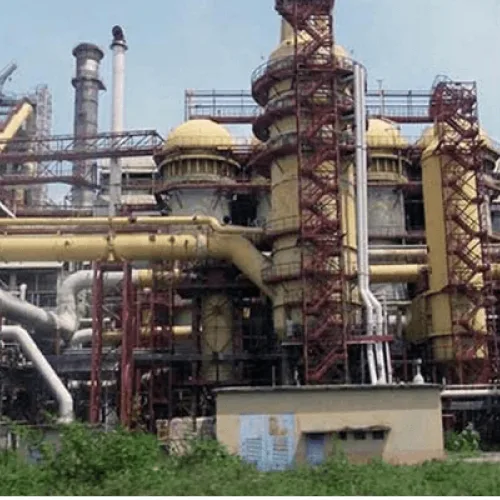
Legal battles surround the Ajaokuta Steel Company Limited. The disputes have stalled the multi-billion-dollar complex in Kogi State, Nigeria, keeping it largely non-operational despite being near completion.
Closely trailing the Ajaokuta Steel Complex is the Aluminium Smelter Company, located in Akwa Ibom State, which, like Ajaokuta, is caught in a legal war between the concessionaire and the Federal Government.
“Most of the previous concessions and deals were not clear, and the buyers couldn’t do anything,” Kufile said. “If the government is sincere, we can bridge our steel gap,” Kufile added.
With the government offering tax breaks, gas incentives, and tariff protection, firms like Galaxy Group and Premium Steel are moving to build capacity that the country has talked about since the 1980s.
If successful, the projects could cut the country’s import bill by capturing a slice of the $4 billion spent on steel, rebar and billet imports.
“Those investing must have done their own due diligence, and they believe it can work and become profitable,” said Muda Yusuf, chief executive officer at the Centre for the Promotion of Private Enterprise.
“There is gas infrastructure that leads to these mills, and steel products have high tariff protection that will make local producers competitive locally,” Yusuf said.
Heat from cheap imports
Closing the country’s steel gap won’t be easy. New and existing mills will have to compete with cheap steel flooding in from China and India, while contending with Nigeria’s chronic power shortages, high logistics costs, and FX volatility.
China and India are the top producers of steel in the world, with 960 million tonnes (MT) and 165 MT as at 2025, according to data from the World Steel Association.
China is flooding global markets and undercutting local producers; even major producing nations like India also face a surge of low-priced Chinese hot-rolled coils.
Under Nigeria’s updated 2026 Fiscal Policy Measures, import tariffs on steel products vary by type: finished or semi-finished items like zinc-coated sheets and rods are generally pegged at 35 percent, cold-rolled low-carbon steel measuring less than 0.5 millimeters in thickness at 20 percent, and raw industrial inputs like steel billets or hot-rolled coils for local production can qualify for zero duty.
The steel sector encompasses makers of primary and secondary aluminium products, cold-rolled coils, wire rods, enamel-ware, galvanised iron and steel, nails and wire, steel pipes and steel.
Manufacturers’ confidence in the basic metals and iron and steel subsectors of the manufacturing industry rebounded to 54.8 percent in the second quarter of 2026, according to data from the Manufacturers Association of Nigeria.
For private capital, the question is whether policy support and local demand are finally enough to make steel profitable — or if Ajaokuta’s ghost will haunt this bet too.


Josephine Okojie-Okeiyi is a journalist with over five years’ reporting experience. She writes on industry, agriculture, commodities, climate change, and environmental issues. She is fellow of Thomson Reuters Foundation and Bloomberg Media Initiative for Africa.
Comments
Start the conversation about this story.