





By Ikechukwu Nnochiri
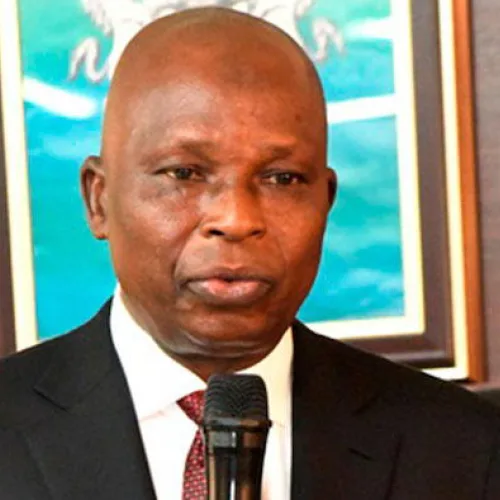
ABUJA— The Attorney General of the Federation and Minister of Justice, Prince Lateef Fagbemi, SAN, has urged the United Nations to reform its framework to ensure protection of national sovereignty in disputes involving member states and investors.
He maintained that such reforms should reinforce rather than bypass domestic courts in Investor-State Dispute Settlement (ISDS).
Speaking during a heads of delegations roundtable at the Chief Legal Advisors Forum (CLAF) 2026 in Singapore, the AGF noted that Nigeria’s economy would have been crippled by a case instituted against the country by a company, Process and Industrial Developments Limited (P&ID).
The AGF disclosed that Nigeria was on the verge of losing over US$11 billion to the company until a United Kingdom (UK) Commercial Court, in 2023, nullified a US$9.6 billion arbitral award the company had secured against Nigeria over a botched gas supply contract that was later discovered to be fraudulent.
Referencing the case in Singapore, the AGF argued that the ISDS reforms Nigeria is seeking would address inadequacies and imbalances in the UN’s legal framework in order to protect investments and taxpayers’ interests.
Commending the forum convened by Singapore’s Ministry of Law, Fagbemi, SAN, argued that as global investment flows evolve and states confront new development challenges, the need for a modern, balanced, and credible dispute-settlement system has never been more urgent.
He said that upon assuming office as AGF, he took steps to address these challenges by constituting a committee of experts to review Nigeria’s bilateral treaties and its commitments under multilateral treaties and conventions, in order to promote and protect investments in Nigeria.
The AGF, in a statement signed by his media aide, Mr. Kamarudeen Ogundele, and made available to newsmen on Thursday, said Nigeria became a strong proponent of clarity concerning the calculation of damages because of its experience in the P&ID case.
“States consistently express concern about the opacity of arbitral proceedings and the unpredictability of awards. Nigeria continues to support reforms that enhance transparency of proceedings, consistency in arbitral reasoning, and predictability in outcomes.
“These elements are essential for investor confidence and state trust alike. That is why Nigeria is a strong proponent of clarity concerning the calculation of damages. The current position largely relies on the whims of each arbitrator or tribunal. For example, in the notorious case of P&ID, damages were calculated on the basis of compound interest, which would have had a crippling effect to the tune of billions of dollars.
“It is with this belief that Nigeria reformed its Arbitration Act to reflect the importance of transparency. There is growing openness to fresh approaches beyond traditional arbitration,” he added.
He noted that UN member states had acknowledged that ISDS reform was not optional, as it was essential for maintaining the legitimacy of the international investment regime.
“Nigeria sees this consensus as a positive development: it signals that the global community understands the need for recalibration to ensure fairness, predictability, and development alignment.
“Many states, Nigeria included, believe that incremental adjustments will not address the structural imbalances embedded in the current system.
“There is increasing support for systemic reform, including clearer treaty standards, improved procedural safeguards, stronger accountability mechanisms, and more balanced rights and obligations for investors and states. This reflects a desire for a dispute-settlement system that is durable and future-proof.”
Fagbemi said Nigeria saw significant value in these innovations, particularly in reducing costs, preventing escalation, and strengthening cooperative problem-solving.
“Strengthening national judicial institutions is central to building long-term rule-of-law capacity and reducing over-reliance on external arbitration.
“Nigeria strongly supports reforms that ensure investment protections do not undermine legitimate public-interest regulation. This is clearly reflected in the 2016 Nigerian Model Bilateral Investment Treaty (BIT), which is currently under review after 10 years of being in use.
“There is a growing recognition that the challenges are shared, solutions must be collective, and reform must balance the needs of capital-importing and capital-exporting countries,” he added.
The post AGF seeks UN’s protection, says P&ID case would have crippled Nigeria’s economy appeared first on Vanguard News.
Comments
Start the conversation about this story.