






Obasanjo’s credit was never in danger and did not require Duke to vandalise everyone else’s contribution.
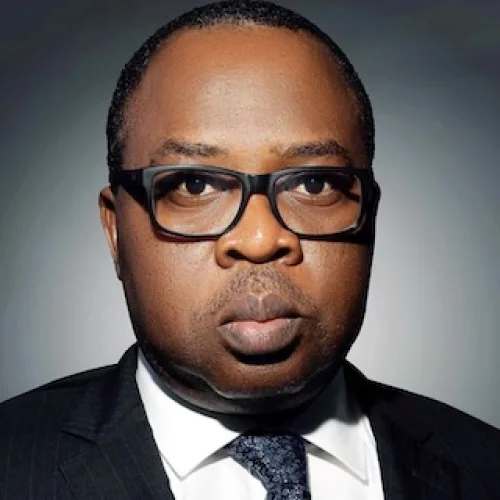
Donald Duke’s recent account of Nigeria’s Paris Club debt deal bears little relation to the public record. In an interview published by SYMFONI TV on 22 August 2026, he accused Ngozi Okonjo-Iweala of taking “vain glory” for the relief. “It wasn’t her,” he said. “It was President Obasanjo.” He reduced her work to presidential “runs” and told her not to take credit.
The Early Campaign and Its Limits
Duke’s recollection ends conveniently where his own part becomes secondary. He remembers accompanying President Olusegun Obasanjo to debt negotiations during the early campaign and Tony Blair’s support; from there, he leaps to the final relief, leaving the impression that the intervening work was incidental. Six consequential years disappear from his account: the failed demand for cancellation, the 2000 rescheduling, the reform programme, the IMF instrument, the terms still unsettled in October 2005, and the minister who gave the process institutional direction and led Nigeria’s delegation when the deal was concluded.
Duke did have a part in the opening campaign. The Guardian described him on 15 June 1999 as Nigeria’s “leading debt negotiator”, reported Britain’s demands for reform and transparency, and quoted him as accepting IMF monitoring.

That work was preliminary; it did not produce the cancellation. After Obasanjo pressed Nigeria’s case in Washington, President Bill Clinton told him in October 1999 that Nigeria was ineligible for total cancellation and that the offer on the table was rescheduling. The outcome was no different when Nigeria returned to the Paris Club in December 2000: the Club’s official account records a US$24.297 billion rescheduled on Houston terms under a delegation led by Chief Philip Asiodu. Duke’s account disingenuously folds an unsuccessful appeal and a later rescheduling into the cancellation achieved five years afterwards. Neither was cancellation.
Obasanjo himself later gave the verdict on that first-term effort: it had attracted “sympathetic hearings, but not much action.” After his re-election, he sought out Okonjo-Iweala and persuaded World Bank President James Wolfensohn to release her to Nigeria. By then, she had spent 21 years at the Bank and risen to become vice-president and corporate secretary. Nigeria’s first female finance minister and first coordinating minister for the economy was not recruited merely to carry messages for a finished deal. She was sought because the deal was nowhere near finished. Her work on the debt had begun earlier: as she records in her published account, Obasanjo brought her home in 2000 to untangle Nigeria’s debt records and establish the Debt Management Office, formally created on 4 October that year.
Reform and Creditor Confidence
The obstacle she met was not a shortage of presidential goodwill but creditor distrust. Euromoney’s contemporaneous account records that Britain, France and Germany had not been convinced that debt relief for an oil-producing country with Nigeria’s fiscal reputation would do any good without economic reform. The economic team she put together answered with an oil-price-based fiscal rule, tighter expenditure, published federal allocations and larger reserves. These were not ornamental reforms; they supplied the fiscal evidence on which Nigeria’s demand could rest. The IMF country report records the programme and the Policy Support Instrument formally requested by Okonjo-Iweala and Central Bank Governor Charles Soludo. For 18 months, the team implemented a home-grown reform programme that the Fund said met its upper-credit-tranche standard – the threshold the Paris Club required before detailed negotiations could begin.
Nor did Okonjo-Iweala’s work stop at Abuja. Euromoney traced six months of engagement in Britain with Gordon Brown, Hilary Benn, senior Treasury official Jon Cunliffe and Tony Blair, alongside approaches to other creditor governments, and efforts to secure Nigeria’s IDA-only classification. Britain was Nigeria’s largest creditor, and Brown helped bring the other creditor governments along. Yet the Paris Club operates by consensus: Blair could champion Nigeria’s case, but he could not bind the other creditors. Working with Okonjo-Iweala, the Centre for Global Development (CGD) made the case for reclassification and proposed the discounted buyback. The change, announced in June 2005, enabled substantive negotiations to begin.
From Framework to Final Negotiation
As late as June 2005, the deal was still not done. The G8 finance ministers said they were “prepared” to support a Paris Club solution. On 29 June, the Paris Club announced a framework in principle and said negotiations would follow “in the months to come” after the conclusion of an IMF Policy Support Instrument. Gordon Brown told the House of Commons the next day that detailed negotiations were continuing. The agreement Duke now presents as Obasanjo’s completed achievement was still a conditional framework awaiting negotiation then.
The central terms remained open in October. As late as 7 October, the IMF still listed the cancellation rate, the phasing period and possible trigger clauses as unresolved. These were the substance of the bargain, not an itinerary for a ceremonial errand. The Fund approved the Policy Support Instrument only on 17 October; negotiations opened the following day. On the eve of the Paris meeting, nobody had yet agreed on how much debt would be cancelled.
The October 2005 Agreement
Then came the negotiation that Duke now tries to erase. The Paris Club’s own account of the 18–20 October meeting names the head of Nigeria’s delegation as “Mrs Ngozi Okonjo-Iweala, Minister of Finance.” It records an agreement that treated US$30.066 billion, cancelled approximately US$18 billion, and required Nigeria to pay about US$12.4 billion through arrears clearance and a discounted buyback. The formal buyback retired roughly US$7 billion in remaining claims for about US$4.3 billion; the rest of the cash payment cleared arrears and post-cut-off debt. CGD describes it as the first discounted buyback ever incorporated into a Paris Club deal. When Nigeria completed the transaction in April 2006, the cancellation and payments cleared its Paris Club debt. This is the work Duke belittles as “runs.”
The word is contemptuous, but the argument beneath it is worse. A president authorises policy and ministers execute it; delegated authority does not make the minister’s labour disappear. If Duke’s doctrine were applied to his own administration, every achievement claimed by his government would belong to him alone, while every commissioner who designed, negotiated or delivered it would be reduced to an errand runner. The logic is too absurd to survive its first application.
The Debt Management Office gives the less theatrical and more exact account. It describes the deal as the result of “concerted efforts” involving Obasanjo, the Finance Ministry, the DMO, the Economic Management Team, the National Assembly, civil society and external partners. Charles Soludo and other officials played material roles; Duke had his moment in the early campaign; Okonjo-Iweala led the Finance Ministry’s work and the final delegation. Obasanjo’s credit was never in danger and did not require Duke to vandalise everyone else’s contribution.
The Quarrel Behind Duke’s Account
Duke is just as selective about Okonjo-Iweala’s 2006 transfer from Finance to Foreign Affairs, which he invokes as proof that Obasanjo rejected her claim to the achievement. Reuters reported at the time that Obasanjo retained her as chair of the Economic Management Team and kept international financial institutions under her oversight. When she later resigned, Obasanjo credited her World Bank experience and international contacts with helping to secure the relief that had “eluded us for so long.” The man Duke says deserves the credit did not tell the story Duke now tells for him.
The quarrel did not begin with this interview. When Okonjo-Iweala’s memoir recounted that Duke had advised her against joining Goodluck Jonathan’s government, TheCable reported in 2018 that he called the book “self-laundering”, described her earlier departure from Finance as a dismissal and declared that she had left Nigeria poorer than she met it. He later told The Africa Report that she had lied. This is not fresh evidence but an old quarrel, reheated and offered as history.
Duke’s own record since leaving Government House makes the hauteur almost comic. He sought the PDP presidential nomination in 2007 and failed. In 2018 he left the party for the SDP, survived litigation over its presidential ticket, polled 34,746 votes nationwide in 2019 and returned to the PDP in 2021. That same year, Okonjo-Iweala became Director-General of the World Trade Organisation. These are not parallel careers, and Duke’s attempt to diminish hers does not enlarge his own.
Duke may keep the quarrel. He cannot launder it as history.
Jide Akintunde is the Managing Editor of Financial Nigeria magazine, and author of the new book, Youth Breed: How Generations of Nigerian Youth Impact Their Country.
Discover more from Premium Times Nigeria
Subscribe to get the latest posts sent to your email.
Comments
Start the conversation about this story.