





The Minister of State for Health and Social Welfare, Dr Iziaq Adekunle Salako, has said that Nigeria must accelerate the development of radiopharmaceutical therapy and precision oncology to improve cancer outcomes and reduce the burden of non-communicable diseases (NCDs).
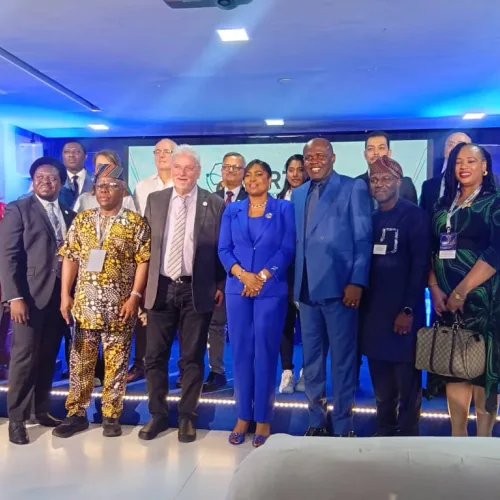
Salako, represented by the Deputy Director of Research at the Nigeria Institute of Medical Research (NIMR), Dr David Oladele, made the call at the International Symposium on Radiopharmaceutical Therapy (ISRT) 2026, hosted by Loveworld Medical Centre (LMC), Ikeja, Lagos, in collaboration with the World Association of Radiopharmaceutical and Molecular Therapy (WARMTH), the International Centres for Precision Oncology (ICPO) and the Chris Oyakhilome Foundation International (COFI).
The August 28–29 symposium, themed “Advancing Radiotheranostics & Precision Oncology in Africa,” brought together more than 120 participants from over eight countries across East and West Africa, including clinicians, researchers, nuclear medicine specialists, policymakers and other healthcare professionals.
Salako described radiopharmaceutical therapy as an important frontier in modern medicine, noting that it combines nuclear medicine, molecular imaging, pharmaceutical sciences and oncology to provide more targeted cancer treatment.
He said the development of local capacity was particularly important for Nigeria as the country confronts a growing cancer burden.
“Our initial response must go beyond improving access to conventional cancer services to embracing innovation, strengthening research and development, building a skilled workforce, and establishing the infrastructure and regulatory system required for safe and sustainable delivery of advanced therapy,” he said.
According to him, Nigeria must deepen collaboration between local and international institutions, facilitate technology transfer, conduct clinical research and generate evidence capable of moving radiopharmaceutical therapy from scientific promise to accessible patient care.
He urged participants to develop practical partnerships and recommendations that would strengthen cancer care and ensure that Nigerians who need advanced treatment can access it locally.
Speaking at the opening, Dr Adeola Philips, Executive Minister, Ministry of Healing, Health and Social Services and Chairman, Loveworld Medical Centre, said the symposium was driven by the need to combine “science, precision, and compassion” in cancer treatment.
Philips stressed that the measure of progress should not only be how long cancer patients live, but “how well the patients are,” including their dignity, self-esteem and quality of life.
She cited the case of a breast cancer patient who received free nuclear medicine treatment at LMC and whose longstanding open wound reportedly reduced significantly after treatment, describing the outcome as evidence of the potential impact of targeted therapy when made accessible.
She said the second edition of ISRT, following the inaugural Nigerian edition in 2024, demonstrated that sophisticated cancer diagnostics and targeted treatments could be developed, taught and delivered in Africa to international standards.
The symposium also featured international experts, including Professor Richard Kingbom, described as a pioneer in nuclear medicine, molecular biology and precision oncology.
Philips said LMC’s ambition extends beyond providing treatment to developing healthcare professionals and multiplying expertise across Africa.
The way forward, speakers emphasised, is to strengthen training, research, infrastructure, regulation, international partnerships and technology transfer while making advanced cancer therapies more affordable and accessible.
The symposium therefore represents a call for Nigeria and other African countries to move from dependence on imported expertise to building sustainable local capacity capable of transforming cancer care across the continent.
Please follow and like us:
Comments
Start the conversation about this story.