





Nigeria made its debut at Gamescom 2026 with the first-ever “Games from Nigeria” pavilion, bringing a 10-person delegation of developers, studios and publishers to Cologne.
The three-day showcase positioned the country’s nascent gaming industry alongside global giants, as it pitched original IP, talent and investment opportunities to platforms, publishers and investors.
The initiative arrives as Gamescom 2026 features over 1,700 exhibitors, with country pavilions providing national games industries a platform to connect developers and companies to the international market.
For Nigeria, presence alone was significant. But the ambition went further: to break down one of the biggest barriers facing African developers — access to publishers, investors, platforms and distributors.
“This is a great opportunity to showcase the future trajectory of Nigeria’s emerging games ecosystem and a signal to the world that we have immense talent and the ability to compete in the global industry,” said Hugo Obi, founder and CEO of Maliyo Games and leader of the Nigerian delegation.
“For years, many of us have been building studios, training talent, creating games, gathering industry data and trying to connect Nigeria with the global games economy.”
“Games from Nigeria brings all of those efforts together under one identity. We are saying: we are here, we are building, and we want to work with the world.”
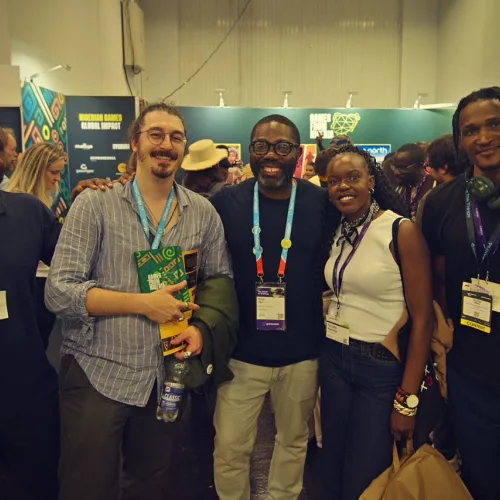
Across three packed days, the pavilion became a meeting point for the global industry. Visitors played Nigerian-made games, met developers, and joined discussions on investment, publishing, skills and distribution.
A dedicated program culminated in the Africa Games Industry Mixer, designed to create direct connections between African studios and international partners.
The debut drew notice from industry leaders. “It is incredibly exciting to see Nigeria establishing such a visible presence at Gamescom,” said Maria Burns Ortiz, managing director of Global Game Jam.
“Initiatives like Games from Nigeria create opportunities for that talent to connect directly with the global industry.”
“Seeing Nigeria represented here in Cologne is an important milestone, and hopefully just the beginning of a much bigger story.”
The push is timely. Africa is now home to hundreds of millions of players, with mobile gaming dominating. Yet most revenue still flows to games developed outside the continent, and the number of established African studios remains small.
Nigeria, one of Africa’s largest gaming markets, is betting it can help close that gap.
Delegates represented not just game development, but community building, education, research and events — a snapshot of an ecosystem building the infrastructure to move from emerging to sustainable.
Organisers say the goal is for Games from Nigeria to become a recurring international platform.
“The real measure of success isn’t simply that we built a beautiful pavilion at Gamescom,” Obi said.
“It is what comes next — the introductions that become partnerships, the games that find publishers, the developers who gain access to new markets. This was our first outing. It certainly won’t be our last.”
Nigeria came to Cologne with games and a bold idea. It leaves with visibility, relationships, and what Obi called “a seat at the table” — and a clear message that Africa does not just want to be the next great market for games. It intends to be one of the places where the next great games are made.


Josephine Okojie-Okeiyi is a journalist with over five years’ reporting experience. She writes on industry, agriculture, commodities, climate change, and environmental issues. She is fellow of Thomson Reuters Foundation and Bloomberg Media Initiative for Africa.
Comments
Start the conversation about this story.