




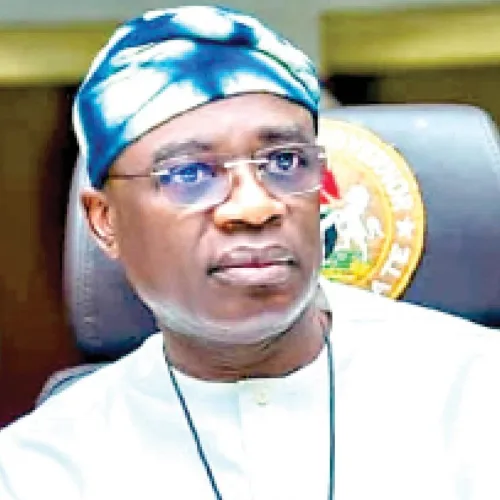
Benue State governor, Rev. Fr. Hyacinth Alia, recently had an interactive session with journalists, including MUIDEEN OLANIYI, where he talked about the plans to close some Internally Displaced Persons (IDPs) camps, his re-election interest, the infrastructural projects, the state’s development plan, and the revival of moribund companies, among other critical issues. Excerpts:
Can you say that your administration is pursuing its blueprints based on the roadmap you set when you assumed office?
Some three years ago, we came into governance with our own blueprints. And we defined and identified projects we deemed fit for the good people of the state. So, we came out to have them executed. Much has been done. Thank you so much for going out to the field to see what we have been able to achieve. And as much as much is done, I know that so much is still left to be done. The fact here is that the moment we came in, we had declared a state of emergency on our road infrastructure. This is why, if you go around the 23 local governments, there has been a very good connectivity of road networks now in most parts of the state. In a number of our urban places, we are doing urban renewal roads. And all the interior within some major townships here have also been converted into the newness of what they are today. We have done a lot in the reformation and revamping of our primary schools. They were in the ICU (intensive care unit) when we assumed office. Local government primary schools were no longer being attended to. So, we were able to give some priority attention just to revamp hundreds of primary schools and local governments back to life. We were able to hire 9,700 teachers just for the primary schools. And then, we also went statewide to take care of the primary health institution.
Before now, life was literally running out of the tertiary healthcare teaching hospital. And it is fixed now to the point that we are having medical tourists coming from all the surrounding states here. We are very grateful for that. We also have a VIP wing of it and, in fact, this is one of the units that is most attended by those who come from outside of the state. I think it is simply due to the fact that we have a number of specialists to cover those areas. Now, we have to get back to the basics, the primary healthcare establishment. They had vanished for some reasons because no attention was given. Now, hundreds of our primary healthcare establishments have been brought back to life and we intend to do that. As I speak here now, we are expecting some consignment to come in from the United States. We have been in some collaboration and partnership with some U.S. subnational governments on health. So, we ordered some instruments that will be coming. These are meant to be delivered to the primary healthcare in different local governments. Why did we have to do this? When you say you will, I think the willpower should also be accompanied. And when you tell the people this is what will make or promote them, I feel something has to be done about that. And we had monitored very closely the words we had given the people. We had to inspect what we were expecting out there. So, the results you see out there now is the inspection we had done to ensure that a blueprint was made, promises were made to people.
We received adequate funds from even the federal government as well and that gained a lot of support from us. We had a hiccup, and the hiccup being the insecurity and insurgencies. But again, thank God that the federal government immediately swung into action and we have relative peace in this state. How do we get the indices? It is through our security apparatuses who are out there in all the local governments, the traditional institutions, and our own very people, the citizenry of the state who are there. We had a chunk of the IDPs (Internally Displaced People). Fifteen IDP camps were set up around the state. Now, we have a few IDP camps. We are just already making some plans to close down some because the IDP occupants have very directly and voluntarily gone back to do their farming. By the durable solution we have made with the collaboration and the partnership of the international community, the United Nations, the International Organisation for Migration (IOM), the UNHCR, we truly appreciate the efforts and their support. We made efforts to ensure that the IDPs are returned to their homelands and back to their farms. It is not just for them to go back to farm and then come back again. You continue to see a dwindling number from the IDP camps and this is because they are out there, not just farming, but now constructing their own homes back.
So, we remain very grateful to the federal government that has made us to be able to execute quite a number of projects here. And I think it is the only way to go for people to experience dividends of this democracy. They have to feel, see and know that, yes, we wanted this, it is done, and we are using it and we are applying it. We intend to continue with that.
What are you doing differently to make sure that the next step of projects – the ones you are resuscitating and the ones you are starting today – do not suffer the same fate of abandonment after your second tenure ends?
Thank you so much. It is a very tricky question. Trying to answer it expressly, we need to touch on the inefficiencies of certain leadership. And there has to be a direction. There has to be a mission and there has to be a vision. Benue State is 50 years old this day. And in the 50 years, we’ve had a series of leadership that came in and out. As a state, do we have a development plan, a master development plan? The answer is no, we didn’t. So, when people came in, they made some inroads on what they thought were meant for the people. But again, this is what the blueprint is expected to be. You do a filtering from the people you are going to serve. What are your needs, your priority needs? Do you really want this? Do you really have this as a need? Want is different from a need. So, when you do not do a filtering, the tendency of you just simply doing the want of the people, it is there. We had to go down to the trenches to ensure that this is what the market woman is needing at this particular time. This is what the farmers are desiring. And this is what everybody in the state truly seeks to have to take us from the so-called glorified village status to the proper status of a city, where we have headquarters and then improve our other townships and all that. So, this is directly from the people. And on a number of the other projects we have done, there is some caveat to enable it to stay sustained. And if people say the government does not have business being in business. If government does not have those whose minds are hung on business, then every little effort made, you know, it is going down the drain.
We have established the Benue Food Basket Brewery. We had one before. If you make statistics from the people to know why we had more beer brewery here previously during Aper Aku, it was simply because people desired it. If through that means, a lot of capital flight is being made against us, the state, and those who are supposed to be enjoying same, you would experience some problems like that. It is not that we have people who love to drink so much. It is food. People love it. We make it from local produce, from the sorghum we produce, from the cassava we produce, and from the corn we make. So, if we are producing this, why are we not converting it so that we all have the ripple effect of the value chain? So, this is being made. And there are a number of things that are put in place to ensure that the Zeeva factory survives. We also have a separate factory for the juice, the concentrate factory. All those three factories made in the last three years are functional and they are meant to remain as such because we continue to monitor. We have the right people to ensure that things work. Now, we are also getting some partnership from the civil society out there who want to have these. Now, in the last one year, a bag of orange has risen from 3,50ra to 17,500 naira. So, there is a lot of competition on that. The farmers are also going to enjoy. We have already registered all the site rooms and those who have their orchards. Different frames of farms are being registered under cooperatives. They know that this is the source of where the funds are coming for them. One, this is to pay their farms. Two, it is to expand the farms and then to keep smiling to the bank. So, there is a full assurance of what they do today to sustain tomorrow.
It is quite unfortunate that we had lost the Taraku Mill. It is one of the very huge components to drive the economy here in the state. That arm of commerce had died because people felt it was just a common cake. Get your knife, cut a chunk, and then you leave. But at the end of the day, everybody lost in the state. Benue State was the number one producer of soya beans here, nationwide. So, we are now trying to work our way back to the front line again. And what is that going to do to the farmers? They understand that the Taraku Mill, to come back, it is going to be a market sustenance on the produce they are doing on the farm. Already, we have started giving farm incentives. We are giving some money to non-farmers, to very big farmers, to go and then get back onto the soybean farming. We are already giving farm inputs to those who have identified themselves. Some data was already taken. So, if some good guard we have in place now would be sustained as we have designed and planned, I want to believe that we are going to even raise more companies here.
READ ALSO: Why I shared ‘Alia Bread’, Action Bitters to Idoma community — Benue deputy gov
Once cottage industries are in place here, a number of lives are going to be changed. We are even planning to have a Benue Farm Market in Abuja. The road is now express. We used to do five and a half hours from here to Abuja. Now it is even shortened. It takes under three hours for us to get to Abuja. So, what stops us from bringing the Benue fresh farms, oranges, yams, you name them, over there? Except if you do not plant, you harvest on this land. So, these are the advantages we have. And if people are making money consistently from their produce, we are going to remain on the path we have now taken. So, we did not just bring back to life the Taraku Mill, it is just one factory that we have resurrected. But all the other new ones are also going to be sustained. And I am very hopeful that as people get some more money and smile to the bank, they are also going to ensure that they will keep coming back to us.
A former military governor of the state described Makurdi as a very big village. Today, Makurdi’s status is changing to that of a big city. We saw high-level interchange in Makurdi and Gboko and the Oju-Awaji Road. How have you been able to put this in place? What are the plans to expand with the hope that the people of Benue State will renew your mandate?
Development is a consistent thing that must happen in our lives, like it or not. So, I know we are still going to stay on that path. Benue at 50, we began a 30-year master plan to ensure that even after power is changed, the same developmental dynamics are still kept. Same vision is being shared and same mission is being embarked upon through this developmental plan.
So, I want to believe that if people continue to hold us and those who come after me accountable for the results to be given. So, I want to believe that it is only one new trend to keep on. These are people-driven projects. Gboko Underpass, for instance, you could just count the number of houses further down towards the Northwest where you stood to see it. I was there and I witnessed how people were being crushed by trucks and trailers in the morning. Poor women who were selling, preparing breakfast, selling their daily bread, pushing their wheelbarrows to cross the road. So, the memories were still on my psyche. And that is the only thing to do to help them and minimise accidents. That part of the road and part of Gboko had experienced that from many years back. And even recently, shortly before we got into the stage of governance, I know two Okada people who had lost their lives. I am a patron of Okada. So, I understand what they do and where they are. So, we had to do this road. And to all the other ones we have done, these are people-driven projects and they are made not just for the fun of the day, but they are fundamentally made.
The roads we are doing are very different from the roads done previously and in a number of places elsewhere. The roads we are constructing are stone-based roads that have a guarantee of over 30 years. This traction to the road projects is not only in town but also in different parts of our suburbs. We do this so that as we begin to build the master developmental plan of the state, if we consider roads, it is going to be not as heavy as it would have been. We have taken care of the primary healthcare. We have already embarked on the secondary tier of the health system. If those are done and subsequent administrations come, they will have less concentration on them because they are fundamentally and diligently done in a manner that durability is guaranteed and is visibly also felt.
The projects we have seen indicate that you have a very good vision of development for your people. But you will agree with me that Nigeria embarked on the sale, privatisation, and commercialisation of its industries many decades ago. But here in Benue, you are going into the revival of economic ventures like the Taraku Mills and Brewery. Under what financial and economic arrangements are you embarking on this? Is the state going directly to use public funds to revive them? Or are you partnering with some private companies? What methods are you going to use to ensure that these projects work well for the Benue people?
I am going into certain partnerships. In fact, this afternoon, we were about to sign something, but the point man who is supposed to do this had another function. So, we had to wait for the signing on some projects on food security.
This is going to be an agricultural zone in Oturkpo axis where much land has been given to these people. We have done our part by giving the land. We are taking care by constructing the road to this space. And then they bring in their own facilities also to put this. We share in the residues that are going to come from here. So, I think it is one quick way to do this. Let us not be deceived.
I think what we know these days is superior to what people knew and were practising yesteryears. It simply means that for us to get more mileage on the produce we make on our farm, for us to be able to expand our farms, for us to be able to create more economy from the drive we do on those farms and different forms of commerce, we have to be mindful of the value chain in between. So, anything short of that would never work. People want this. People have a desire for it. They go back to their farms. They are now expanding their farms because of the support we give them. We just distributed over 11 trucks of fertilisers from the federal government. We did ours some two months back at the level of the state to our own farmers. And when we do this, it is at a subsidised rate. So, why are we doing this? To ensure that there is continuity on their own farm. And then, we want them to expand those farms. The gains they make from here, they do not just carry the raw materials straight to the buyers’ hands. And this is why the establishment or the revival of the Taraku Mill is being done. Already, people are coming to the table to partner on this. If the state never uses our public funds to revive the Taraku Mill, it would only be the part that cooks the rice but never eats the rice. So, we want a share in what we spend our money in establishing. As we bring it back to life, those that are being attracted, the fat companies that want to come in and join us on this, have already their documents on the table for us. So, we have been going through three, four separate companies to see how they can come in to partner with us. I think it is one quick way that our farmers are going to have their full value chain.
We have travelled with Mr President to France. And one French businessman who is conversant with some part of Nigeria was asking why Benue State has so much soybeans. But we are not exporting our soybeans. So, the simple answer I had given after a presentation I made was that what we need is for us to be able to use every part of this soybean back home. They can come to us with their own factories and every other form of partnership they want to do rather than us trying to struggle with this soybean and take it over there. The value chain remains very limited. So, we want it at full scale.
In response to a question earlier, you mentioned insecurity as a hiccup and thanked the federal government for quickly coming to the rescue. In response to another question, you mentioned inefficiency at some level. What is the hardest part of governing a state like Benue that people outside this Government House don’t really see? Is it vast geographical space, politics of indigenship or something else? What keeps you awake at night?
A number of things keep me awake. For those who were in Benue, say, five years back, you knew what it looked like. And by coming back now, you can tell what it is. Because there is a political will. Benue is large quite alright – 23 local governments with large land mass and population of about 7 million. It is large. But again, what modus operandi was being exhibited and executed by leadership previously? I believe that you cannot keep doing one thing all the time and expect a different result. So, we had a need to bring in reforms. And when you bring in reforms, where there is so much drought of funds, drought of ideas, and drought of implemented projects on the ground, you really have to sweat. And you sweat badly. The reforms we have brought to bear are the ones that are giving us results. But then reforms present a pushback from those who had enjoyed just a normal same old status quo. Don’t do this. It was not here. But we still live and exist. So, would the earth stop going round if we do them? So, the answer is no, but status quo now becomes a problem. Is it roads that we eat? No, it is not roads that you eat, but at the same time intrinsically you enjoy the roads and you eat the roads because they have gone through your farms, they have gone through the market square and then from the produce on the farm, they are coming back to the buyer in the town or in some suburb area.
So, it means you are still eating the roads, but at the same time, a 5-year-old boy that doesn’t have anything to show for can be a problematic child. So, he has to augment himself. We are augmenting the state in the manner that people have already started enjoying the reforms that are here. Parents are enjoying not paying any school fees to their children from Basic One to Basic Nine because we are using their own money given under the custody of government leadership to take care of this. In other words, pinching the pain to ensure that we do this thing. We are taking care of the primary health system now. If you have malaria, you don’t have to leave my village to come all the way to Makurdi to spend three and a half hours to treat malaria here. With the clinic, hospital, and General Hospital we have, we have the primary and the second tier, which is the General Hospital by the same axis. That takes care of a number of things. It is the same thing with the primary school. Initially, there was some kind of resistance. If you go back to history, reforms bring resistance. I think it is part of what the federal government might be suffering from. So much is done. I just made a pronouncement here that with much money the federal government is giving us, thank God, you have seen that this money is being translated into those projects, Otobi Water Works, series of roads and underpass you have seen, schools, hospitals. And I think it is the only way to go. There has to be a direction. Part of your question is calling for an immediate establishment of masterplan on our development because each administration that comes in now takes a look at it and picks what to take care of. He can pick one to four. Then, we are moving forward. This is how Lagos also began. This is why I was highly enthused about President Bola Ahmed Tinubu becoming the president. I knew what he went through. I knew how the city was. And in the last 25 years, the masterplan that was made has been religiously executed. So, if we have similar thing, and this is a trend we have actually taken. But reforms have to be brought in so that the newness of what we seek is being established. As we continue to do this, it is going to be very helpful. Since we came in, we have never ceased paying salaries. In the last three years and counting now, we have never stopped paying pensioners.
This question is on money. A few years ago, governors were running to Abuja, caps in hands begging for money to pay salaries. Now, you are talking about expanding your projects, where are you getting the money?
The President loves the state so much. But at the same time, what he gives Benue is what is being distributed elsewhere as well. So, we are all having a very common share. In fact, we have so much on the ground. Since the harnessing of what we have has not fully taken its position on the table, we are yet to have our 13 per cent derivation. I think quite soon, we are going to be there. You may hear the announcement on the oil and gas that is found in the state here. So, much attention is already given there. We are also not just having a pipeline, work has already begun on harnessing the series of solid minerals we have. Nigeria has quite a chunk. Benue has a share in those 43 varied solid minerals and quite a number are on a commercial basis. The federal government will increase our IGR (Internally Generated Revenue). Our IGR has been increased again simply because of the monetary. The oil subsidy (removal), I think, is the one that is throwing this back to us. The funds that were being used to ship the oil or to get the oil in different places, it is now being brought to us directly. We must say it….
With regards to your collaboration with the federal government, how will you assess it?
Prior to my coming in, there was no love lost between our subnational and the federal government. Things had gone sour. The end result was that the state lost so much. People did not have relevance. They (people) did not know what was actually happening from the central government. So, we had to renew our relationship. Now, it is quite superb. And this is why the federal government, Mr President, has been quite good to us, the sub-national. Remember, we are running a federation – the federal government and the sub-national here. What we receive from our federation account, it is what enables us to do what we do. The attention we have given to re-energising our internally generated revenue, it is what enables us to do what we are doing today and to ensure we are paying without owing anybody.
Comments
Start the conversation about this story.