





Following recent indices on the rise of malnurished children in Niger State, the state government has warned that failure to address the challenges during the first 1,000 days of a child’s life could have devastating consequences for the state’s future human capital and socio-economic development.
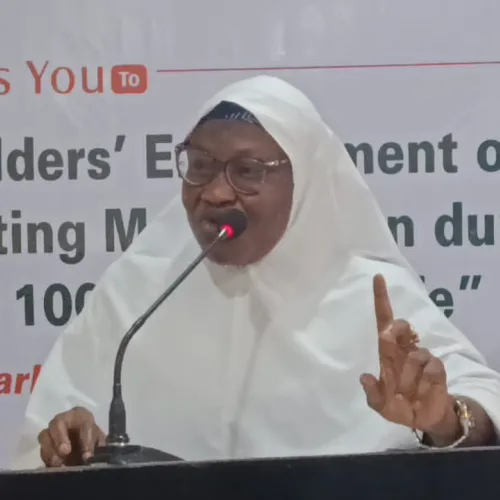
While making this disclosure at a one-day Stakeholders Engagement on Preventing Malnutrition During the First 1,000 Days of Life organised by the Planning Commission in collaboration with the United Nations Children’s Fund (UNICEF) and funded by the United States Government, the Permanent Secretary, Niger State Planning Commission and Chairperson of the State Committee on Food and Nutrition, Hajiya Aishatu Usman described malnutrition as one of the most pressing public health and development challenges confronting the state.
Speaking to participants drawn from Ministries, Departments and Agencies, development partners, civil society organisations, academia, health professionals, traditional institutions and community leaders, Hajiya Usman warned that unless urgent, coordinated and sustained action is taken, thousands of children could continue to suffer irreversible physical and mental impairments, poor educational outcomes, weakened immunity and reduced productivity in adulthood.
According to her “the first 1,000 days from conception until a child’s second birthday represents the most critical period in human development, as nutrition received during this window determines brain development, physical growth, learning ability and overall health throughout life.
“The situation remains particularly worrying across many northern states, including Niger State, where food insecurity, poverty, inadequate infant and young child feeding practices, recurrent disease outbreaks, poor access to safe water and sanitation, and the impact of climate-related shocks continue to place thousands of children and pregnant women at nutritional risk”.
She noted that although nutrition interventions are ongoing, persistent pockets of child under nutrition in the state demand sustained attention and stronger collaboration among all stakeholders.
“The first 1,000 days represent a golden window of opportunity. What happens during this period profoundly shapes a child’s physical growth, cognitive development and future productivity. Preventing malnutrition is not just a health priority; it is an investment in the future of our state and our nation,” she stated.
“Despite ongoing interventions, malnutrition remains a significant threat to maternal and child health, stressing that its consequences extend beyond the health sector to education, economic growth and sustainable development”.
The Permanent Secretary cautioned that unless the trend is reversed, the state risks raising a generation whose full potential may never be realised because of preventable nutritional deficiencies.
She therefore called for an integrated, multi-sectoral response, insisting that government alone cannot tackle the challenge without the active collaboration of development partners, donor agencies, civil society organisations, the private sector, tradition.
In their goodwill messages, Development partners including the World Health Organisation (WHO) and the UNICEF, disclosed that Nigeria has the second-highest number of stunted children globally, with about 32 per cent of children under five suffering from stunted growth, while an estimated two million children are affected by Severe Acute Malnutrition (SAM) every year.
Please follow and like us:
Comments
Start the conversation about this story.