





In recent memory, former governor of Kano State, Senator Rabiu Musa Kwankwaso, has become one of the most fascinating studies in political reinvention, emotional intelligence, and strategic humility. To watch him accept to deputize Peter Obi on the platform of the NDC, whether from a position of strength or limited choice, is to watch a man refuse the applause of a crowd that has already decided what pride should look like.
We are conditioned to believe that ego is principle, that entitlement is dignity, that a man who has been senator, minister, and governor of one of Nigeria’s most populous states cannot, under any circumstance, stand behind someone younger, or less experienced on paper. Yet Kwankwaso did exactly that. He chose alignment over noise, possibility over posture.
That choice cuts against an unwritten law we have all absorbed in Nigerian politics. Once you have been a minister, you do not go back to local government. Once you have been a lawmaker, you do not walk the street again. Once you have tasted power, poverty must never see your face.
Political scientists call this status inconsistency, when the social rank a person is expected to occupy no longer matches the office they hold. Sociologist Max Weber warned that societies confuse authority with prestige, and when the two separate, people panic. Psychologist Leon Festinger would call the discomfort cognitive dissonance. We say we want service, but we punish anyone who serves outside the title we gave them in our heads.
This faulty expectation is what corrupts our political culture from the bottom up. A councilor who serves for three to four years with no pension becomes obsessed not with what he will do in office, but with what he will do after it. The thought that “life will never remain the same” becomes a quiet terror.
Research on political exit in Africa by scholars like E. Gyimah-Boadi shows that the fear of post-office irrelevance drives accumulation, patronage, and even desperation. When a former chairman joins public transport, it trends. When a former House member rents a flat, people whisper. We turn their decline into comedy, into pity, into content with better flavor than any skit. The message to those in office is coded but clear: “Be a big man for life.” And so they count days, save in fear, and treat public office as a lifetime annuity instead of a temporary assignment.
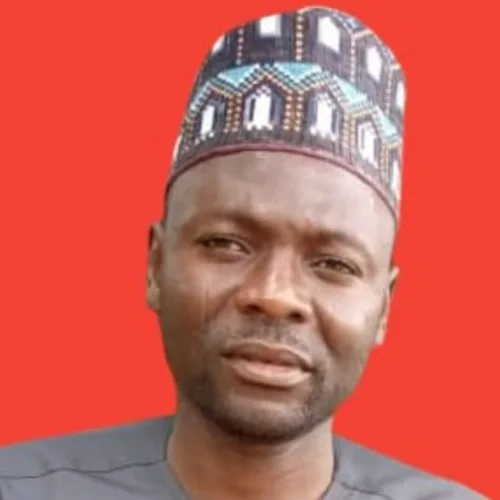
Kwankwaso’s move and another small story from Kano this July 29, 2026, tell the same truth from opposite directions. In Sheka Ward of Kumbotso Local Government, the sound of sewing machines has replaced the sound of sirens. Abdullahi Gali Shitu, known as Comrade Abdullahi Gali Basaf, returned to tailoring after the Kano State High Court nullified his Certificate of Return in March 2026 and declared Ali Musa the rightful chairman. Until then, he had governed Kumbotso for one year and three months, built schools, facilitated hospitals, and sponsored over 2,000 students. But the court was swift, and he was out. Most people would have disappeared into lobbying, into bitterness, into the chase for the next appointment. Basaf went back to his shop.
He said it plainly: politics should not be the sole focus. Tailoring, he argued, is not small. It funded his campaigns. It employs about twenty people. It gives stability that office cannot. “Politics can change overnight. You can be in office today and out tomorrow. But tailoring remains. It feeds you, it supports your family, and it allows you to help others.” Even with a Bachelor’s and Master’s in Political Science, and with networks that could earn him white-collar jobs, he chose the trade he started as a youth. His goal now is to build a garment company that employs fifty or more. He wants young people to see dignity in work, not shame in returning to it. Basaf’s journey was shaped by Kwankwasiyya politics.
He founded Kwankwasiyya Reporters in 2015, chaired ANP, ran for Senate, served as SSA on Information, and then won the LGA. The court ended one chapter. He started another, not as fallback but as philosophy.
That philosophy is rare because we have made it shameful. The contrast was loud when Isaac Fayose mocked his elder brother, former Ekiti Governor Ayo Fayose, for accepting appointment as Chairman of the Rural Electrification Agency (REA) by President Bola Tinubu. In a video shared widely, Isaac reminded the public that his brother had vowed never to take DG, minister, or senator positions again, that he was already a billionaire, and that the REA job was “beneath” him. “They no give him minister, they no give him ambassador,” he said, comparing it even to Reno Omokri. He called it a Greek gift and urged his brother to give it to his son instead. Sahara Reporters and others carried the story.
Isaac is not alone. We have normalized the idea that a former governor must only become senator, minister, or party chairman. Anything else is an insult. We rate “service” by what it pays, not by what it fixes. So we ask: what is so small about chairing the board that will determine electricity for rural Nigeria? Why do we treat the sector that defines our growth as a consolation prize? The answer is in our culture of symbolism. We demand that leaders maintain a permanent “big man” life after temporary office. To meet that, they must be greedy. To avoid that, they must be accused of greed.
This is where Kano quietly offers a correction, and it is not new. Professor Shehu Jibrin Bida (Marafan Nupe), the first Professor of Veterinary Medicine in Northern Nigeria and first Nupe professor, left a distinguished career at Ahmadu Bello University (ABU) to serve as Commissioner and later as Chairman of Bida Local Government. People called it humility. Others called it waste. He called it service.
More recently, Professor Salim Abdulrahman, former ASUU chairman, became Chairman of Gwaram LGA in Jigawa and later ALGON chairman in the state, saying the grassroots was a noble calling. In Borno, Professor Adamu Alooma of Banking and Finance was elected Chairman of Damboa LGA in 2020, and Professor Ibrahim Bukar of Education took Gwoza the same year. Each time, the public asked the same question: why would a professor do this? Each time, the answer was the same: because impact is not measured by rank.
What Kwankwaso, Basaf, and these professors are doing fits what scholar Joseph Schlesinger called “descending ambition”, the rational decision to take a lower office to remain in the game of service. It also reflects what leadership theorist Ronald Heifetz describes as “adaptive leadership”, the courage to abandon the image people expect of you in order to meet the reality in front of you.
The public wants a neat arithmetic of progression. Life defies it. A man can go up early and find no higher seat left. A woman can leave office and find that the only thing that feeds her is the trade she never abandoned.
The aim here is simple. Society must learn to adjust with people when fate turns. We must stop making survival a scandal. If we insist that everyone must always go up, what happens to those who rose young? What happens to those whose tenure ends and the economy does not care about their CV? The pressure to maintain status is one of the engines of corruption. It tells a leader: steal now, because after this, you cannot trek, you cannot rent, you cannot wear simple clothes, you cannot be seen in a shop.
Yet we are the same people who belittle trade, who call tailoring, farming, or painting “small business,” and then wonder why unemployment grows and why leaders cling to office like life.
Kwankwaso, by aligning without applause. Basaf, by returning to his machine without shame. Bida, Alooma, Bukar, and Abdulrahman, by choosing LGA over lecture hall. They are retelling the story. Public office is temporary. Dignity is not. Service is not about the size of the title, but about what you do with the time you have.
And sometimes the most thrilling, most radical act in Nigerian politics is not to climb higher, but to come down gracefully, and still serve.
Bagudu can be reached via bagudumohammed15197@gmail.com or 07034943575.
Comments
Start the conversation about this story.