





Based in Arusha, Tanzania, the protocol establishing the African Court on Human and People’s Rights (AfCHPR) was adopted in 1998 and ratified in 2004 by more than 15 countries. Blueprint.ng correspondent writes on its journey so far.
The Gavel that echoes across a continent
From landmark rulings to human rights battles, the African Court on Human and People’s Rights (AfCHPR) for twenty years now has moved from a paper idea in Arusha to the most authoritative judicial voice on human rights in Africa.
Significantly, the continental court has since it was berthed has espouses legal jurisprudence and has protected human rights in Africa.
Inside the temple of justice where Africa’s legal story is being rewriting via verdicts and major decisions by its jurists, the court has not only demonstrated its resolve to continually fight for human dignity in the continent, it has also compelled states to answer for rights, democracy and the rule of law.
From a farmer in Tanzania, a journalist in Burkina Faso, and an opposition politician in Benin Republic, the court was designed to be a last resort for citizens whose own courts failed them. So, for many, this court is more than a courtroom and was never meant to be just another legal body but the only place where people’s voice mattered against the power of the state.
Findings by this medium reveals that from freedom of expression to fair trial rights, from electoral disputes to the rights of indigenous peoples, the court’s judgments are now cited in law schools in Senegal, Nigeria, Tanzania, Kenya and Gambia, thereby given African human rights law its own language, separate from Europe and the Americas.
The judges and landmark decisions
Twenty years ago, it can be recalled, African leaders signed a treaty with a bold promise: to create a court that would hold governments accountable. Interestingly today, the court is marking two decades of existence and has built something rare in Africa.
Although the work has not been easy because the court has no police to enforce its orders, in most of its decisions, it has ordered states to pay compensation, release prisoners, and amend discriminatory laws.
In the Ogiek case against Kenya for instance, the court affirmed indigenous land rights. In the Tanganyika Law Society case, it defended the independence of the bar. Each ruling delivered by its judges chipped away at impunity.
Beyond the judgments are the judges; men and women from across the continent that have had to balance law, politics, and conscience. And behind them are thousands of petitioners, lawyers, and activists who believed that justice in Africa could be more than a slogan. They brought their pain to Arusha, and asked the law to answer.
Meanwhile, despite pushback amid successes which came with a handful of resistance here and there, judicial overreach, funding delays and political pressure, coups, shrinking civic space, digital rights violations among other setbacks, the court has put law above power in Africa and has given hope to millions.
Going forward, with a total of 476 decisions pronounced by the court as at July 2026, stakeholder in the legal parlance hailed the judges for their industry, but demands that though the court has given Africa a legal conscience, citizens he said should demand it gives legal consequences.
In an exclusive chat with Blueprint Judiciary, a Nigerian based legal practitioner, Emmanuel Umahi Ekwe hailed the court for its growing body of jurisprudence over the years, saying reputation through landmark decisions that have strengthened democracy, protected fundamental rights, and promoted accountability among African states.
“Since its first judges were appointed on July 2, 2006, the Court has built a strong reputation. Its greatest achievement lies in its growing body of jurisprudence, which has influenced national laws, judicial decisions, and governance across several countries. The Court has also strengthened Africa’s human rights architecture by providing victims with a continental platform to seek justice when domestic remedies fail.
“The journey, however, has not been without challenges. Limited ratification of its founding Protocol, the withdrawal of declarations allowing direct individual access by some states, inconsistent compliance with judgments, and funding constraints have affected the Court’s overall effectiveness.
Even so, the Court’s achievements far outweigh its setbacks. Two decades on, it remains a symbol of Africa’s commitment to justice, human dignity, and the rule of law, with growing expectations that its influence will continue to expand in the years ahead,” Ekwe said.
A tie back
At a ceremony held under the theme “20 years of service in protecting human and peoples’ rights,” which reflects its two decades of advancing justice across the continent, President of the Republic of Ghana, John Dramani Mahama, asks all African nations and individuals to respect and implement the Court’s judgments in good faith, harping on need for a declaration the declaration to allow individuals and NGOs direct access to the Court.
In his keynote address, President Mahama further made a strong appeal to African Union Member States that have not yet ratified the Protocol to the African Charter establishing the Court to do so.
According to him, with full cooperation with the Court’s mandate, including implementation of judgments and acceptance of direct access for individuals and NGOs, the court he emphasized would remain a judicial body established to protect human rights.
President Mahama also encouraged African Union Member States to engage confidently with the Court, noting that there is nothing to fear in appearing before it, as
In her remarks at the event, Deputy Chairperson of the African Union Commission, Selma Malika Haddadi, urges deeper reflection and renewed commitment on how to strengthen the Court’s impact.
While describing the Court’s 20th Anniversary as a historic milestone, she noted: “Twenty years of work have translated the promise of justice into real protection for Africans.”
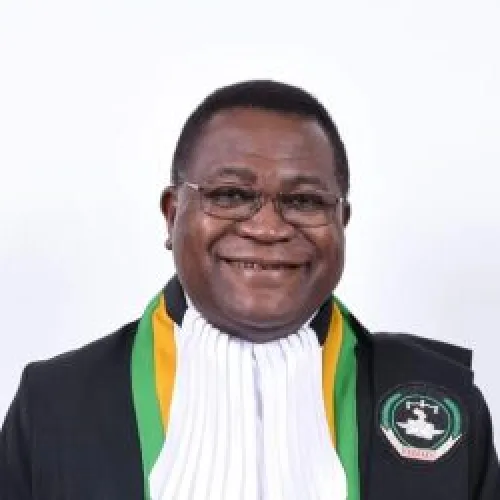
Giving a remarks, the President of the African Court Honourable Justice Blaise Tchikaya revisited feats so far recorded by the Court, saying its growing impact on continental jurisprudence and access to justice since its establishment in 2006 cannot be overemphasized.
The Court he added has handled over 370 cases and has contributed meaningfully to strengthening electoral standards, protecting vulnerable groups and advancing the right to life, dignity and political participation across Africa.
However, he expressed with dismay how limited ratification and low public awareness has continued to hinder broader access to the Court, expressing hope that greater engagement by Member States would enhance its impact.
Why 20 years matter now
After two decades it officially berthed to interpret law and defend democracy in Africa, experts in the legal parlance submits that the AfCHPR cannot just be a “court of last resort’ anymore that citizens should start demanding that it becomes a “court of first impact”
They also advocate for faster justice, enforcement with teeth by shame, naming countries that refuse to obey, granting of direct access for everyone, a continental campaign to get all 55 AU states to accept Article 34(6), take the court to the people and protect democracy before it breaks.
As the African Court marks 20 years, the question is no longer whether it exists. The question is whether Africa will let it work. Will more states accept its jurisdiction? Will governments implement its judgments?
For the millions still waiting for justice, the next 20 years will determine if this court remains a symbol, or becomes the shield it was meant to be.
But like its President Justice Tchikaya rightly pointed out, the court had in twenty years strengthened the protection of fundamental rights across Africa and has expanded access to justice for many who would otherwise have none.
To build on this progress, for the president, would only require greater ratification of the Protocol, stronger implementation of judgments and wider public awareness of the Court’s role.
Comments
Start the conversation about this story.