





Speaker of the House of Representatives, Hon. Tajudeen Abbas, Tuesday emphasised that it is time Nigeria deliberately prepares young people for positions of leadership, stressing that they should be active participants in shaping the country’s future rather than continuously referring to them as the leaders of tomorrow.
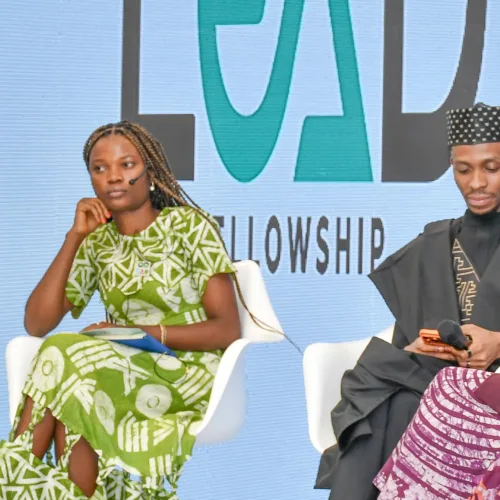
Abbas stated this at the launch of the LEAD Fellowship organised by the Gender Mobile Initiative at the National Assembly, Abuja.
He said the country’s large youthful population must be equipped with the knowledge, ethical values, institutional exposure and leadership skills required to transform ambition into meaningful public service.
Represented by the Chairman of the House Committee on Women Affairs and Social Development, Hon Kafilat Ogbara, the Speaker said leadership goes beyond occupying political office, stressing that it is fundamentally about responsibility, accountability and respect for democratic institutions and the rule of law.
“It is high time we prepared young people for power. As the trustees of our tomorrow, they must understand how government works and how to use political office to change society for the better. Without this preparation, they risk squandering the opportunity to effect real, lasting good,” he said.
He commended the LEAD Fellowship for targeting students in tertiary institutions, describing the initiative as a strategic investment in Nigeria’s democratic future.
“The youths are no longer merely the leaders of tomorrow; their time has come. As voters, innovators, entrepreneurs and community leaders, they deserve the power to influence the decisions that shape their lives today,” Abbas added.
He said the fellowship would help build a new generation of leaders capable of understanding public policy, questioning the use of power and strengthening institutions that outlive individuals.
Abbas also praised the fellowship’s inclusive approach, saying the deliberate inclusion of women, persons with disabilities and other historically marginalised groups was essential for strengthening democracy.
“The inclusion of women, persons with disabilities, and historically marginalized groups is not an act of benevolence. It is a matter of basic justice, democratic legitimacy and institutional effectiveness. A democracy that excludes large sections of society cannot be said to be representative,” he stated.
The speaker reiterated the House of Representatives’ commitment to improving women’s political participation through the proposed constitutional amendment to create special seats for women in the National Assembly and State Houses of Assembly.
He explained that the proposal was designed to address the long-standing under-representation of women without preventing them from contesting existing elective positions.
Abbas identified inadequate campaign finance, exclusion from party structures, cultural stereotypes and electoral violence as major obstacles confronting women seeking elective office.
“Nigeria does not need a generation that is simply more ambitious than the one before it. Our nation needs a generation that is wiser, more ethical, more inclusive, more technologically advanced and more institutionally minded,” he said.
The Executive Lead of Gender Mobile Initiative, Omowumi Ogunrotimi, said the initiative was conceived to address the growing disconnect between student leadership and opportunities for meaningful participation in governance after graduation.
The initiative launched the Leadership for Equity, Advocacy and Development (LEAD) Fellowship, an 18-month leadership programme aimed at grooming 1,000 student leaders across 10 tertiary institutions for ethical leadership and public service.
She disclosed that the fellowship is being implemented in partnership with the Office of the Speaker of the House of Representatives, the National Institute for Legislative and Democratic Studies (NILDS), the Office of the Senior Special Assistant to the President on Student Engagement, with support from the Open Society Foundations.
Ogunrotimi said the idea for the fellowship was inspired by the experience of a female student leader who questioned what opportunities awaited ethical student leaders after graduation.
According to her, the student recounted the challenges of navigating campus politics marked by political gatekeeping, transactional practices and attacks on personal integrity before asking, “Even if I survive all this, if I graduate and maintain my integrity, where do I go next? That single, courageous reflection became a mirror held up to our entire national governance ecosystem. It became the catalytic seed for why we are convened here today,” she said.
She noted that while young Nigerians are already practising governance and organising movements on campuses, society has ignored systemic shortcomings that threaten the country’s democratic future.
Ogunrotimi explained that the LEAD Fellowship was designed as an institutional response to both challenges by providing structured leadership training, mentoring and exposure to democratic institutions.
The spokesman for the House, Hon. Akin Rotimi, urged young Nigerians to prioritise character, competence and service above the pursuit of political power, insisting that the country’s future depends on deliberate investment in ethical leadership.
Rotimi said effective leadership does not emerge by chance but through intentional mentoring and preparation.
He described the fellowship as a timely initiative that would equip young Nigerians with the values, skills, exposure and networks required for leadership and public service.
“Strong institutions require capable leaders. Leadership must therefore be identified, nurtured and developed,” he said.
The Director-General of the National Institute for Legislative and Democratic Studies (NILDS), Prof. Abubakar O. Sulaiman, said Nigeria’s democracy can only be strengthened through deliberate investment in ethical leadership long before individuals assume public office.
Sulaiman, who was represented by Dr Shuaibu Danwanka, described the fellowship as a bold national investment in ethical leadership, democratic resilience and inclusive governance, saying it responds to the critical question of who will lead Nigeria in the future and how the country is preparing its young people for that responsibility.
“Today’s event represents far more than the unveiling of another fellowship programme. It is the launch of a bold national investment in ethical leadership, democratic resilience and inclusive governance,” he said.
Please follow and like us:
Comments
Start the conversation about this story.