






In about two weeks, I will commence my fourth month in the MTN Media Innovation Programme (MIP) at Pan-Atlantic University’s School of Media and Communication. It is a six-week residential programme spread across six months for media practitioners in Nigeria.
But in such a short time, my mind has been stretched, and I have been challenged not only to think outside the box but also to question the status quo, especially how journalism is practised in Nigeria.
On 18 May, my journey back to the classroom began. It had been 13 years since I last walked out of a university classroom after completing my Master’s degree in Media and Communication. I never imagined I would be back ‘so soon’. Between leaving the classroom and returning to it, I welcomed a set of triplets who are now teenagers. But if you’ve ever raised multiples while juggling full-time editorial responsibilities and everything else life throws at you, you’ll understand why going back to school seemed almost impossible, even a little over a decade later.
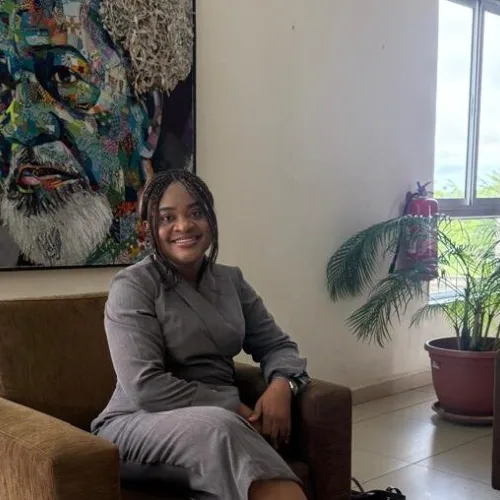
 Jayne Augoye returns to the classroom after 13 years
On my first day back in class, I expected lectures, assignments, and, let me confess, familiar media and communication concepts that I would easily relate to. But boy, was I in for a surprise! And, in fact, the last thing I expected was to have my assumptions about journalism, innovation and even myself challenged.
It was at that point that I realised I was about to unlearn, relearn and learn all I thought I knew about media, journalism and innovation, while rediscovering what it means to remain relevant in a rapidly changing media landscape.

While my standout classes so far remain Innovation and the Future of Legacy Media (using The New York Times case study), Media Entrepreneurship and Product Thinking, Creativity and Design Thinking (SCAMPER and the Six Thinking Hats), and Corporate Communication and Strategic Planning, I will never forget the mindset shift I have experienced in such a short time.
It has been mind-blowing, literally opening my eyes to see beyond my immediate field of vision and reminding me that we are not just journalists but are storytellers, innovators, problem-solvers and product thinkers.
The humility of becoming a student again
One of the biggest adjustments isn’t the intensive coursework; it is the mindset. And of course, although multitasking comes naturally to mums, balancing motherhood, school, my editorial responsibilities and reporting duties at PREMIUM TIMES has been both challenging and humbling.
I’ll explain.
After more than 16 years in journalism, making news judgements and mentoring younger reporters, I found myself back in a classroom taking notes, learning alongside Gen Z media practitioners, content creators and veteran newsroom leaders, asking questions and occasionally admitting, “I don’t know,” while exclaiming, “Wow!” now and then. The experience has been one I won’t forget in a hurry.
 Jayne Augoye returns to the classroom after 13 years
If I entered the programme thinking, “What do they want to teach me that I don’t already know?” I have consistently left each class humbled, while also realising how much I actually knew.
Although some concepts were entirely new, I also find I can relate to many of the discussions and contribute to classroom conversations by drawing on my own newsroom experience.
There is something incredibly humbling about becoming a student again, as it reminds you that experience is valuable. Still, it should never replace humility, open-mindedness, willingness to adapt, and curiosity. Oh, and how did I almost forget what it felt like to be one of the oldest in my group? (Mind you, I’m not that old!).
We were divided into groups for several assignments and presentations, and in my group, there is a tech bro, a tech content creator, a music journalist and then… me. Now you get the drift. There is something incredibly humbling about staying up late with my teammates, brainstorming ideas, preparing presentations, debating concepts and racing to meet deadlines just like we were back in university. I have to consciously remind myself that experience didn’t automatically make me the smartest person in the room. Sometimes I am there to learn, and other times I can share from my newsroom experience; this intergenerational exchange of ideas is one of my biggest takeaways from the programme.
More than lectures
One thing that strikes you almost immediately at Pan-Atlantic University is intentionality. And I say this carefully, without the risk of sounding overly patronising, because that is the best way I can describe the learning experience.
Every lecture, classroom discussion and group presentation is designed to encourage critical thinking rather than passive learning.
In fact, if, like me, you don’t particularly enjoy taking notes, you won’t need anyone to remind you because the lecturers rarely stop at theory.
 Jayne Augoye returns to the classroom after 13 years
Almost every session ends with questions such as: “How will you apply this in your organisation? and”What happens after this programme?” What these questions do is automatically ensure you are not just another passive student sitting in class. They force you to think beyond the lecture room and imagine how each lesson can transform your organisation and career.
Learning from those shaping the industry
The diversity of facilitators has also been refreshing. We have been taught by top MTN executives, telecommunications professionals, media entrepreneurs, policymakers, newsroom leaders and leading lights in the creative industry.
Their willingness to share both successes and failures bridges the gap between theory and practice in a way few professional programmes do.
I particularly love the fact that they stripped themselves of the larger-than-life personas often associated with their positions; they demystified themselves completely and have just been human.
Equally enriching has been learning alongside journalists, broadcasters, YouTubers, digital creators, editors and media entrepreneurs from across Nigeria. The classroom has become a melting pot of ideas, perspectives and experiences. After almost every class, I am reminded that innovation often happens when people with different backgrounds come together to solve problems.
Thinking beyond journalism
The biggest shift for me has been moving beyond thinking solely as a journalist, and that, for me, has been the sweet spot. Before MIP, I largely viewed my role through the lens of reporting and editing, but today I find myself asking different questions. Who is the customer?, What problem are we solving?, how can this story create more value? And how do we build sustainable media businesses in a rapidly changing digital economy?
These are questions I never imagined would occupy so much of my thinking.
Our lecturers repeatedly demystify innovation, reminding us that it isn’t always about inventing something entirely new. Sometimes, innovation means improving an existing concept or identifying an old problem and solving it better.
One lecture illustrated this through MTN’s value-added service, Who Dey Call Me, which addressed a uniquely Nigerian challenge by helping subscribers identify missed calls even without internet access or downloading another application. That simple example completely changed how I now think about innovation.
Taking the classroom into the newsroom
One of the advantages of participating in the programme while still working full-time is that every lesson can be tested almost immediately.
READ ALSO: 39 music scholars graduate from MTNF-MUSON scholarship diploma programme
Each evening, I leave Pan-Atlantic University’s serene campus and return to my accommodation, where I often reflect on the day’s lessons and how they could shape my work at PREMIUM TIMES once I’m back in the newsroom.
I won’t pretend that I’ve completely transformed the newsroom or my desk in a few weeks. Far from it, but I have noticed small changes in myself as I now ask more questions and find myself constantly looking for context. Recently, one of my reporters, Friday, said, “I’ve noticed you now ask for more context and you’re changing the way you edit my stories’’ and I smiled to myself; If only he knew he was already seeing the impact of the MTN MIP.
The greatest lesson
The programme has reminded me that no matter how experienced we become, the willingness to keep learning will always determine how relevant we remain, especially in a profession changing as rapidly as journalism. For the last 16 years, I’ve been asking other people questions, and that’s what journalists do, but MIP has challenged me to turn the microphone on myself.
Am I learning enough? Am I adapting quickly enough? Am I preparing for the newsroom of tomorrow rather than holding on to the newsroom of yesterday?
I may not have all the answers yet, but after returning to the classroom more than a decade later, I am convinced of one thing. The greatest gift this programme offers isn’t another certificate but the confidence to keep evolving and innovating at my own pace, to remain employable, to adapt to changing times without letting go of the core tenets of journalism, and to inspire a younger generation of journalists, one article at a time. And in today’s media landscape, that may be the most valuable qualification of all.
Discover more from Premium Times Nigeria
Subscribe to get the latest posts sent to your email.
Comments
Start the conversation about this story.