





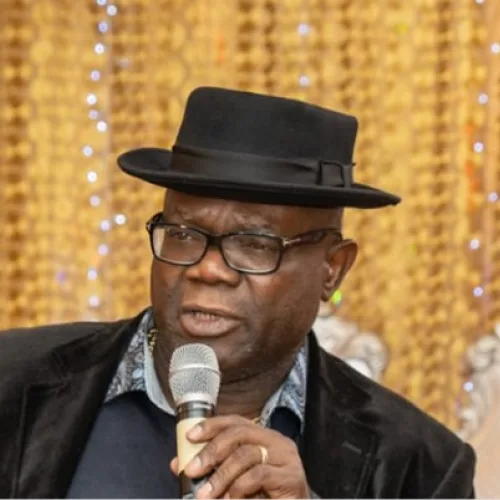
Nigeria’s first certified astronaut, Chief Owolabi Salis, has urged President Bola Tinubu to revisit the submissions made by Catholic Bishops led by former Cardinal John Onaiyekan, saying their concerns reflect the growing hardship faced by Nigerians.
Salis, a chartered accountant and lawyer who spoke from the United States, said the President should give serious consideration to the views of the Catholic Bishops in the national interest, citing their leadership experience, proximity to the people and longstanding record of speaking truth to power.
According to him, the position occupied by the bishops gives them a unique perspective on the challenges confronting ordinary Nigerians and enables them to communicate the people’s grievances to government without equivocation.
“The truth is that so many people are dying. It is those who are concerned who feel it, and Cardinal Onaiyekan is a consistent voice of reason that cannot be ignored,” Salis said.
He said the level of hardship among Nigerians had become evident to him through the numerous requests for assistance he receives, despite living outside the country.
“Today alone, I know the number of people that have called me for one assistance or the other. I spend the large chunk of my resources on so many poor homes in Nigeria that I sometimes ask myself whether I am being stupid,” he said.
Salis urged the President to reconsider aspects of the government’s approach to economic reforms and remain conscious of the responsibility that comes with governing the country.
“The government needs to change strategy. The President needs to constantly remind himself of the onerous responsibility of governance of the people,” he said.
He said the administration should prioritise policies aimed at narrowing the gap between the rich and the poor, arguing that the government appeared disconnected from the realities confronting many Nigerians.
“He should constantly be working on how to bridge the gap between the rich and the poor. Unfortunately, he seems detached from the people each time you hear talk about his administration,” Salis said.
He expressed concern over hunger across the country, saying the situation should be a major priority for the President as the custodian of the people’s mandate.
“The truth is that people are dying of hunger across Nigeria and that should concern every Nigerian, especially the President who is the custodian of the people’s mandate,” he said.
While acknowledging efforts by the government to reduce food prices, Salis argued that lower prices alone would not solve the problem if millions of Nigerians lacked the income and purchasing power to afford basic necessities.
“It is true that government is bringing down the price of food, but you have to look at it from the angle of the income of the people. The bitter truth is that many people are so poor in Nigeria that they cannot buy such food because they lack the purchasing power,” he said.
Salis said his location in the United States had not insulated him from the hardship in Nigeria, noting that he remained in regular contact with people affected by the economic situation.
“Though I am in the United States, I feel the pinch of the suffering of the people because I interact with the people almost on a daily basis,” he said.
He also identified corruption as a major obstacle to effective delivery of government programmes, alleging that resources intended for the people often fail to reach their beneficiaries.
“Part of the problem is corruption because resources of state meant for the people hardly get to them,” Salis said.
He argued that the wealthy were less affected by rising food costs, stressing that the greater challenge was ensuring that poor Nigerians could afford to feed themselves.
“The rich people do not have the problem of food, but the real challenge is how to get food to the poor who cannot afford to eat,” he said.
Salis also questioned the government’s handling of corruption allegations involving a former minister responsible for the welfare of poor Nigerians.
“Remember a minister in charge of welfare of the poor was involved in corruption, but till today we have not heard that she has been sanctioned,” he said.
He urged the Tinubu administration to demonstrate greater empathy with Nigerians, particularly when implementing reforms that impose significant short-term hardship, saying government must show citizens that it understands and shares their pain.
Comments
Start the conversation about this story.