






It is absolutely critical that the opportunity to build synergies and leverage capacity across the African world is forged towards as a future alternative to the exploitation, colonialism and brutal hegemony that is currently the global approach. The wider diaspora, coordinated with a continental focus of 54 countries, can become the engine for a future that is inclusive and interdependent. The next two generations of Africans need this systemic change, and Afrlition lays it out starkly and hopefully with clarity.
The African expression of identity and character in the 21st century has to be transcontinental. It has forever been so: in the DNA of human beings, both the mitochondrial and Y chromosomes go back to African origins. Afrilition, thankfully, offers Africanness based on self-identification, not genetic or even official origins. As a book or manifesto, the focus is the engagement of the willing or remnants, as there are many born on the continent who are white supremacist in orientation and mental model. This is nothing shocking, since their formal socialisation offers Africa as a foil to perceived European or Western excellence. Afrilition targets those who choose African identity worldwide.
Across the Americas, there are many remnants – especially in the Caribbean, South America, and North America — as there are in Europe and increasingly in Asia. Africans across the globe, whose understanding and experience vary but whose commitment is unwavering towards an authentic and disciplined Afrocentric tomorrow. Often we forget to highlight the newer African world that existed, even when the world formally ended the Trans-Atlantic enslavement and trade in African people — including the return of formerly enslaved people who fought on the side of the British against the US colonialists.
Many of these people ended up in Nova Scotia, Canada; especially in Halifax. They were joined by the Maroons, who had fought the British to a standstill in Jamaica, and some of them were then sent to Sierra Leone as part of an unprepared return effort, and possibly as a colonial prototype. There was the return or exile from Bahia of those alleged champions and participants of the Imale uprising to the West Coast of Africa in their multitudes and interspersed with returned formerly enslaved Cubans.
The stories of the African American support for Abyssinia in the First World War, including helping to form the Air Force then. Some fighting aside, for raising money to support the defence of Abyssinia. Many Caribbean people came out of enslavement only to be sent to West African outposts to replace failed European missionaries, many of whom were just left to survive and sometimes die without support. All these, as Edward Wilmot Blyden was crafting his pioneering work on the African Character as the first Pan-African ideal. He was from St Thomas in the Caribbean, but got educated in Freetown, Sierra Leone, the centre of African schooling. The critical input of the African Diaspora has continued for generations, in the face of popular scepticism on the relevance, importance, or even alleged complicity of Africans in the enslavement decimation of its population.

In the past few weeks, the African Union and the Caribbean Community (CARICOM) signed a Memorandum of Understanding to integrate Caribbean economies into the African Continental Free Trade Area (AfCFTA), laying the foundation to engage a 1.4 billion strong African market predicted to be soon over three billion! The African Union has formally recognised the Caribbean as the ‘Seventh Region’ of Africa, with a consultative seat in the AU.
One of the interesting stories that the Diaspora holds is that of literacy and how much the African world has engaged with the narrative that literacy, as defined in the Western education system, is critical to transformation. Two of the countries that are at the top of world literacy are the creations of the brutal trans-Atlantic enslavement of Africans — Cuba and Barbados — which both have 100 per cent literacy. The example of Barbados is quite distinct, as it is a majority African descendant country. At full emancipation in 1838, literacy was estimated to be below 10 per cent.
The brutality of the enslavement of Afro-Barbadians was quite notorious in a very diabolical system, as its exceptionally brutal approach was imported into the Southern United States of America to destroy the spirit of rebellion. The vast majority of the emancipated population were field labourers who were denied formal education to the point of death. Even at emancipation, the white plantation owners strongly and widely resisted widespread literacy. Today their descendants are number one in the world, along with others.
The African descendants of the US faced even more ongoing resistance from the first Reconstruction, and in the face of a more recalcitrant government and people, they built over 100 private universities and thousands of schools, fighting daily stereotypes that, in paradox, suggested they did not desire education and were somehow of less intelligence or capacity. These were all allegations that are not borne out by objective data or analysis. In later articles and exploration of Afrilition, we will look at this foundation and the often ignored incredible transformation of Nigerian literacy.
Afrilition offers the African world a route that will inspire our better angels and coordinate the pursuit of our dreams. It most certainly offers us the clarity of purpose to avoid the constant triggers that are distracting our productive energies and leverage our varied capabilities.
In the past few weeks, the African Union and the Caribbean Community (CARICOM) signed a Memorandum of Understanding to integrate Caribbean economies into the African Continental Free Trade Area (AfCFTA), laying the foundation to engage a 1.4 billion strong African market predicted to be soon over three billion! The African Union has formally recognised the Caribbean as the ‘Seventh Region’ of Africa, with a consultative seat in the AU. The African Diaspora, which includes everyone who affirms the African identity, is across the world.
It is absolutely critical that the opportunity to build synergies and leverage capacity across the African world is forged towards as a future alternative to the exploitation, colonialism and brutal hegemony that is currently the global approach. The wider diaspora, coordinated with a continental focus of 54 countries, can become the engine for a future that is inclusive and interdependent. The next two generations of Africans need this systemic change, and Afrlition lays it out starkly and hopefully with clarity.
Afrilition offers the African world a route that will inspire our better angels and coordinate the pursuit of our dreams. It most certainly offers us the clarity of purpose to avoid the constant triggers that are distracting our productive energies and leverage our varied capabilities. What the willing African Diaspora shows us in their rise from enslavement and progress towards a world-class presence, is that they are key partners in Afrilition’s promise of African excellence.
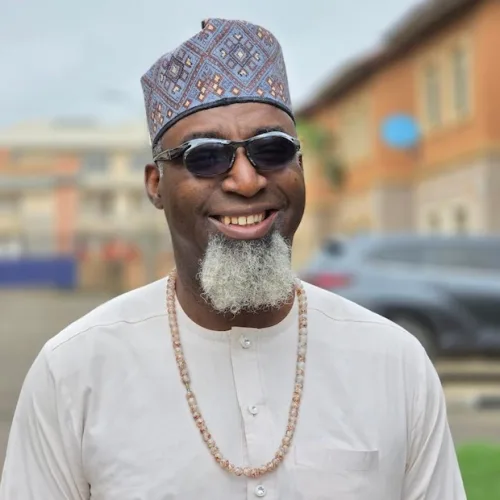
Adéwálé Àjàdí, a lawyer, creative consultant and leadership expert, is author of the newly released Afrilition: 21st Century African Manifesto, and Omoluwabi 2.0: A Code of Transformation in 21st Century Nigeria.
Discover more from Premium Times Nigeria
Subscribe to get the latest posts sent to your email.
Comments
Start the conversation about this story.