





…as Senate intensifies probe of NEITI audit report
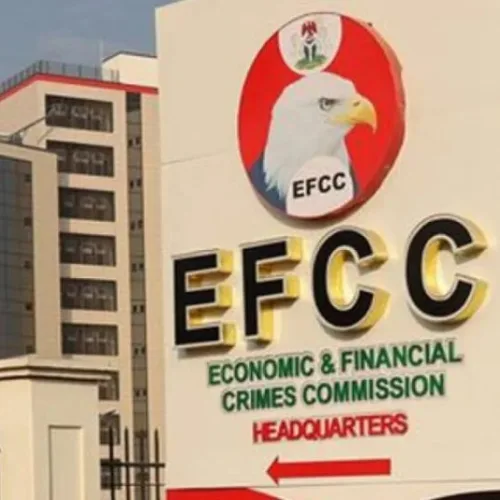
The Economic and Financial Crimes Commission (EFCC) has recovered more than N115 billion in outstanding statutory levies owed the Niger Delta Development Commission (NDDC) by oil companies, following investigations into queries contained in the Nigeria Extractive Industries Transparency Initiative (NEITI) 2021–2023 Oil and Gas Sector Audit Report.
The recovery, covering the period between 2021 and 2023, comprises N76.883 billion and $81.076 million in outstanding 3 percent statutory levies due to the NDDC, the EFCC told the Senate Committee on Public Accounts on Wednesday.
The disclosure was made by the EFCC representative, Francis Oka-Phillips Usani, when he appeared before the Senator Ibrahim Hassan Dankwambo-led committee as part of the Senate’s ongoing investigation into the findings contained in the NEITI audit report.
Usani said the commission investigated 43 oil companies, with 24 companies operating within the Niger Delta found to have outstanding liabilities to the NDDC, while the remaining 19 companies were cleared of the queries.
“At the commencement of investigation, EFCC invited 43 oil companies out of which 24 operating within the Niger Delta, were found to have outstanding liabilities in the sums of N76,883,705,907.17 billion and $81,076,655.00 million while the remaining 19 other oil companies were given clean bill of health,” he said.
According to him, the commission’s investigation and pressure on the affected companies resulted in some of them paying their outstanding liabilities directly to the NDDC.
He said the payments made directly to the commission by the affected companies amounted to N6.709 billion and $16.994 million.
Usani further disclosed that the EFCC had released N73.373 billion and $67.070 million to the NDDC from the sums recovered on its behalf.
He said the balance currently domiciled in the EFCC’s recovery account stood at N3.510 billion and $14.005 million.
The figures provided by the EFCC gave the Senate committee a clearer picture of the financial implications of the NEITI audit findings and the extent to which unpaid statutory obligations had accumulated within the oil and gas sector.
Explaining the scope of the commission’s intervention, Usani said the EFCC focused primarily on one of the key issues identified in the NEITI report, the failure of oil companies to remit the mandatory three percent statutory levy due to the NDDC.
He, however, said the commission did not lose sight of the possibility that other statutory obligations and taxes might also be outstanding to the Federal Government.
“EFCC focused on one primary pillar identified in the NEITI report i.e, unpaid 3% statutory levies due to NDDC but that EFCC did not lose sight of the fact that there could be other unpaid statutory obligations and taxes due to the Federal Government,” he said.
The recovery comes as the Senate continues to scrutinise the NEITI 2021–2023 Oil and Gas Sector Audit Report, with the Public Accounts Committee examining the financial obligations of oil companies and the response of relevant government agencies to outstanding liabilities.
However, the committee’s proceedings also exposed continuing concerns over the appearance of oil companies before the lawmakers.
Shortly after the EFCC’s presentation, the committee rejected an attempt by TotalEnergies EP Nigeria Limited to defend queries raised against the company in the audit report through a representative.
The committee cited the company’s under-representation and consequently directed the Managing Director of TotalEnergies to appear personally before it.
The appearance is expected to take place next week on a date to be communicated by the committee.
The committee also gave the managing directors of South Atlantic Petroleum Limited, Oando Oil Limited, Famfa Oil and Green Energy International Limited a final opportunity to appear physically before the panel and respond to queries against their companies.
The development underscores the increasingly tough approach being adopted by the committee as it intensifies its examination of the NEITI audit findings and seeks direct explanations from companies implicated in outstanding financial obligations.
For the committee, the objective is not only to establish the extent of liabilities but also to determine whether the relevant companies have fulfilled their statutory obligations and whether government agencies have adequately enforced the collection of revenues due to the public.
The EFCC intervention has already demonstrated the potential financial impact of acting on audit findings, with more than N115 billion in liabilities identified and substantial sums subsequently recovered or released to the NDDC.
But the Senate’s continuing hearings suggest that lawmakers are seeking to go beyond recoveries already made to establish the circumstances surrounding the accumulation of the debts and ensure that outstanding obligations are properly accounted for.
At the end of Wednesday’s session, Dankwambo said the investigative hearing would continue on Thursday as the committee intensifies its scrutiny of the NEITI report.
The committee’s investigation is expected to bring more oil companies and government agencies before the lawmakers as the Senate seeks explanations on the financial queries contained in the three-year audit of Nigeria’s oil and gas industry.


Comments
Start the conversation about this story.