





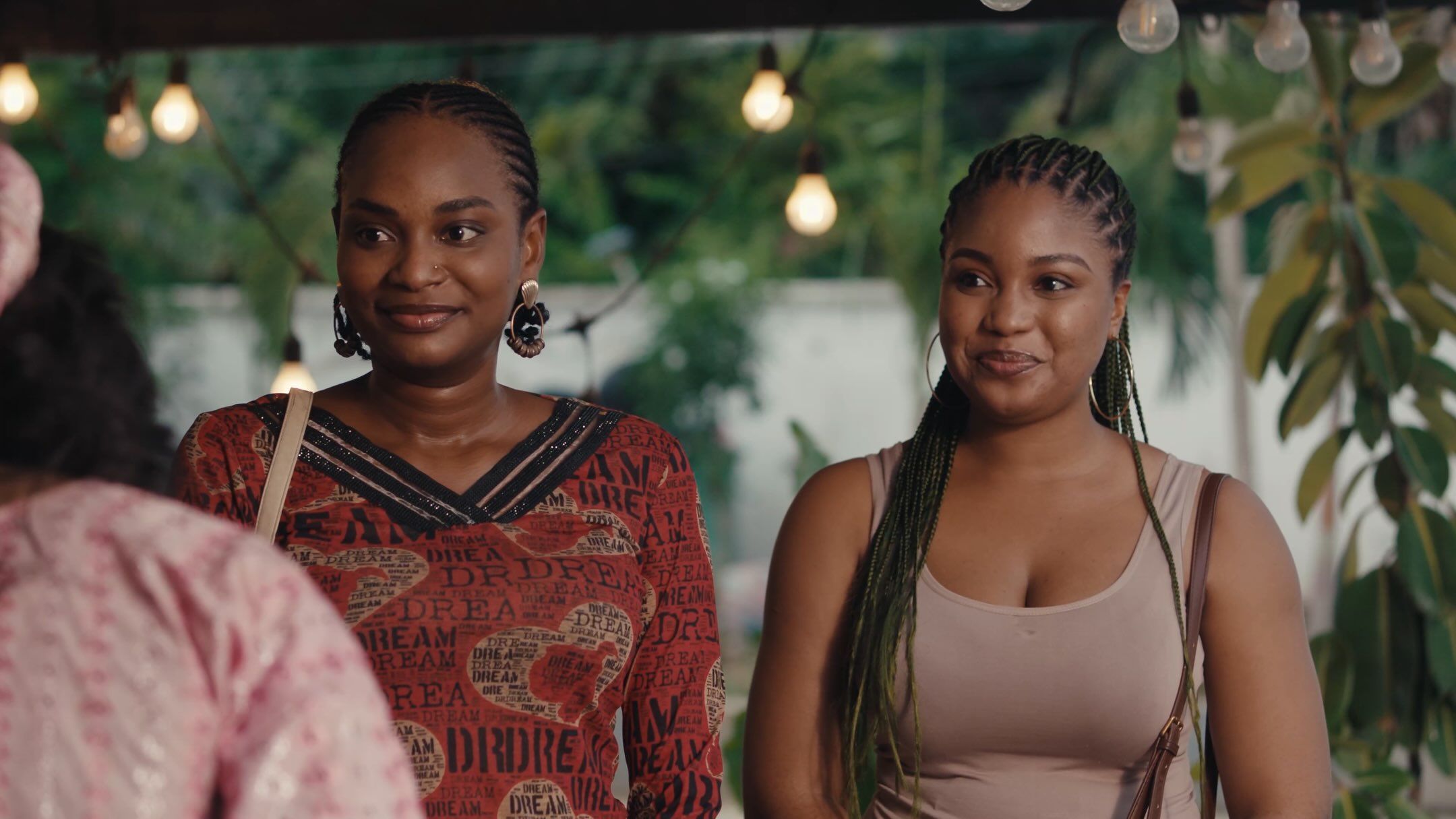
Lead actress Ifeoma Obinwa appears in a scene from filmmaker Dika Ofoma’s short film A Happy Ending.
Dika Ofoma has been labelled a festival filmmaker because at the start of his career, he uploaded his films to YouTube, with no plans beyond that. It was other filmmakers who spotted his films on the streaming platform and encouraged him to submit to festivals. C. J. Obasi among them. “I took it seriously,” Dika said, “and that was how the festival filmmaker path was born.”
Dika has made peace with where that path has taken him. “For me, what is important is telling stories and for people to listen to the stories I’m telling. Whatever opportunities provide an audience for these films, whether it’s on YouTube, festivals or whether it’s to take it to the box office, I’m very much open,” he says.
Dika’s brilliance, however, continues to shine, as proven once more in the final drop of Zikoko’s Life 2: ‘A Happy Ending’. In the film, Dika brings Tatiana’s story to life, drawing on a character and experience that feels deeply grounded in the realities of a real woman. It is another example of the filmmaker’s instinct for finding the emotional truth in ordinary, complicated lives.
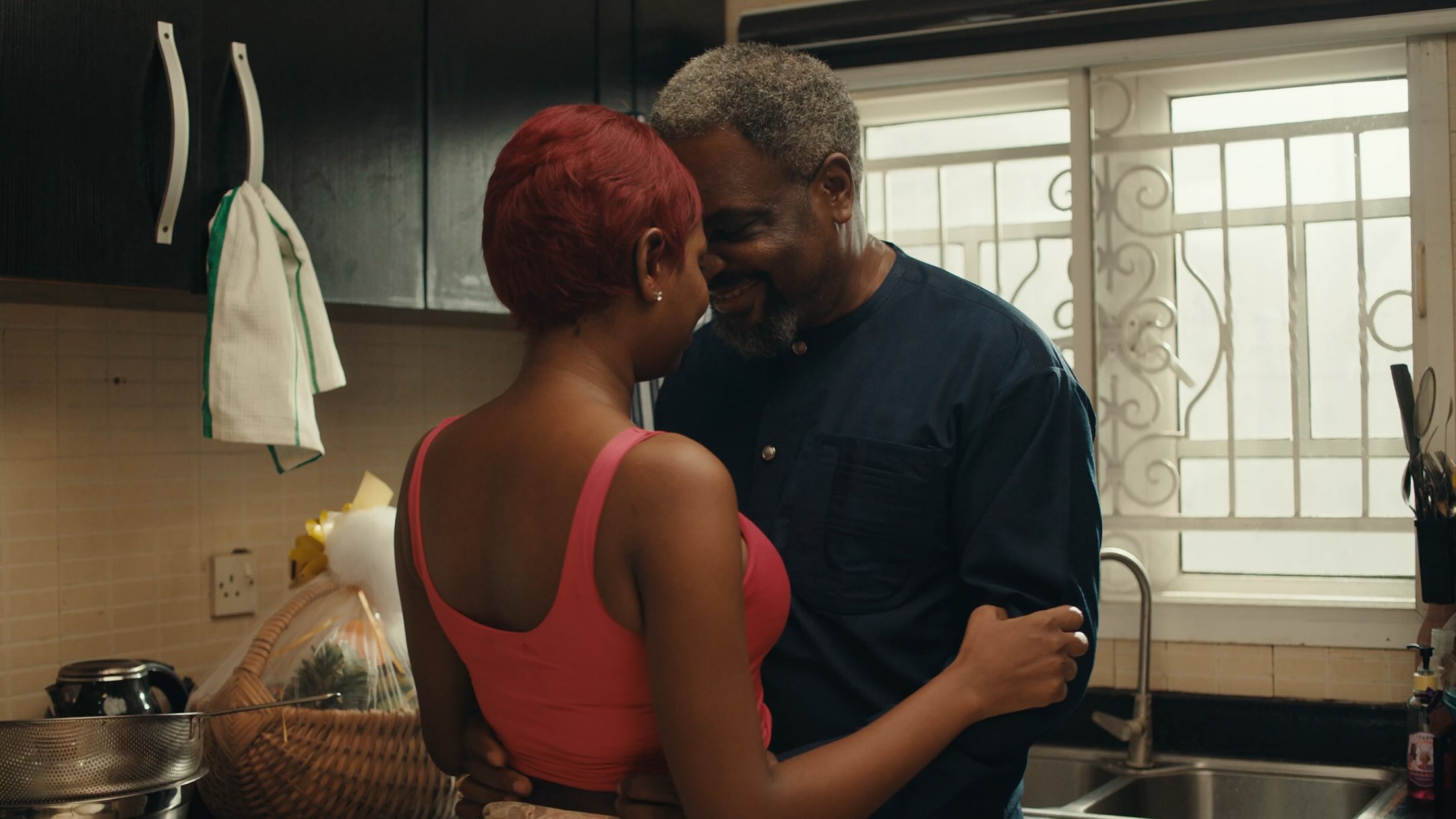
Film still from director Dika Ofoma’s short film A Happy Ending, featured in Zikoko’s Life 2 series.
In this conversation, Dika talks about his journey from making films for YouTube to becoming a familiar name in Nigeria’s film industry, the creative choices behind A Happy Ending, and what it means to keep telling stories without becoming too attached to where they might take him.
Initially, Dika had a casting problem with ‘A Happy Ending’. He needed someone who understood the film’s intention to play the lead actress.. Tatiana is a young woman who moves to Lagos to work as a masseuse. Her job exposes her to a wealthy politician who enjoys the add-on of happy endings to his massages. The professional relationship between the pair goes beyond the spa and becomes more than Tatiana intended. He had an actor in mind, but after reading the script, she turned it down.
Her reason stuck with him because two other actors shared the same sentiments. They wouldn’t play Tatiana because she wasn’t written as a victim. She didn’t have a sick mother back home, no pressing issues that required the support of a politician, and no gun to her head. Tatiana was a young woman who weighed her options and chose the one that kept her dreams alive.
Dika found this experience telling. “It opened my eyes to the sort of society that we live in,” he says. He admits that he’s surrounded himself with “a lot of progressives” for so long that he had “forgotten how conservative our society is.” The truth is that people need it “to be such a miserable story for them to empathise and understand why a person would get into sex work”.
His refusal to write Tatiana as a broken woman came from the real woman who inspired her story. Speaking about the woman, he says, “What was clear was that she didn’t think of herself as a victim.” “She knew that she was economically disadvantaged, and she wanted a better life for herself, her siblings, and for their parents. Knowing all this, it became important for me that I captured that in the script.”
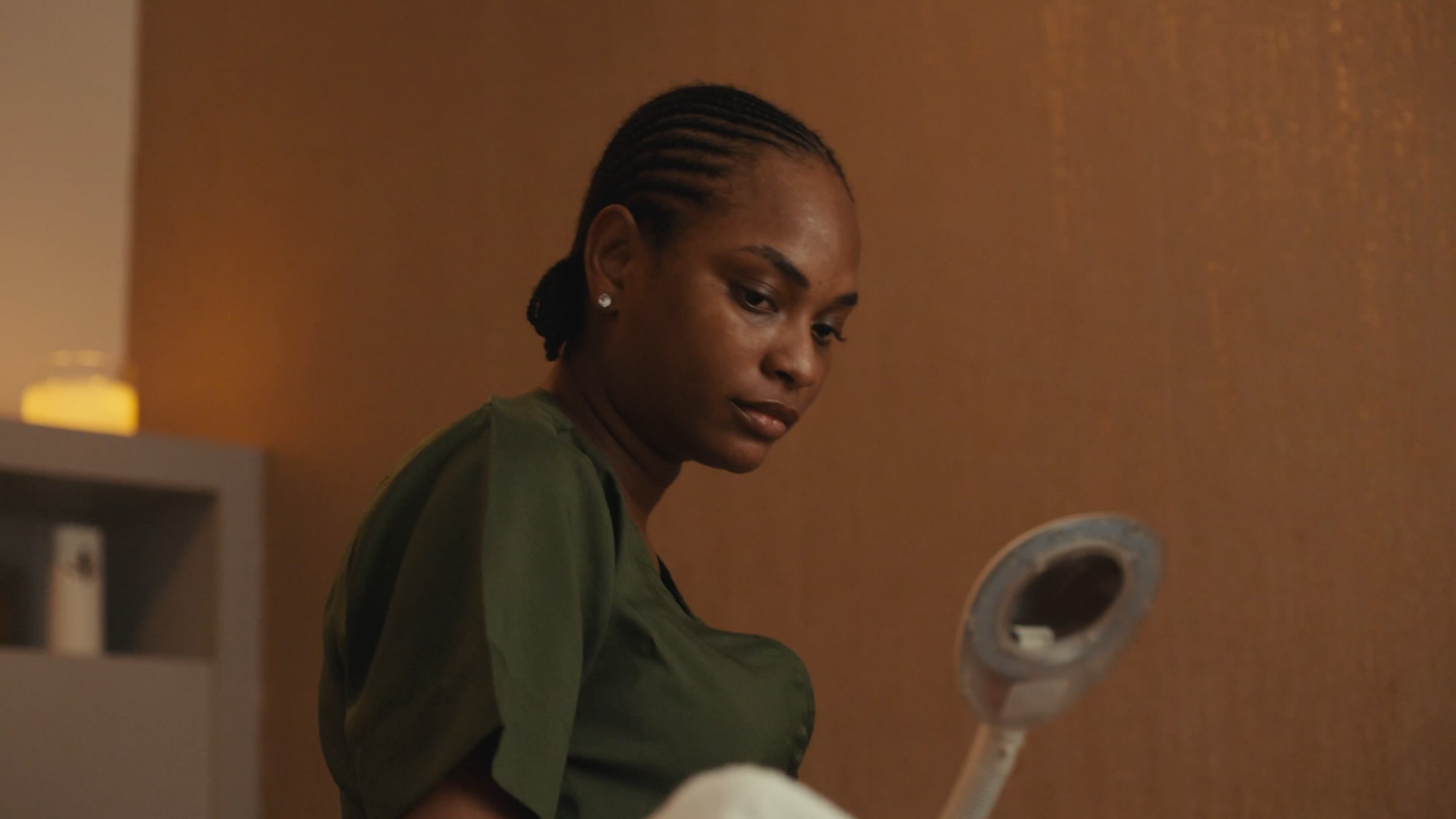
A spa scene from Dika Ofoma’s short film A Happy Ending, starring Ifeoma Obinwa.
He is equally clear about why that mattered to him as a storyteller. “It’s so important to give the characters agency to make choices, even under pressure. This person is a human adult, and they can make decisions.”
Dika eventually found his Tatiana in Ifeoma Obinwa, whose Igbo instantly convinced him. “I’m an Igbo speaker, and I can tell when the Igbo is good,” he says. Her audition sealed it. “When I looked at her, I was like, yeah, this is really Tatiana.”
The person who nudges Tatiana into sex work, Madam Ngozi, could easily have been the film’s villain, but Dika refused to do that. “I didn’t want to write her as a villain,” he says. “I never go in thinking, who’s the bad guy here? I don’t think great stories come from writing people as black or white. Where there’s a bad guy, and there’s a good one.”
Instead, he gives her a backstory that mirrors Tatiana’s. “I imagine that the circumstances might have been a lot harder for her than it was for Tatiana,” he says. “And so, she sees Tatiana as her younger self.”
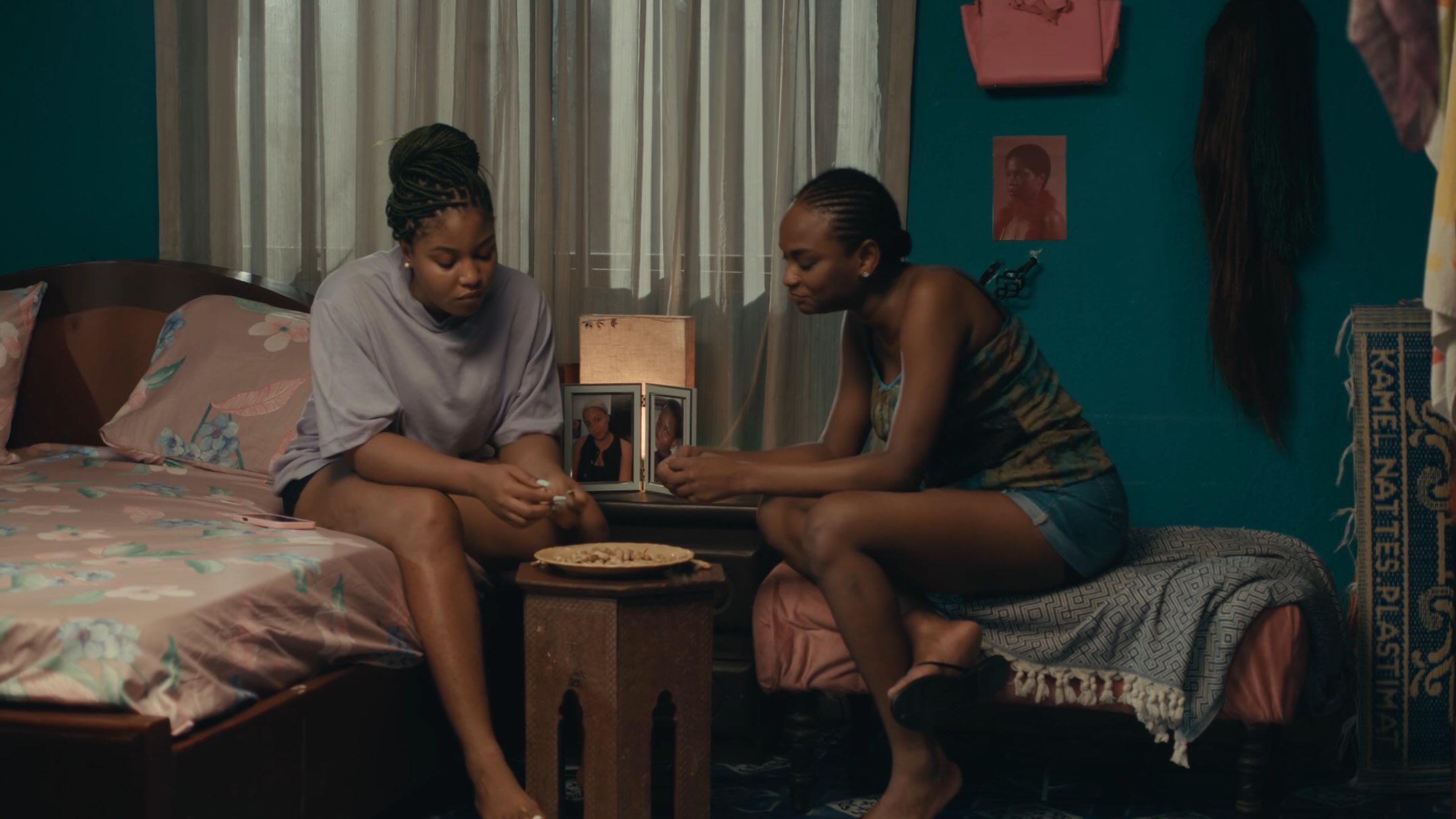
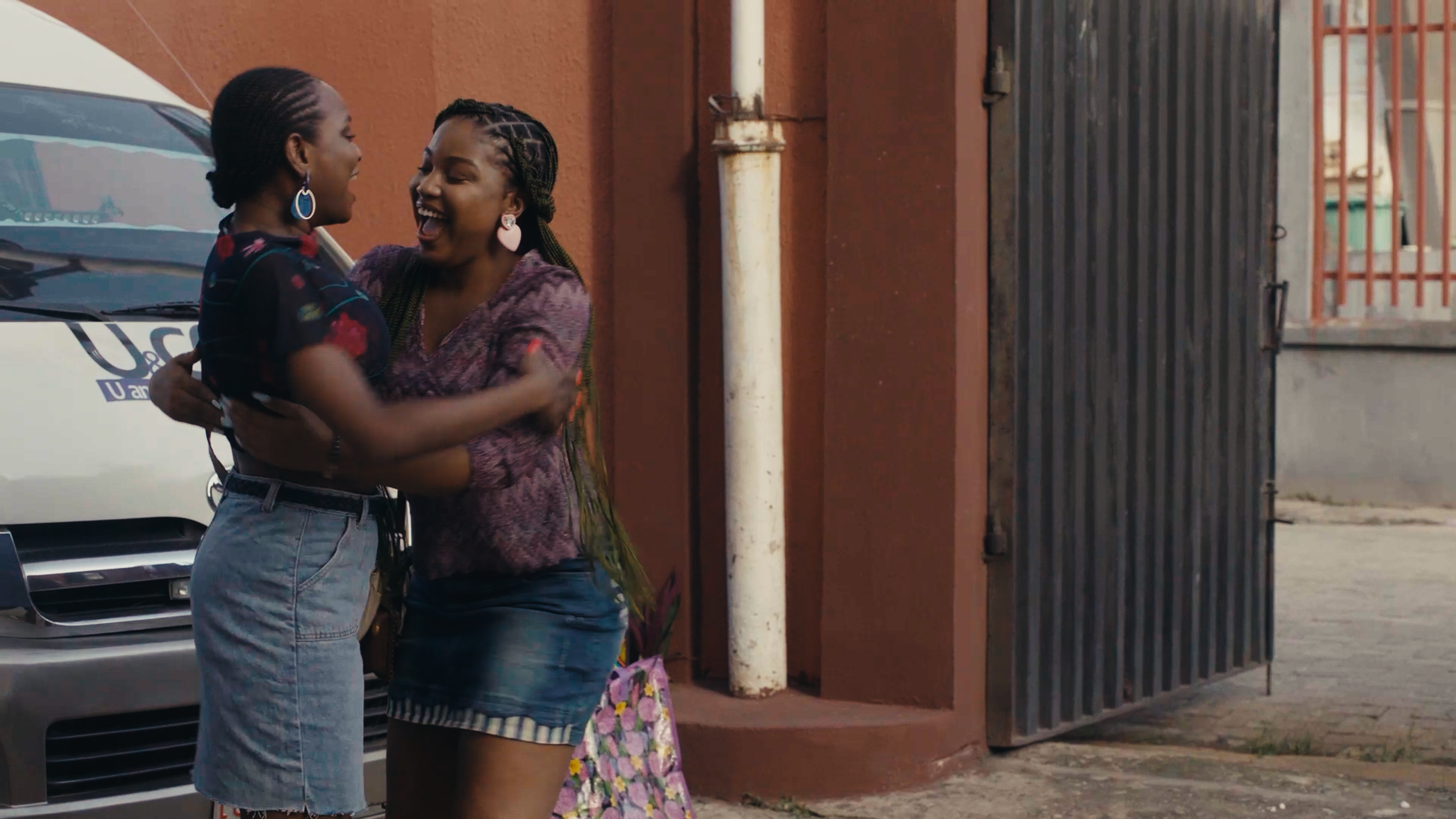
A quiet character scene illustrating female friendship in Dika Ofoma’s short film A Happy Ending.
His favourite scene is the one where Madam Ngozi hands Tatiana a contraceptive and tells her to look after herself. “That was the scene where we could really see her as human, outside of running her spa and being a madam.”
He also speaks on how little self-awareness Madam Ngozi has about her role in Tatiana’s situation. “It is not often that people recognise that what they’re doing is not in order.” He even suggests, almost gently, that Madam Ngozi “could have thought of that as an act of kindness.”
The bond between Tatiana and her best friend Ginika carries much of the film’s warmth. But Dika explains that he wasn’t trying to make a grand statement about women specifically.
“I didn’t go into the story trying to say something about female friendships. I was simply trying to talk about friendship,” he says. “I have male friends, I have female friends, and it’s the same in how we care for each other. We look out for one another.”
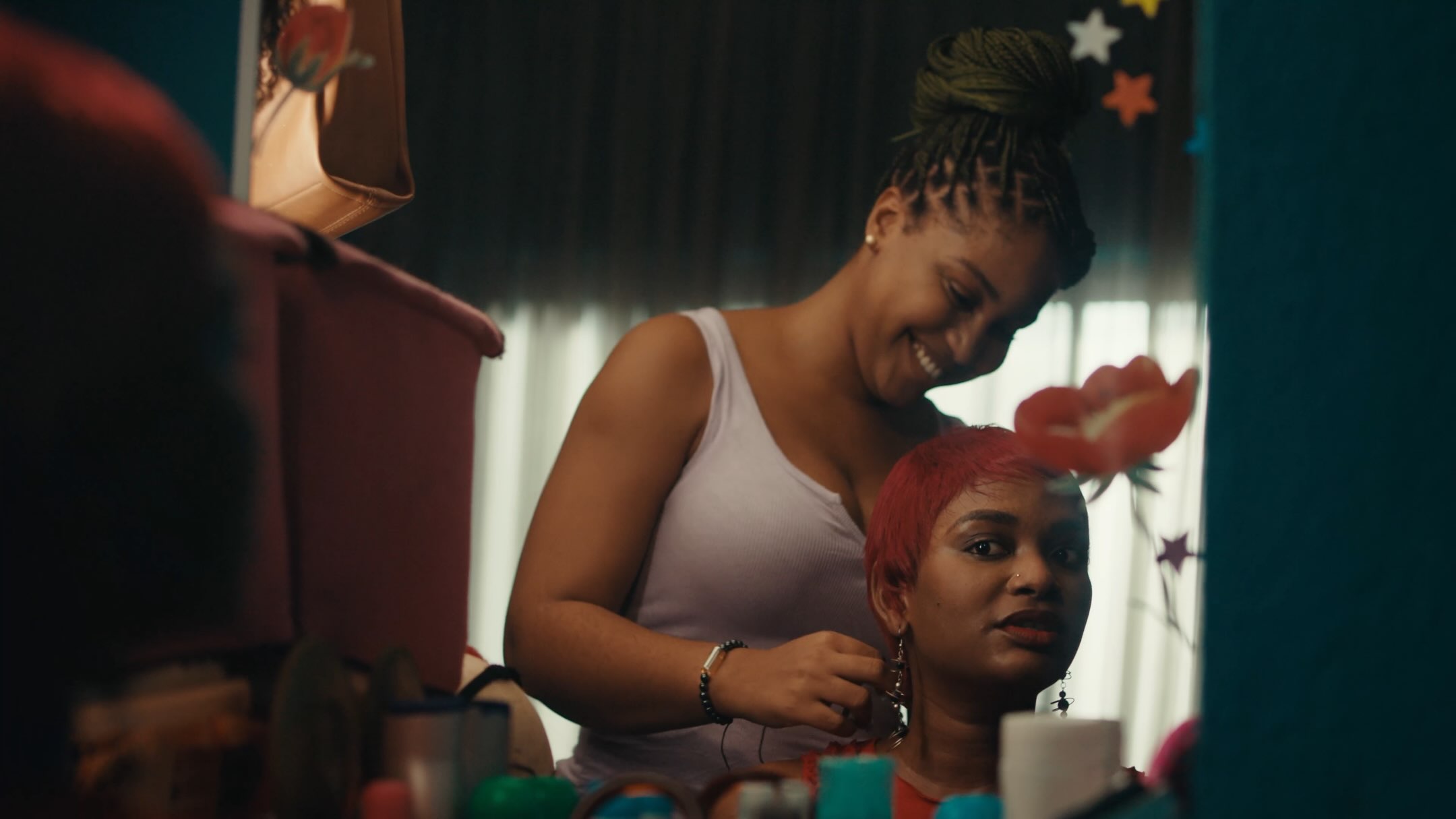
Character scene from Dika Ofoma’s A Happy Ending exploring friendship and identity in Zikoko’s Life 2 series.
Still, he can see how naturally it reads as something closer to sisterhood. Especially watching how easily his two lead actresses built real chemistry. “It feels as though it’s a story about Tatiana, but it’s also very much Ginika’s story, and it’s about their friendship as well,” he says.
Dika didn’t set out to make a film with a message stapled on it. He intended to write characters the way people actually are. Messy and with motives, and let the audience do the work of deciding what they think.
Watch the full film below
Comments
Start the conversation about this story.