





Nigeria and China are set to deepen cooperation in cancer care, with the Federal Government seeking technical support, joint research, technology transfer and expanded radiotherapy capacity to improve cancer treatment outcomes in the country.
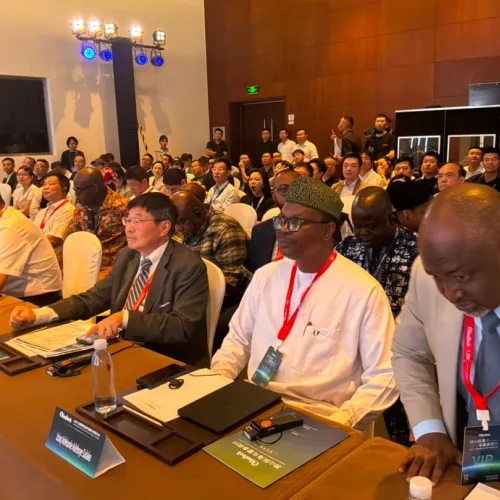
The Minister of State for Health and Social Welfare, Dr Iziaq Adekunle Salako, disclosed this on Saturday at the Link Global Summit on Innovation and Practice in Oncology at the China National Convention Centre, Beijing, China.
Salako said Nigeria’s participation in the summit was aimed not only at observing advances in oncology but also at shaping global cancer innovation and bringing relevant technologies and expertise back to the country.
ALSO READ: Insecurity: NCCSALW, NYSC strengthen partnership to tackle illicit arms proliferation
He said Nigeria would inaugurate the Radiotherapy Working Group of the China-Africa Hospital Alliance and the Link Global Oncology Alliance, in which Nigeria is a founding African partner, as well as sign a strategic cooperation agreement with LinaTech, a Chinese company specialising in radiation therapy technologies and integrated solutions.
“Nigeria has not come to Beijing to just observe innovation in oncology. We have come to help shape it, and to take it home,” Salako said.
He said cancer had become a national priority for Nigeria because of the country’s rising cancer burden, late presentation, gaps in diagnosis and treatment, and the financial hardship imposed on families.
According to him, Nigeria recorded an estimated 127,763 new cancer cases and 79,542 cancer deaths in 2022, with breast, prostate and cervical cancers accounting for more than 40 per cent of the mortality.
Salako said the country’s limited radiotherapy infrastructure remained unacceptable, noting that Nigeria, with a population of more than 220 million, had for years operated a radiotherapy fleet that could “be counted on two hands.”
He, however, said the mortality-to-incidence ratio had improved from 62.3 per cent in 2022 to 59.6 per cent in 2024, describing the development as modest progress that had strengthened the government’s resolve to accelerate cancer prevention, early detection and access to quality treatment.
The minister said the administration of President Bola Ahmed Tinubu had, since May 2023, intensified efforts in cancer prevention, public awareness, treatment infrastructure, financing and research under the Renewed Hope Agenda.
He cited the introduction of the human papillomavirus vaccine into routine immunisation in October 2023, saying more than 14 million girls aged nine to 14 had since been reached, making it the largest single round of HPV vaccination in Africa.
He also highlighted the National Initiative for Cancer Early Detection, Screening and Coordinated Access to Network Care, NICE-SCAN, which he said was bringing cancer screening, early detection and referral closer to communities and health facilities.
Salako said the government was also intensifying efforts to eliminate cervical cancer through community-based screening activities led by the Task Force for the Elimination of Cervical Cancer and other initiatives.
On cancer treatment and financial protection, he said programmes including the National Cancer Access Programme, Catastrophic Health Insurance Scheme, National Cancer Health Fund and Social Determinants of Cancer Care Fund were expanding access to essential cancer medicines and treatment.
He said the initiatives were also designed to improve affordability and reduce financial uncertainty for cancer patients and their families.
According to Salako, the government has strengthened the National Institute for Cancer Research and Treatment, which has trained about 140 early-career cancer scientists and funded 24 research grants.
He said six cancer centres of excellence were also being developed, with three already completed and commissioned in Katsina, Enugu and Benin, equipped with modern linear accelerators.
The remaining three centres, he said, were advancing towards completion with dedicated funding through Nigerian Sovereign Investment Instruments.
Salako further disclosed that President Tinubu had approved the procurement and installation of 35 additional linear accelerators between 2026 and 2028 to expand access to radiotherapy for cancer patients.
He said the initiatives were part of the Nigeria National Cancer Control Plan 2026–2030, whose Technical Working Group and Global Advisory Council are now operational.
According to him, the plan focuses on prevention, decentralised cancer diagnostics and treatment, financial risk protection, development of an oncology workforce, clinical trials and strengthening the national cancer registry ecosystem.
He said the government also wanted to build local capacity to install, service and eventually produce cancer technologies in Nigeria, moving the country from being primarily a consumer of cancer technologies to becoming a contributor to global cancer care.
Salako described Nigeria’s emerging partnership with China as critical to achieving the objectives.
He said the Memorandum of Understanding between both countries would provide for radiotherapy technical support, joint research and development, academic exchanges and support for establishing professional bodies to regulate radiotherapy practice.
The minister said Nigeria expected the partnership to produce a joint work plan with designated focal persons and quarterly milestones to ensure that the agreement translated into measurable outcomes beyond its signing.
He also called for the twinning of Nigeria’s cancer centres of excellence, the National Institute for Cancer Research and Treatment and tertiary hospitals such as the National Hospital, Abuja, with leading Chinese cancer hospitals.
Salako stressed the need for training, maintenance and local technical support alongside the installation of radiotherapy equipment.
“Machines without people are monuments,” he said, stressing that every linear accelerator installed in Nigeria must be backed by in-country servicing and spare-parts arrangements.
He said the Radiotherapy Working Group of the China-Africa Hospital Alliance should facilitate the establishment of a designated clinical training base in Nigeria, which could serve as a West African hub for advanced radiotherapy training.
He also proposed a fellowship pipeline in China for Nigerian radiation oncologists, medical physicists, radiotherapy technologists and biomedical engineers.
Looking towards 2030, Salako said Nigeria wanted the partnership to deliver technology transfer, local assembly and servicing of radiotherapy and imaging equipment, supported by the country’s zero-duty and zero-VAT incentives for health manufacturing.
He said both countries could also pursue joint clinical trials and registry-linked research focused on cancer phenotypes affecting African populations, as well as deploy artificial intelligence-assisted treatment planning, adaptive radiotherapy and tele-oncology links between Chinese and Nigerian cancer centres.
The minister stressed that all technologies introduced into Nigeria should come with appropriate training and maintenance arrangements.
“Distinguished guests, innovation in oncology is meaningful only where it reaches the patient. Let this summit be remembered not for what was displayed, but for what was delivered. Nigeria is ready, our plan is costed, our partners are welcome, and the patients are waiting,” Salako said.
He said the summit provided an opportunity for governments, clinicians, researchers, industry, development partners and patient advocates to translate evidence and innovation into practical interventions capable of improving cancer outcomes.
He said Nigeria’s ambition was to prevent more cancers, detect the disease earlier, expand access to quality treatment, reduce financial hardship and ultimately save more lives.
Comments
Start the conversation about this story.