







The federal government has been urged to strengthen healthcare delivery in markets by providing basic clinics and increasing investment in preventive healthcare to enable traders access medical services without disrupting their businesses.

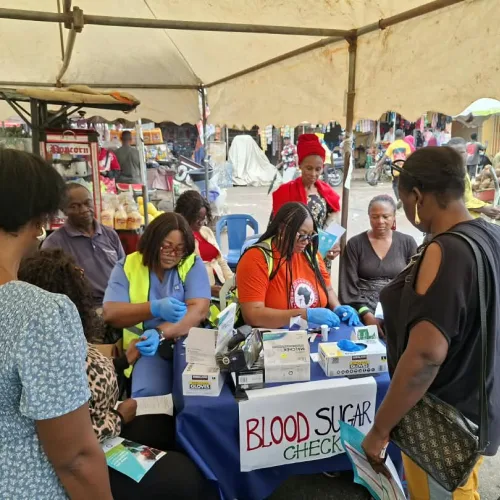
The call was made by Joyful Rose Health Initiative, a health and wellness non-governmental organisation (NGO), during a medical outreach for traders at Karu market, Abuja, organised under the theme, “Healthy Lifestyle Choices: Healthy Traders, Wealthy Market.”

Chairperson of the initiative and Deputy Director of Nursing at the Federal Medical Centre, Abuja, Mrs Joy Chioma Nwankwo, said taking healthcare to the market was necessary because many traders spend most of their day working and have limited time to visit hospitals.
She said the organisation was established to help address healthcare gaps affecting underserved communities, stressing that access to basic medical services should not depend on how much time or money people have.
Nwankwo, who said the outreach was designed to reach about 200 traders, urged government to pay greater attention to healthcare needs in markets and other underserved locations.
“What I am proposing for Nigerian government is that they should do more. They are trying, but there are some localities that have not been touched. Even in this market, there is need for them to have a clinic,” she said.
According to her, the absence of a nearby health facility could discourage traders from seeking care until health conditions become severe.
Nwankwo said her regular interaction with traders at Karu Market had also exposed concerns around prolonged sitting, poor eating habits and obesity.
“Most of our marketers stay in the shop from morning till night. They sit down in one place, eating so many things that may not really go down well with them as far as health concerns are concerned,” she said.
She therefore, advised traders to break up long periods of sitting by moving around during the day, noting that physical activity was important for healthy blood circulation.
Medical doctor of internal medicine, Dr Somto Chukwu-Benson, identified hypertension, diabetes and obesity among the health concerns observed during the outreach, alongside cases of undiagnosed eye problems.
He said the absence of routine medical examinations remained a major challenge, as some people could have chronic conditions without being aware of them.
“The common health challenge is actually the disregard for medical check-ups. There are a lot of people that have chronic conditions, but they don’t know because they don’t check up,” Benson said.
He explained that obesity could increase the risk of hypertension and diabetes, urging traders to exercise regularly, make healthier food choices and undergo periodic medical screening.
The outreach offered free blood pressure, blood sugar, malaria and eye tests, as well as body mass index (BMI) assessments. Cases requiring further attention were referred to doctors for appropriate care.
One of the beneficiaries, Blessing Ernest, said the exercise had reminded her that the demands of business should not prevent traders from monitoring their health.
“I learned that sometimes you should go to hospital, check yourself and know your health issue. Some of us are business women; business, business, business, and we don’t remember to go to hospital,” she said.
Another beneficiary, Mr Ugwu, a vegetable trader, said the outreach provided an opportunity for traders who rarely visit hospitals to know their health status.
“I have been checked and I am okay, but I learnt today the importance of knowing my health status and the need to always prioritise my health because it is wealth,” he said.
Nwankwo said the organisation would assess the outcome of the outreach and explore similar interventions in other underserved communities.
Comments
Start the conversation about this story.