





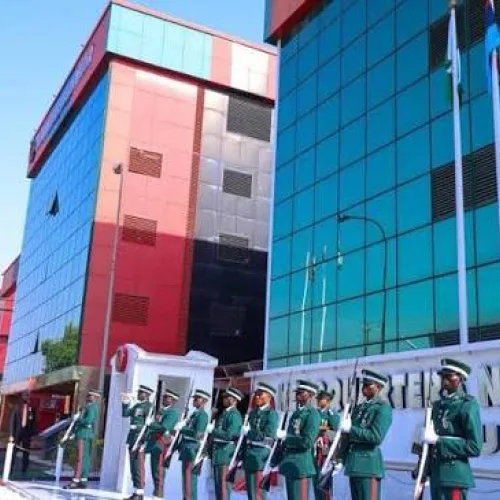
The expansion of the Nigerian Army (NA) from eight to 12 divisions reflects the President Bola Ahmed Tinubu administration’s determination to provide more boots on the ground in the battle against insecurity. The expansion could not have come at a better time, given the spike in insecurity ripping across some parts of the country. Announcing the expansion last week, the presidency said the decision was geared towards confronting the multi-faceted security threats, with the recruitment of 28,000 additional personnel for the newly created divisions.
The four new divisions comprise the 5th Division (Makurdi), which is tasked with addressing farmer-herder crises and armed violence in the North-central states of Benue, Nasarawa, and Kogi; the 9th Division, based in Ilorin, Kwara state, is primarily concerned with combating rising banditry and cross-border criminality across Kwara and Niger states; the 10th Division, based in Jalingo, is to focus on securing the volatile borders and countering insurgency in Taraba and Adamawa, while the 83rd Division (Benin City), is to engage on tackling oil bunkering, piracy, and local militancy across Edo, Delta, and Bayelsa.
The effective take-off of the new army restructuring is divided into two operational phases: the 5th, 9th, and 10th divisions are to be activated by September 2026, while the 83rd Division is to become operational in December 2026. The restructuring, no doubt, is poised to fundamentally modify the country’s defence dynamics, including opening new doors to immediate tactical opportunities and institutional challenges.
Apart from ensuring enhanced command, control, and rapid responses crucial to military efficiency, the newly created divisions would resolve previous challenges that had hindered the Nigerian Army from managing vast inter-state territories. Splitting these areas not only makes it easier for the new divisions to manage but also helps reduce fatigue among troops, especially during forced, prolonged combat deployments in active security emergencies.
The expansion of the Nigerian Army resolves the popular but muted suspicion about military balancing in the country and eliminates perceptions of state and zonal domination in military infrastructure. The restructuring also introduces new challenges in securing financial resources to cover recruits’ salaries and the purchase of modern hardware, advanced defence equipment, and tactical vehicles, among others, for the effective take-off of the divisions. Amid a tight fiscal climate marked by declining revenues, bearing the burden of funding this expansion can be unnerving.
Security experts have warned against expanding ground forces as an immediate solution to current security problems, noting that involving the army in domestic policing could have long-term consequences. Over-relying on the new military divisions to tackle some of the security challenges, the experts warned, may end up treating the symptoms rather than the root cause of the crisis.
The army, being primarily responsible for ensuring a nation’s security and sovereignty, is trained to repel foreign military invasions through active combat, air-land integration, and strategic defence. Though it may, from time to time, be drafted to assist the police in tackling challenges related to internal unrest, engaging the army in maintaining internal security should be an exception rather than the rule.
The current deployment of military technologies, especially Unmanned Aerial Vehicles (UAVs, or drones), has shifted the focus of global military forces from traditional army roles, deeply characterised by high-manpower-attrition warfare, to intelligence-led, precision-driven operations. These new defence technologies place less emphasis on deploying more boots on the ground and more on using drones to curb security threats and inflict collateral damage on enemies of the state.
More than anything, the modern Nigerian soldier requires software and network proficiency rather than additional boots on the ground for operations. To achieve the goal of defeating non-state actors in the current war against insecurity plaguing the nation, modern, technology-driven approaches must replace traditional military strategies that rely on more boots on the ground.
Expanding the army, for now, could provide more boots on the ground, but in the long run, deploying modern technologies remains the only final solution in crushing these criminal elements threatening the corporate existence of the Nigerian state. We believe that strengthening the internal security mechanism, including effective collaboration between security forces and the civilian populace, remains the sustainable way to secure Nigeria against blood-thirsty criminal groups and terrorists fighting for the disintegration of the country.
Apart from expanding the army, Blueprint.ng believes that deploying new defence technologies, as adopted in other countries, could help prosecute the battle against insecurity and brighten the prospects of early victory over these criminals. Relying more on additional boots on the ground than in the use of modern military technologies could cast a long shadow over the nation’s battle against insecurity.
Comments
Start the conversation about this story.