





Running a delivery business in Nigeria has become increasingly difficult. Fuel costs remain one of the biggest operating expenses for logistics companies, courier services, e-commerce delivery firms, and transport operators. Every increase in petrol or diesel prices eats into already thin profit margins, forcing many fleet owners to either raise delivery charges or absorb the additional costs.
- How fuel price is reshaping Nigeria’s logistics industry
- Reasons you should convert to CNG
- CNG offers more than lower fuel costs
- ALSO READ: Hostel logistics: How campus startups weaponise WhatsApp Business for fast profit
- Government support is accelerating adoption
- Safety depends on professional installation
- What logistics companies should consider before converting
- Infrastructure is improving
- The competitive advantage
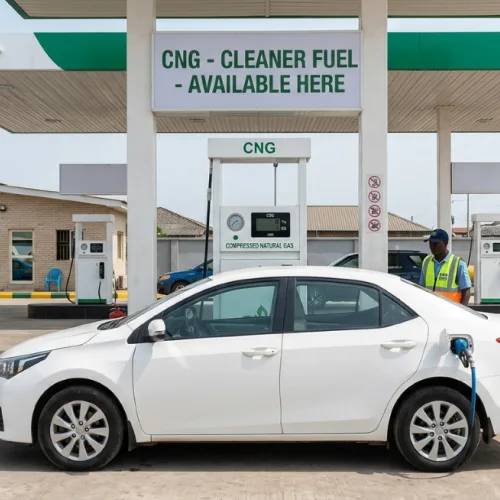
Against this backdrop, Compressed Natural Gas (CNG) has emerged as more than just an alternative fuel, it is becoming a strategic business decision.
With the Federal Government promoting cleaner transportation and expanding CNG infrastructure nationwide, more fleet operators are beginning to rethink how they power their vehicles.
For businesses evaluating CNG conversion logistics business Nigeria, the question is no longer whether CNG is worth considering. The more important question is whether delaying the transition could make their operations less competitive.
How fuel price is reshaping Nigeria’s logistics industry
Delivery businesses operate on volume and efficiency. Whether transporting parcels across Lagos, delivering groceries in Abuja, or distributing products nationwide, fuel accounts for a significant share of operating expenses.
As transportation costs continue to fluctuate, businesses that depend solely on petrol or diesel vehicles face growing pressure to maintain profitability. Even small reductions in fuel expenditure can translate into substantial annual savings for companies operating multiple vehicles.
This explains why logistics firms are increasingly exploring alternative energy solutions that reduce running costs without compromising operational performance.
Reasons you should convert to CNG
CNG offers more than lower fuel costs
The strongest argument for CNG is economic efficiency. Natural gas has consistently provided a lower-cost fuel option compared with conventional petrol in Nigeria.
For delivery companies covering hundreds of kilometres daily, the cumulative savings can become substantial over time.
Beyond cost, CNG burns cleaner than petrol and diesel, producing fewer harmful emissions and reducing engine carbon deposits. Cleaner combustion can contribute to improved engine longevity when vehicles are professionally converted and properly maintained.
These benefits make CNG particularly attractive for businesses operating high-mileage delivery fleets.
ALSO READ: Hostel logistics: How campus startups weaponise WhatsApp Business for fast profit
Government support is accelerating adoption
Nigeria’s push toward compressed natural gas has gained significant momentum.
The Presidential Compressed Natural Gas Initiative (PCNGI) aims to expand CNG adoption by increasing refueling infrastructure, encouraging vehicle conversions, and supporting broader use of natural gas within the transportation sector.
Meanwhile, the National Automotive Design and Development Council (NADDC) promotes automotive engineering standards, certification processes, and technical guidelines that support safe vehicle conversion and encourage industry best practices.
Fleet operators considering conversion should work only with authorised conversion centres that comply with recognised engineering and safety standards.
Safety depends on professional installation
Some business owners remain hesitant because of safety concerns. In reality, professionally installed CNG systems are designed with multiple safety mechanisms, including pressure-tested cylinders, automatic shut-off valves, reinforced fuel lines, and leak detection procedures.
The NADDC often emphasised that vehicle conversions should be performed by trained technicians using certified components that meet approved engineering specifications.
Attempting low-cost, uncertified installations increases operational and safety risks while potentially affecting vehicle reliability.
What logistics companies should consider before converting
Before beginning a CNG conversion logistics business Nigeria project, operators should evaluate vehicle age, engine condition, annual mileage, payload requirements, access to nearby CNG refuelling stations, maintenance support, and conversion costs.
Companies with vehicles travelling long distances each day generally recover conversion costs more quickly because they consume significantly more fuel.
A phased conversion strategy, starting with several vehicles before expanding across the entire fleet, also allows businesses to evaluate operational performance while minimising disruption.
Infrastructure is improving
One of the biggest barriers to CNG adoption was limited refuelling infrastructure.
That situation is gradually changing as new CNG stations are commissioned across major Nigerian cities and transport corridors through public and private sector investments.
Although nationwide coverage is still developing, availability continues to improve, making CNG increasingly practical for commercial fleet operators.
Businesses should map available refuelling stations along their regular delivery routes before making investment decisions.
The competitive advantage
Companies that reduce fuel expenses are often better positioned to maintain competitive delivery prices while protecting their profit margins. Lower operating costs can also free up capital for fleet expansion, vehicle maintenance, driver training, and technology investments.
As more logistics operators embrace cleaner transportation, businesses that delay the transition may eventually face higher operating costs than competitors using alternative fuels.
The conversation around CNG conversion logistics business Nigeria has moved beyond environmental benefits. For many delivery businesses, it is becoming an important operational strategy for controlling fuel costs, improving long-term efficiency, and strengthening competitiveness.
While conversion requires upfront investment, working with certified conversion centres that follow NADDC engineering standards can help ensure safe, reliable performance. As Nigeria expands its CNG infrastructure and adoption accelerates, early movers may be better positioned to benefit from lower operating costs and a more sustainable transport model.
Comments
Start the conversation about this story.