





A former Senator representing Kwara Central, Ibrahim Oloriegbe, has alleged that many former governors who move to the Senate use the National Assembly as a retirement destination and a means of shielding themselves from anti-corruption agencies.
Oloriegbe, an All Progressives Congress governorship aspirant, also said many former governors struggled to adapt to the demands of legislative work, ultimately depriving their constituencies of effective representation and other benefits.
The former lawmaker, who represented Kwara Central in the Ninth National Assembly, stated this on Monday while contributing to a debate on the 2027 Kwara Central senatorial race in a popular WhatsApp group, The Kwara Tabloid.
The discussion followed a viral post promoting the expected senatorial ambition of the Kwara State Governor, AbdulRahman AbdulRazaq, whose second term ends in May 2027.
Responding to arguments that AbdulRazaq’s experience as governor would make him suitable for the Senate, Oloriegbe said the skills required to function effectively in the executive were different from those needed in the legislature.
“Are you going to vote in Kwara Central to tell us about our choice? The capacity, capabilities and skill required for legislative work are different for an executive position,” he wrote.
Oloriegbe said a senator could not delegate core legislative responsibilities in the same manner that an executive could assign duties to commissioners, aides and other appointees.
According to him, lawmakers must personally participate in plenary sessions and committee meetings, contribute to debates and build relationships with colleagues to attract benefits to their constituencies.
“One of such is that you cannot delegate legislative duties; you must attend plenary and committee meetings personally.
“You must speak and speak loudly because it is a debating house. You must network because it is a house of equals and a house where you need others to get things done,” he said.
The former senator added that effective representation also required lawmakers to maintain close contact with their constituents.
“You must be accessible to your constituents; answer their calls, respond to their requests and needs, etc. And more that space will not allow me to state now,” he said.
Drawing from his experience in the Senate, Oloriegbe said many former governors found it difficult to adjust from an office where they exercised extensive powers to one where influence depended largely on participation, persuasion and collaboration.
“From my experience in the Senate, most governors perform poorly because the legislative systems do not fit what they are used to.
“Most of them use the position as a retirement place and a place to protect themselves from anti-corruption agencies.
“Unfortunately, it is their constituencies that bear the consequences,” he said.
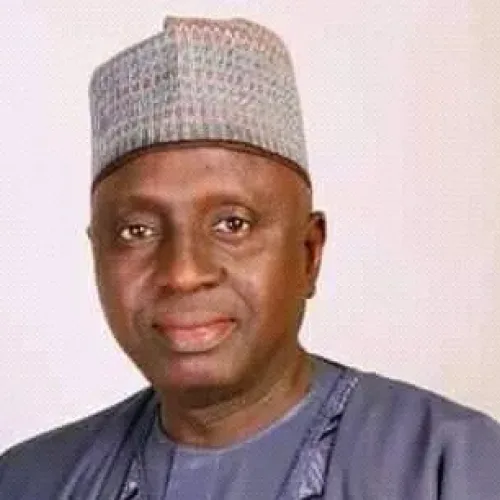
Oloriegbe cited his experience as Chairman of the Senate Committee on Health in the Ninth Assembly, saying four former governors served as members of the committee but only a former Kano State governor, Ibrahim Shekarau, regularly attended its meetings.
“Let me give two examples to illustrate this. I had four former governors as members of my Senate Committee on Health; only one of them attended our meetings — that is HE Senator Ibrahim Shekarau,” he said.
Oloriegbe attributed Shekarau’s participation to what he described as the former governor’s modest lifestyle and political orientation.
“He attends because he is socialist in orientation and lifestyle.
“Despite being an eight-year governor and a former minister, he was living in a rented property while in the 9th Senate,” he said.
The former lawmaker said failure by senators to participate in committee activities could have direct consequences for the communities they represented.
“For those that don’t attend or participate in the committee meetings and activities, they don’t get the benefits from the committee such as employment opportunities, projects in the budget,” he said.
“This is a loss to their constituencies.”
Oloriegbe also recalled serving on another Senate committee chaired by a former governor, whom he did not name, accusing the former governor of leaving the committee’s activities largely in the hands of his deputy.
“Another example is a committee whose chairman was a former governor.
“The chairman completely delegated the activities to his deputy. It is whatever the deputy reports to him that he knows or gets to his constituency,” he said.
Oloriegbe said his constituency benefited more from the committee’s activities than that of the chairman because of his own active participation.
“I was a member of that committee and I got more benefits to my constituency than the chairman got because the chairman cared less,” he said.
“Who suffered? His constituency, of course.”
The former senator further said legislative work required lawmakers to devote considerable time to studying bills, government proposals and other documents needed for lawmaking and oversight.
“In addition, a legislator is expected to read and review many documents,” he said.
“Because the offices are not funded to recruit qualified and competent assistants, many don’t do justice to the documents; hence, they cannot act appropriately on the documents.”
“This leads to poor oversight on the executive. The consequence of this is on the constituents,” Oloriegbe added.
His comments come amid increasing political activities surrounding the Kwara Central senatorial seat ahead of the 2027 general election.
The race is expected to attract significant attention following indications that AbdulRazaq may seek the seat after completing his second term as governor.
The incumbent senator, Saliu Mustapha, who chairs the Senate Committee on Agriculture, Production Services and Rural Development, has also expressed confidence that he would retain the seat on the platform of the Peoples Democratic Party.
Mustapha recently said during an appearance on Channels Television that he would defeat AbdulRazaq before noon on election day.
Comments
Start the conversation about this story.